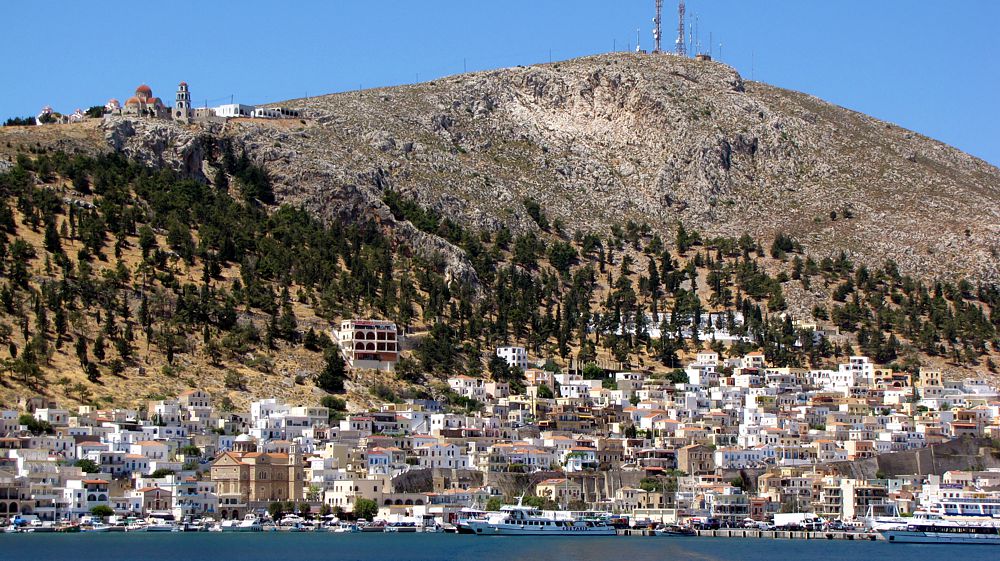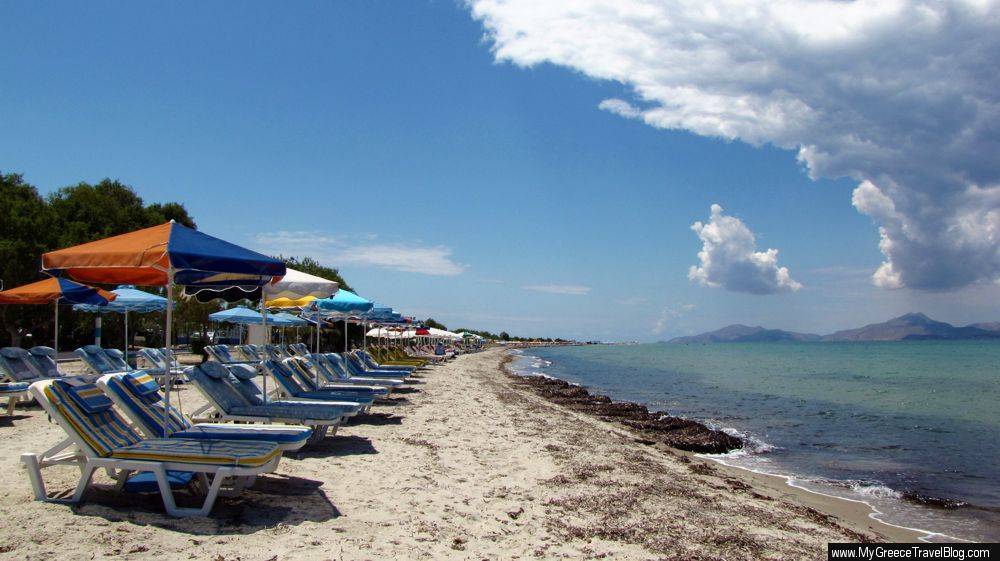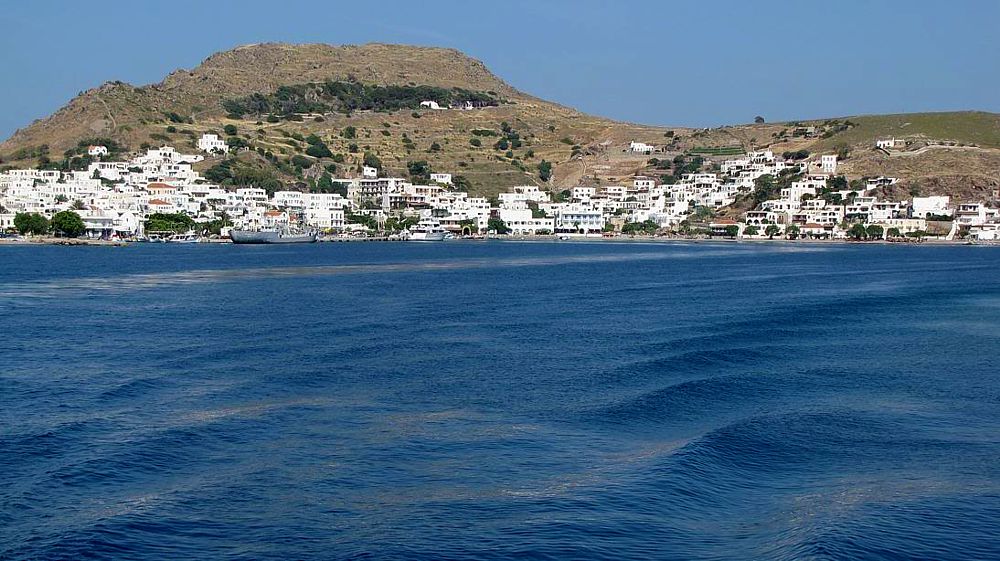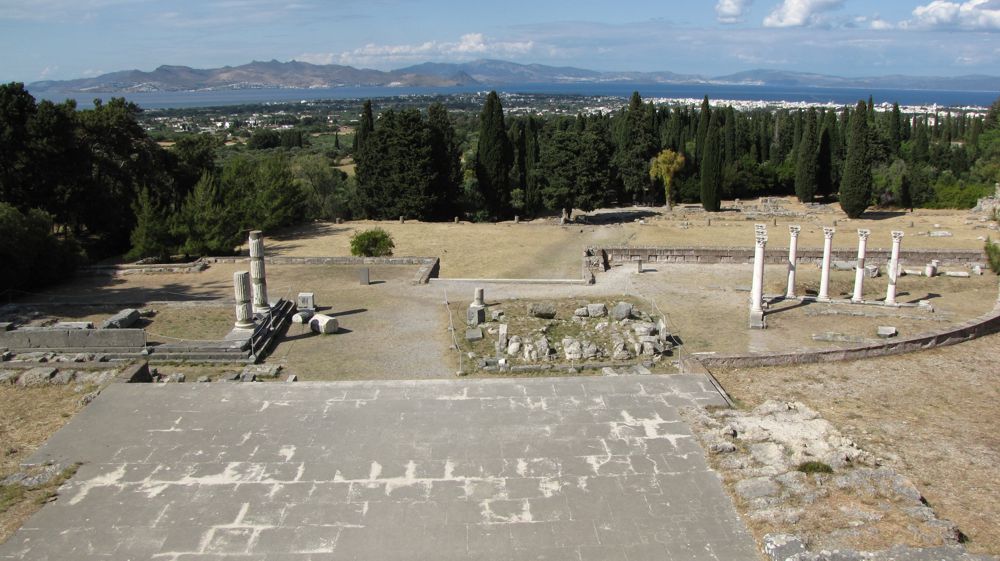
The view from the Asklepieion ruins and monuments on Kos island takes in nearby Kos Town and extends to the mountainous coast of Turkey. Click on the photo to open a larger image so you can enjoy a better view!

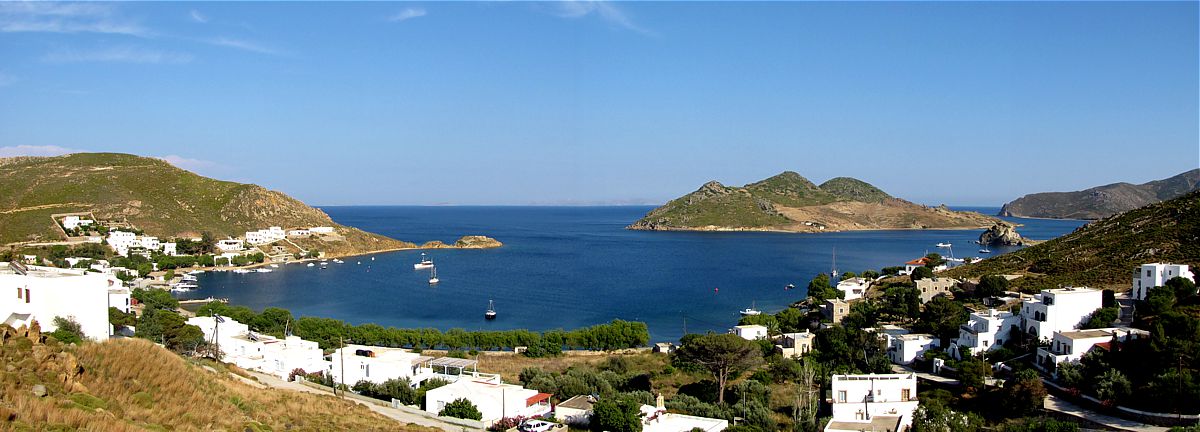
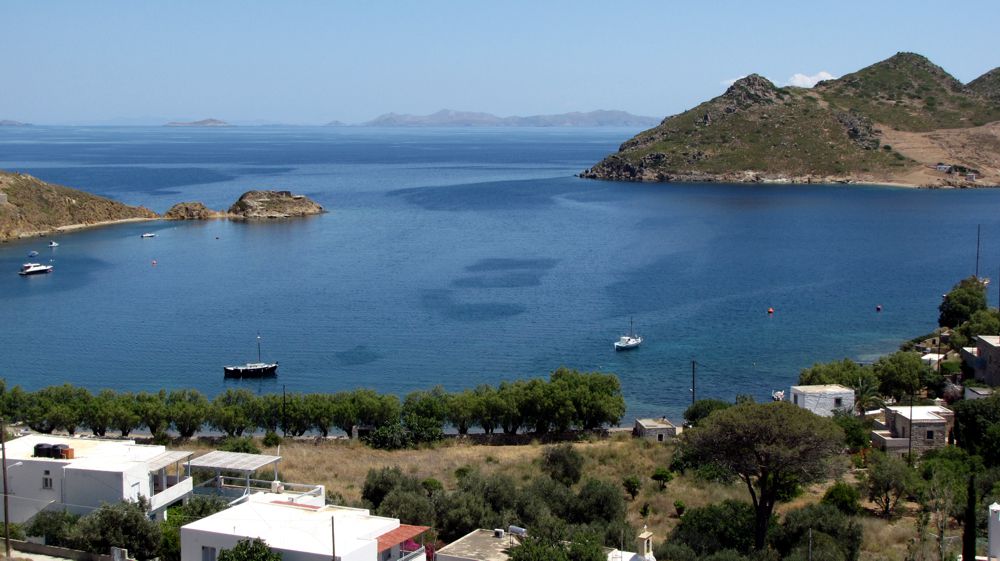
We enjoyed this panoramic view from our balcony at the Hotel Golden Sun at Grikos Bay on Patmos during our Dodecanese holiday in May 2010. Below is another Grikos Bay photo we shot from the hotel. Click on the pictures to view full-size images.
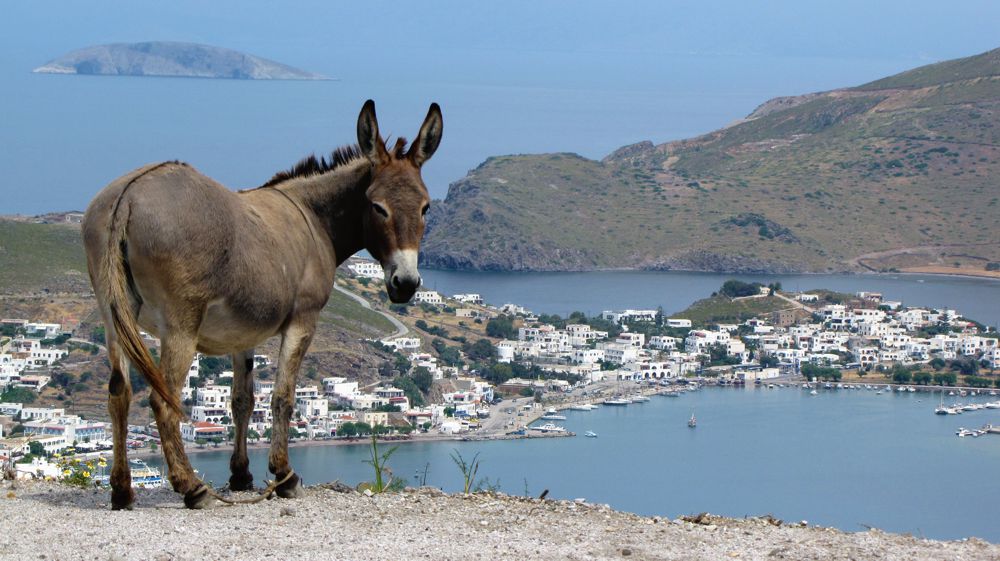
This donkey enjoys a spectacular view of Skala, the port town on Patmos, from his hilltop vantage point on the edge of Chora
Donkey tales: Mules and donkeys can be a common sight on many of the Greek Islands including — not surprisingly — two of the country’s most popular tourist destinations: Santorini and Rhodes. If you visit Santorini’s capital town Fira, especially during a cruise, you’ll see scores of the animals working as taxis to transport tourists up and down hundreds of steps linking the small port to the town 220 meters above sea level (see my Don’t ride the donkeys! post above for more about that controversial practice). On Rhodes, dozens of donkeys are similarly pressed into service to lug lazy sightseers up the path to the Acropolis above Lindos.
On smaller isles that don’t draw huge hordes of tourists and cruise ship visitors, you’re more likely to see donkeys grazing in fields and yards while you hike or drive around. Sometimes you might not be able to see them, but you’ll clearly hear them — their boisterous braying can carry across a long distance. And at other times, you can wind up having a close encounter with one or more of the animals just when you least expect it.
CONTINUED ON PAGE 2
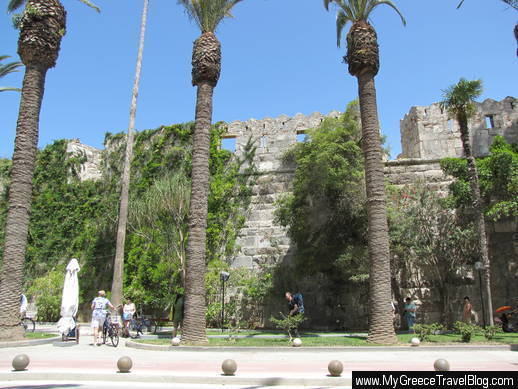
The exterior wall of the Castle of the Knights of St John, viewed from the opposite side of palm-tree-lined Finikon street in Kos Town …
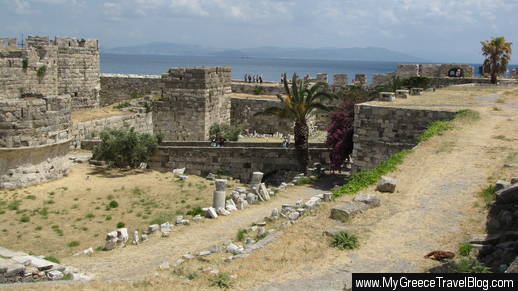
… and part of the castle interior, viewed from the elevated walkway that extends along the perimeter of the castle’s tall stone walls. Visible in the distance is the Bodrum area of Turkey.
Seaside stronghold: When I was a little kid, my friends and I used to build makeshift forts and treehouses and compete for control over the territory. “I’m the king of the castle, and you’re a dirty rascal” was a familiar taunt back in those days. It’s too bad our parents never took us to Kos, because we would have had the time of our young lives visiting the Castle of the Knights in Kos Town.
One of the most popular tourist attractions in Kos, the castle was constructed sometime in the 15th Century by the Knights of St. John, who used stones and marble recovered from the ruins of an ancient city that was devastated by an earthquake. It took them more than 120 years to finish building the stronghold, which was the second castle to be built on the site. (The first one was built in the early 1300s and later got completely destroyed). There actually is a castle within a castle — the outer wall was built between 1495 and 1514 to provide extra fortification for the original castle built more than a half century before.
CONTINUED ON PAGE 2
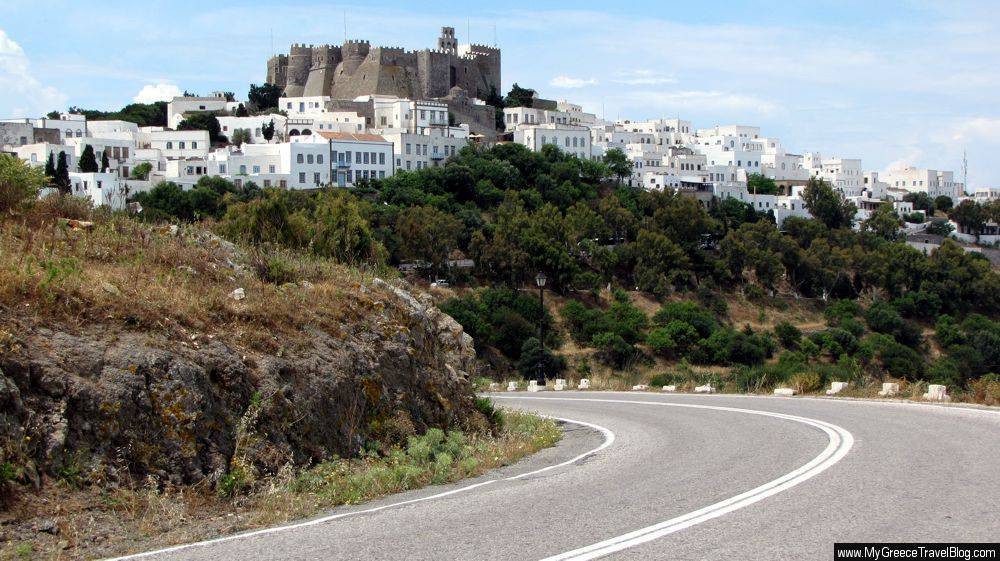
The biggest building on Patmos just happens to be the island’s biggest tourist attraction — The Holy Monastery of Patmos, seen towering above the houses and mansions of Chora. Also known as the Monastery of St. John, it was built around 1088.
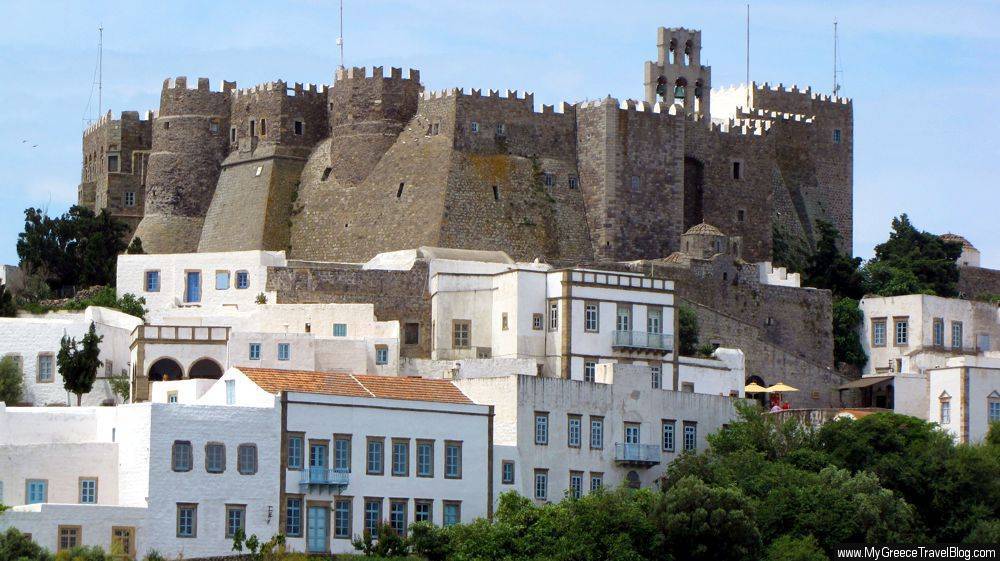
Another view of the imposing fortress-like monastery, the number 1 sightseeing destination for tourists whose cruise ships make brief calls into Skala port at Patmos

The monastery dominates the Patmos landscape even when viewed from sea
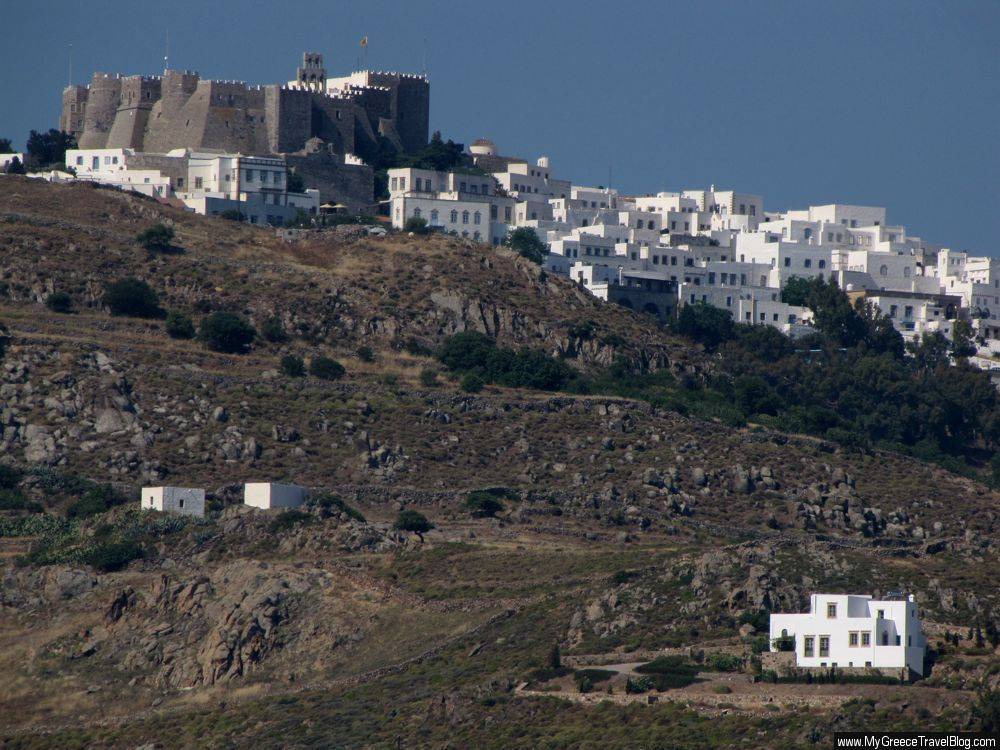
A zoom view of Chora and the monastery, shot from a ferry departing Skala port
Theme by Anders Noren — Up ↑