
MyGreeceTravelBlog.com
Photos & memories from our trips to Athens, the Peloponnese, mainland Greece & Greek Islands — plus profiles of places we would love to visit

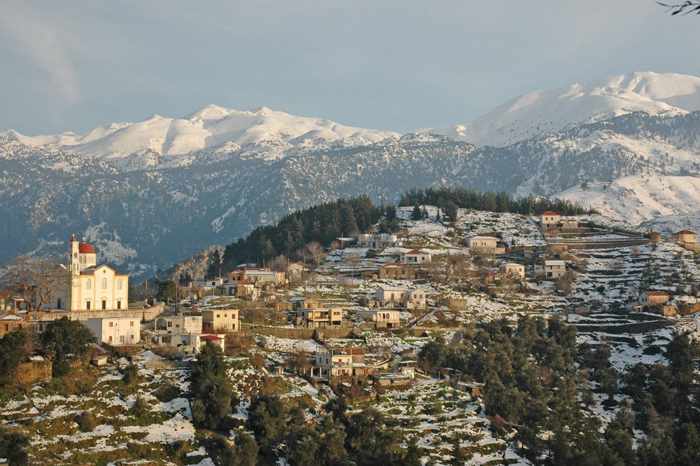
  • A winter daytrip to Paleochora in southwest Crete

    Share

    This 9-minute film by  fitness and travel buff William Taudien shows Paleochora, Crete from ground level, in the air, and even under water.


    Just a few weeks back, I wrote about a new promotional video that tourism authorities on Crete had produced to encourage more travellers to visit the island in winter.

    Since then, I’ve been keeping an eye on social media to watch for current photo and video posts, to get a better feel for what the island is like at this time of year. The latest we have ever been to Crete ourselves was in late October and early November 2017, when the tourist season was wrapping up and most hotels and restaurants were either already closed or shutting down. Despite a few days of inclement weather, we had a great time, but we often wondered how visiting in winter would compare. It seems other people are curious, too — in online travel forums, I’ve noticed an uptick in the number of people asking whether winter travel to Crete and other places in Greece would be worthwhile.

    This week I got some answers when adventure traveller, fitness buff and vlogger William Taudien published the video I posted above.

    William has been living near the Crete city of Chania for the past three months. In late December, he took a daytrip to Paleochora, a small town on the island’s southwest coast which happened to be the last stop on our late autumn holiday two years ago.

    After a bumpy 90-minute bus ride through gorgeous mountain scenery, William arrived at Paleochora to sunny skies and comfortable temperatures in the low 20s Celsius — weather similar to what we had experienced. Conditions were ideal for William to film ground-level video while wandering the streets, the seafront on the east side of town, and beautiful big Pachia Ammos beach to the west, which he had all to himself. With his drone, he captured amazing aerial views of the colourful town, the beach, and the spectacular mountain and Libyan Sea surroundings. He even shot some underwater scenes while swimming and snorkeling.

    Everything looked pretty much as it had when we spent three days in Paleochora, with one major difference — as William explains in the video, restaurant options are extremely limited in winter, especially if you’re looking for somewhere to have lunch.  

    Although he had an enjoyable trip to Paleochora on that particular day, William told me in an email that “It seems like the weather is a bit unstable in the winter.” In fact, right after his daytrip, the weather changed rapidly when a massive storm system that meteorologists named Zenobia swept across Greece, lashing the country with gale-force winds, heavy rains, and snowfalls in some regions. Zenobia pounded Greece for the final four days of 2019, and weather conditions remained unsettled into the first week of the new year.

    But conditions improved, and sunshine and mild temperatures returned. In his email, William told me he took another daytrip a few days ago, this time to explore the village of Hora Sfakion on Crete’s southern coast. And, once again, he went swimming. “It was really sunny and nice,” he said.

    Now, as I look out my window at gloomy grey skies and the temperature below the freezing mark here in Toronto, I keep daydreaming about paying a winter visit to Chania, and taking daytrips to places like Paleochora and Hora Sfakion if the weather is decent. Definitely something to keep in mind for next winter!

  • Tourism video invites travellers to discover themselves — in the city of Heraklion on Crete

    Share

    A new tourism video aims to show travellers that whether they prefer to spend their holidays taking a leisurely look at local history, culture,  food and wine, or keeping a faster pace with outdoor sports activities, beach fun and lively nightlife — or maybe a mix of both — there’s an extensive range of exciting activities and fascinating attractions awaiting them in Heraklion


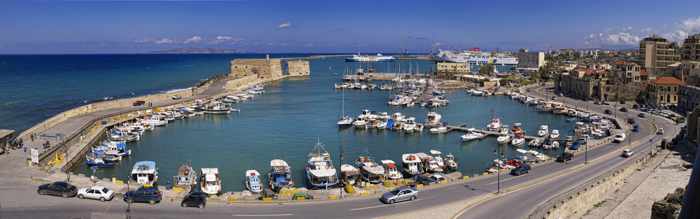
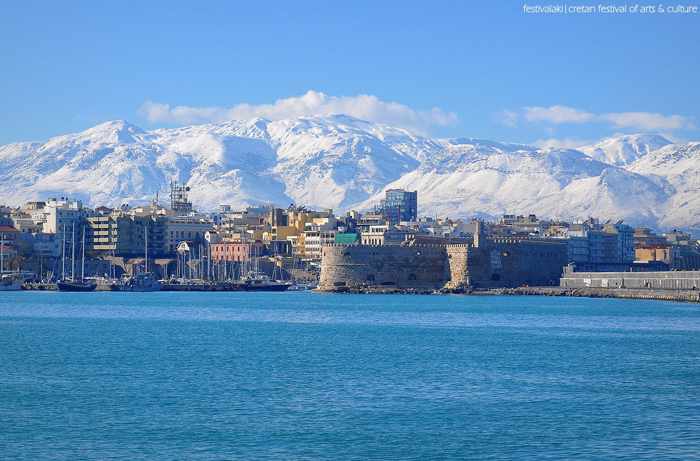
    A newly-released tourism video is inviting visitors to “discover the other part of yourself” in Heraklion (often spelled Irakleio), the biggest city on Crete, in 2020.

    Notes posted on the video’s YouTube page say the nearly 3-minute-long film “presents a vivid city with unique images in every corner, in every step. With flavors, sounds and aromas you’ll never forget!”

    “Stroll around Heraklion, in its market and beaches, visit its archaeological sites, its monuments and its museums. Enjoy the authentic Cretan lifestyle and gastronomy. Feel how living like a true local here in Heraklion, really is! Discover all 5+1 civilizations that make Heraklion truly unique, so full of experiences that you will wholeheartedly enjoy all year round,” say the release notes.

    Produced by the Heraklion Municipality Tourism Department, the film was published on January 7.

    “We are waiting for you, here in the heart of the most important island in the Mediterranean, ‘where Crete begins’!” the video release notes say, quoting the city’s official tourism slogan.


    [adToAppearHere]


    Should you be interested in finding yourself in Heraklion this year, I’ve collected website links to a fistful of recent Greek magazines that spotlight things to see and do in Heraklion and its surrounding area. The articles are packed with superb photos and useful information about major monuments and attractions, events, and alluring places to enjoy  either traditional or contemporary Cretan food and drink.

    The Greece Is | Crete 2019 special issue includes an insightful article about Knossos Palace (at page 72), a map highlighting top attractions to check out in the region beyond Heraklion city limits (pages 144-5), and recommendations for things to see and do during a 2-day city break in Heraklion (page 146). 


    Screenshot of an article about Knossos from the 2019 Greece Is special Crete issue

    In Knossos Uncovered, writer John Leonard recounts a visit to the Palace of Knossos, which he notes is “Greece’s most popular, best-known archaeological destination after the Athens Acropolis.”


    Screenshot of a Heraklion feature article in the Greece Is 2019 special issue on Crete

    A highlights map indicates “at a glance” places to explore in the municipal region beyond the city of Heraklion/Irakleio


    Screenshot of an article about Heraklion in the Greece Is 2019 special issue on Crete

    Heraklion is an ideal city break destination, and the Greece Is feature 48 hours in Irakleio is an excellent guide to help plan a short visit. 


    ♦  The just-published White Issue of Fly, the on-board magazine of Sky Express airline, includes a 7-page spread spotlighting key attractions, events and places near Heraklion, including the Natural History Museum, CretAquarium, Knossos Palace, the Messara Plain and Archanes village. The quick-read article is iIlustrated with beautiful photos by Perikles Merakos.

    Screenshot of an article about Heraklion in Sky Express Fly magazine Issue 06

    This photo feature from Sky Express airline’s Fly magazine highlights several noteworthy attractions in and near Heraklion


    ♦ Issue 77 of Blue Magazine, the on-board publication of Aegean Airlines, includes a 13-page “guide to the good life in one of Greece’s most vibrant cities.” It spotlights two of Heraklion’s micro-breweries, various coffee shops where visitors can experience traditional Cretan cafe culture, restaurants offering either authentic island food or contemporary “creative” Cretan cuisine, as well as cocktail bars and lounges. The guide also describes the new Heraklion Cultural and Conference Center and an emerging “hot spot” district of the city that’s rapidly gaining popularity for its food and beverage offerings.


    Screenshot of Aegean Blue Magazine Issue 77 guide to Heraklion Crete

    A Blue magazine guide lists places to visit for coffee, cocktails, locally-brewed beer, traditional Cretan food and modern creative cuisine


    ♦ Heraklion gets feature coverage in two articles in the Summer 2019/Spring 2020 issue of Minoan Wave, the on-board magazine for the Minoan Lines ferry company.  In one, writer Olga Charami joins local resident Spiros Staridas, who has published a cultural map of Heraklion, for a fascinating tour of historically significant city sights most visitors would overlook (including segments of ancient city walls preserved inside two fashion clothing shops). The other is a short 3-page piece suggesting specific places visitors should consider dropping by for pastries, coffee, raki or cocktails, and either traditional Cretan cooking or contemporary Mediterranean cuisine.

    Screenshot of Heraklion feature article in Minoan Wave magazine Summer 2019 edition

    The article Heraklion: Hidden Charm takes readers on “an alternative walk” through the city’s historic center to discover “often-overlooked gems.”


    Screenshot of a Heraklion dining feature article in Minoan Wave magazine

    The short but sweet article Heraklion: Unfailingly Flavorful tells visitors where to taste delicious pastries and desserts; raki, cocktails and other beverages; and their choice of either traditional or modern Cretan cuisine.


    [adToAppearHere]

  • Moments in Molyvos Part 3: Visiting the 650-year-old Castle of Mithimna

    Share

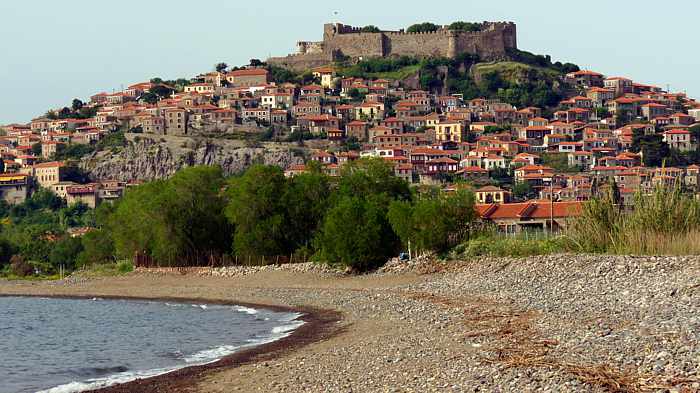
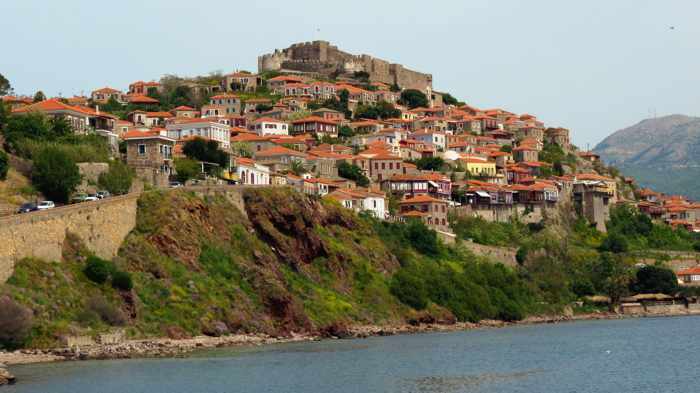
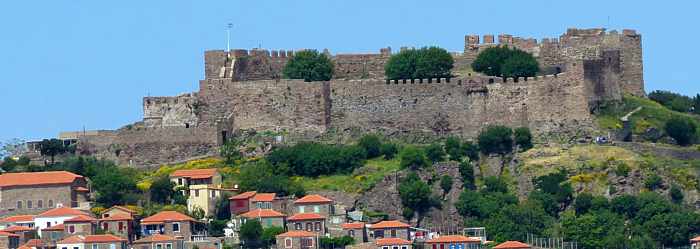
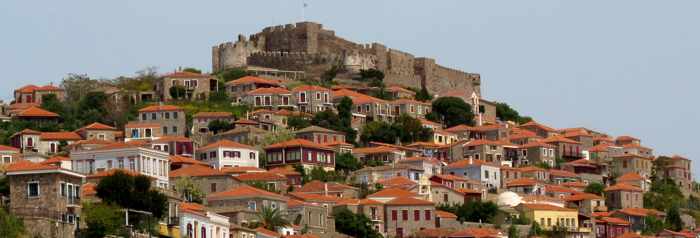
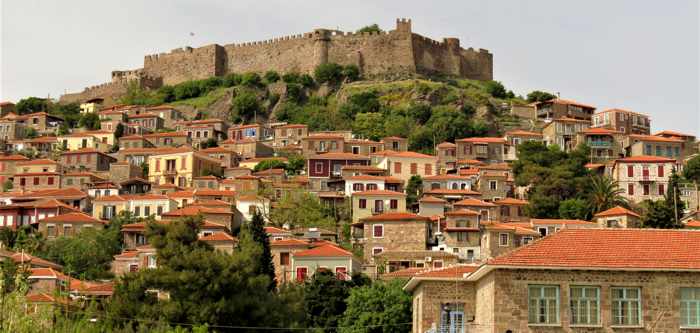
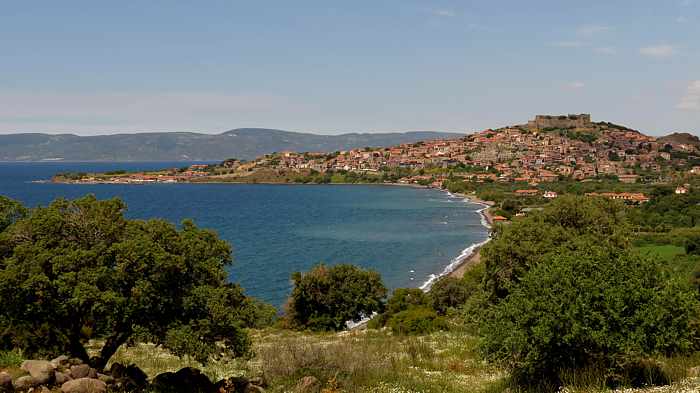
    Molyvos Castle on Lesvos island

    The Castle of Molyvos on Lesvos island

    Molyvos Castle and houses in the town of Molyvos on Lesvos island

    The Castle of Mithimna dominates views of Molyvos town from all directions. 


    Editor’s Note: This is the third instalment of my Moments in Molyvos series of photo reports from our 8-day visit to Molyvos (also known as Mithimna) in spring 2019. Part 1 featured photos of sights along the main commercial road and harbourside, while Part 2 contained pictures from walks in the town’s traditional market, and on the hillsides below the castle.


    It’s the biggest, most important and most visible monument in Molyvos, so of course we had to pay a visit to the Castle of Mithimna during our  first-ever Lesvos island holiday in late April 2019.

    Nearly 650 years old, the castle occupies a hilltop location that has been historically significant for more than 2,500 years. According to a leaflet published by the Ephorate of Antiquities of Lesvos, an ancient acropolis stood on the site from around the 5th Century B.C. until sometime during the 6th Century A.D., when the Byzantines built a fortification in its place. The Venetians conquered the  fort in 1128, but from 1204 to 1287 it was occupied by Baldwin II of Flandre.  At the end of the 13th Century, the fortress came under Catalan control; however, much of the structure was destroyed when the Genoans seized the stronghold early in the 14th Century.  In 1373, the Genovese Francisco 1 Gateluzo ordered the reconstruction of the castle, and the Genoans controlled it until the Ottomans took occupation of Lesvos in 1462. The Ottomans made repairs and additions to the structure in the 15th and 17th Centuries, but the form of the fortress — an irregular trapezoid shape with 10 towers and two strongholds — has remained essentially the same to this day.

    Further historical background information is available on the Molyvos/Mithimna Castle page of Odysseus, the official website of the Greek Ministry of Culture and Sport. The link contains two pages of historical and descriptive information, and while it’s available in Greek only, you can use an online translation program to read it in English or other languages. Additional information, along with maps and a video, on the Castle of Mithimna page of the Kastrologos Castles of Greece website.

    To reach the castle from the main road in Molyvos, we had the choice of walking or driving to the top of the rocky hill. We preferred to hoof it, which meant huffing and puffing our way up dozens of flights of steps on the steep hillsides below the castle. It sounds like an arduous trek, but it’s actually a great opportunity to explore some of the scenic residential neighbourhoods of Molyvos en route. (You can see what these areas look like in Part 2 of this series). 

    Admission to the castle cost only €2 per adult in April 2019.

    This video by Yiorgaks takes you on a scenic flight over Molyvos, providing excellent views of the castle and upper town areas of Molyvos, and beyond


    Please click on the link below to turn to page 2, where I have posted our photos of the castle (inside and out) and its views.

    CONTINUED ON PAGE 2
  • Moments in Molyvos Part 2: Exploring the old market and hillsides below the castle

    Share

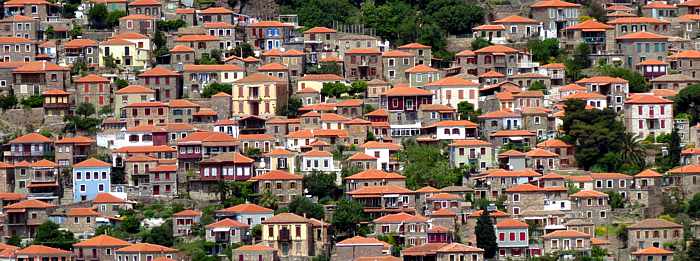
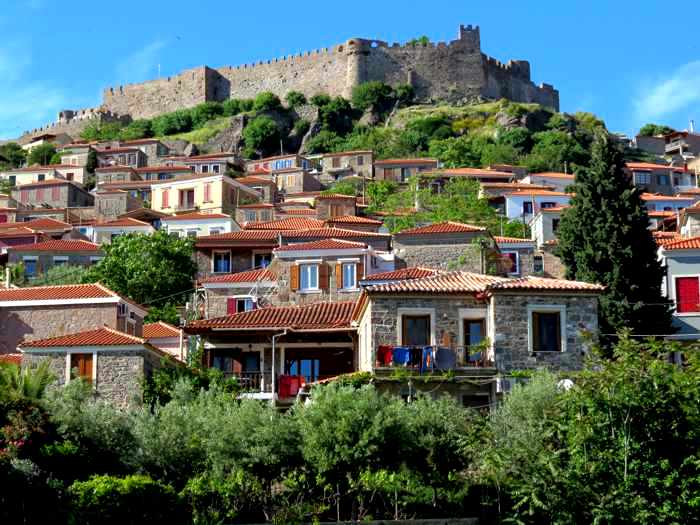
    Houses on the hills below the Castle of Molyvos on Lesvos island

    Even though it meant climbing up and down hundreds of stone steps, we couldn’t resist exploring the residential districts that line the steep slopes beneath Molyvos Castle. 


    My first Moments in Molyvos post included of photos we shot, during our spring 2019 vacation, of sights along on the town’s main road and harbour. 

    In this instalment, we venture uphill to explore the residential areas situated on the steep slopes that descend from the hilltop Castle of Molyvos to the main road. Photos in this collection include elegant stone houses, villas and hotels; four of the town’s major churches; shops and restaurants lining the cobblestone lanes of the historic market district; a lovely pine-forested park; the municipal cemetery; and occasional scenic views from the hillsides. We will visit the castle in Part 3.


    buildings cling to the steep hills below the Castle of Molyvos on Lesvos

    Tile-roofed stone buildings, many of which are centuries-old, cling to the steep hills below the Castle of Molyvos. In this post, we enter the maze of lanes and steps between the buildings to take a closer look at what’s there.


    Please click on the link below to continue the photo tour of Molyvos. 

    Page 2 contains pictures from our walkabouts in the town’s traditional market and surrounding neighbourhood, while

    Page 3 features photos of our walks on the hillsides below Molyvos Castle.

    Page 4 has pictures from our walks on the hills northwest of the castle, high above the harbour.

    CONTINUED ON PAGE 2
  • Top Greece travel reads of 2019: Greek food and wine

    Share

    Screenshot of Aegean Blue Magazine Issue 80 article about Vegan food in Greece

    “Long before it became a fashionable trend and part of a new philosophy, dishes without any meat or animal products were a fundamental part of Greek cuisine, and they remain so today,” says the introduction to an Aegean Airlines in-flight magazine article about vegan food.


    Feta. Greek Yogurt. Plant-based cuisine. Local Greek Island specialties. Wine bars in Athens. Vineyards open to visitors. These are a few of my favourite things in Greece, and they’re also the subject of magazine and newspaper articles I found particularly informative and instructive to read in 2019.  If you love food and wine yourself, and have a trip to Greece in your sights for 2020 (or later), the publications I spotlight in this post will give you an advance taste of the culinary and oenophilic delights you can plan to experience.

    The articles I have selected as best reads for 2019 cover some topics that interest me personally, and others that will be useful to people who have emailed me or asked questions on social media or online travel forums that I regularly follow, like the Greece forum on TripAdvisor.

    For instance, there’s a question that has become increasingly common in the past couple of years: “Will I be able to find vegan food & restaurants in Greece?” The answer: “Absolutely!” Brand-new restaurants specializing in vegan cuisine have been popping up in Athens, Mykonos and other major tourist destinations in recent years, while many existing eateries have been adding a range of vegan dishes to their menus to meet rapidly rising customer demand. But even in off-the-tourist-path places, travellers won’t have any trouble finding delicious meals that haven’t been prepared with meat or animal products.

    As writer Nana Daroti notes in the article Vegan: Made in Greece, which starts at page 110 in Issue 80 of Blue, the Aegean Airlines on-board magazine,  Greeks are devoted to vegetable dishes known generally as ladera, and which can be found everywhere from “summer seaside tavernas to mountain retreats.”

    “Olive oil, vegetables, beans and grains play leading roles in Greek recipes, not because they’re fashionable, but because they’re encoded in the Greek DNA,” Daroti explains.

    For me, a far more difficult challenge than finding vegan food is shopping for wine in Greece, and not just because the labels on many bottles are written only in Greek.  Since we’re not familiar with local varietals and vineyards, we can never be certain what might suit our palates, and often wind up choosing a bottle at random and hoping we like it. We’ve found some pleasurable hits that way, but also some sorry misses. Happily, buying wine should be considerably less confusing on future holidays thanks to Wine Plus Magazine, which devoted its 2019 summer edition (Issue 57, pictured below) to all things a visitor needs to know about Greek wine.

    In a welcome message, Editor Maria Netsika says the issue takes readers on “a journey through the wines of Greece … a travelogue to pleasure.” The Wine Plus trip itinerary includes the regions of Thrace, Macedonia, Epirus, Thessaly, Central Greece, the Peloponnese, Aegean islands, Ionian islands, and Crete, and visits not only the country’s leading vineyards, but also lesser-known wine makers. For each region, the magazine suggests “must try” and “must buy” local cuisine and food products, and provides directions to vineyards and wineries to help visitors plan their “oenotourism stops” in whatever area of Greece they may be travelling. Directories highlight specific regional wines, and conveniently include photos of the bottles.

    Cover of issue 57 of The Wine Plus Magazine special issue on Greek wines

    The Summer 2019 edition of The Wine Plus Magazine is a veritable encyclopedia of Greek wine, packed with everything you need to know about Greek grapes, vineyards, wine regions, production, and more.  


    Please turn to page 2 to see more of my favourite articles about Greek food, wine and beverages from 2019.

    CONTINUED ON PAGE 2

  • 20 alluring, authentic and quieter alternatives to the major tourist islands in Greece

    Share

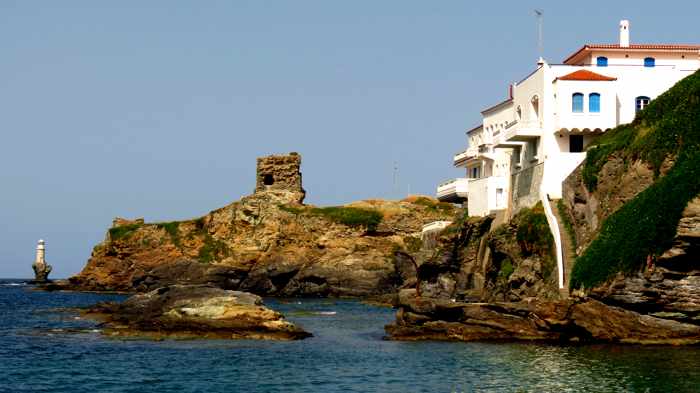
    Tourlitis lighthouse ancient Kastro and mansions of Chora on Andros island

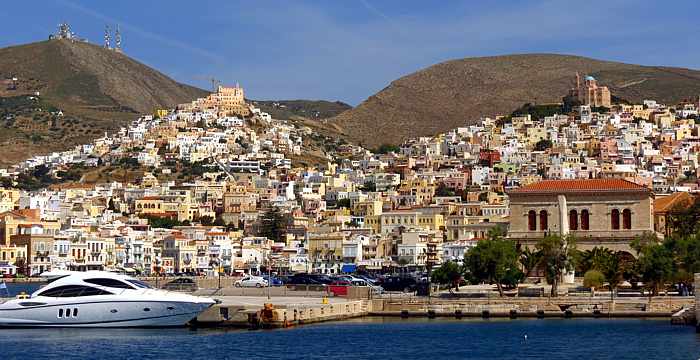
    Port city of Ermoupoli on Syros island

    Views of the Tourlitis lighthouse, the ancient Kastro ruins, and mansions overlooking the seaside at Chora on Andros (top photo); and the stunning port city of Ermoupoli on Syros (bottom). Andros and Syros are among 20 islands Greece Is magazine recommends as alternatives to crowded mainstream places like Mykonos and Santorini.


    It’s understandable why many people planning a first-time trip to the Greek Islands quickly feel overwhelmed by the task of arranging their itineraries — there are so many isles to choose from, and all of them look and sound amazing based on pictures and descriptions in brochures, magazines and online travel sites.  How can you possibly tell which ones would be the best choices for what you would like to see and do during your vacation?

    The dilemma of selecting ideal destinations doesn’t get much easier for repeat island hoppers, either, if they’re hoping to discover someplace new rather than revisit isles they have already experienced.

    I had expected my bucket list of must-see islands would gradually shrink after each trip to Greece, but it keeps growing longer. Whenever we visit a dream destination, locals and fellow travellers tell us wonderful things about nearby places we haven’t considered before, and those inevitably get added to the list. 

    I’m resigned to the reality that I won’t get to see everything I want unless I live well past 100!

    But thanks to a helpful article published by the Greece Is magazine and website on January 3,  I will be able to quickly narrow down my options whenever I’m seeking islands that aren’t super-commercial or bursting at the seams with thousands of tourists and cruise ship daytrippers (something we’ve been striving to do on recent holidays!). 

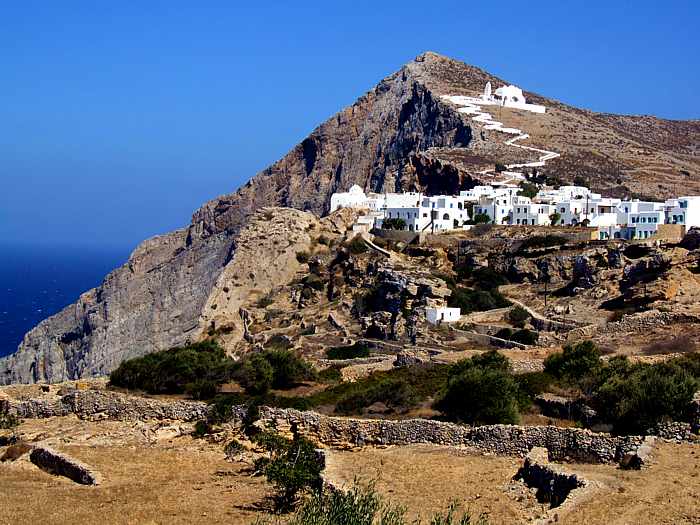
    view toward Ano Meria and the Panagia Church on Folegandros island

    A view toward the village of Hora and the stunning clifftop Panagia Church on Folegandros, another island recommended as a great alternative to the busiest tourist isles


    In the feature story 20 Alternative Islands to visit in 2020, writer Paulina Kapsali has profiled “off the tourist-beaten path” islands that will be ideal for avoiding the crushing summer crowds of perenially popular tourist magnets like Mykonos, Santorini, Rhodes, Kos and Corfu.

    Each of her selected destinations will offer a quieter, less busy and more authentically Greek island experience than any of the mainstream tourist draws, “whether you’re looking for a typical Cycladic island to enjoy without the hordes of tourists, a historically significant location that none of your cultured coworkers have heard of, or a remote place to spend days on the beach without the pressure of any human interaction” she says. 

    The 20 islands that Kapsali singles out can be found in five distinct regions of Greece:

    ♦  the Lasithi area of eastern Crete, and Gavdos island south of Crete;

    ♦   the Northeastern Aegean islands of Limnos, Psara, Samothraki and Skyros;

    ♦ the Dodecanese islands Astypalea, Halki, Karpathos, Kastellorizo and Kasos;

    ♦  Kythira island south of the Peloponnese; and

    ♦ the Cyclades islands Andros, Folegandros, Kea, Kimolos, Kythnos, Sikinos, Syros and Tinos.

    The article includes a photo and brief description of each island, transport options to reach them, and links to any feature stories that Greece Is has published on that particular place. 

    We have been to five of the spots Kapsali recommends  — Andros, Astypalea, Folegandros, Syros and Tinos — and I have illustrated this blog post with photos that we took on each of those islands.  Most of the other islands she suggests are already on our list for future travel.

    Click here to read the full write-up of what Kapsali calls “20 island destinations you’ll be the first of your friends to visit in 2020.”

    And if you haven’t already done so, be sure to bookmark the Greece Is website while you’re reading the article. I find it’s a superb resource for information about travel, culture and gastronomy in Greece, and I check it regularly for ideas, inspiration and advice.

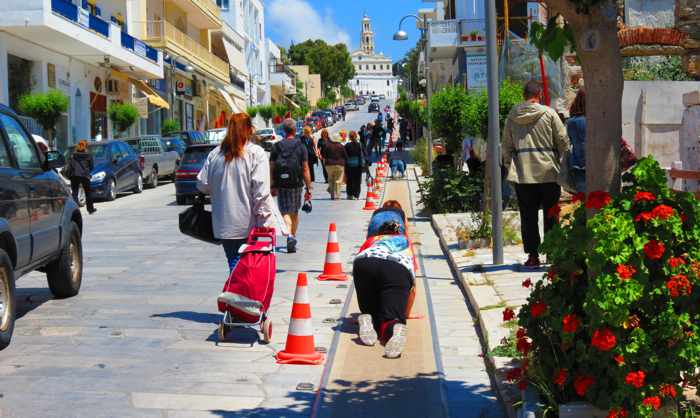
    pilgrims crawling uphill to Evangelistria Church on Tinos island

    Pilgrims crawl a long uphill road to the Holy Church of Panaga Evaggelistria (visible at the top of the picture) on Tinos island


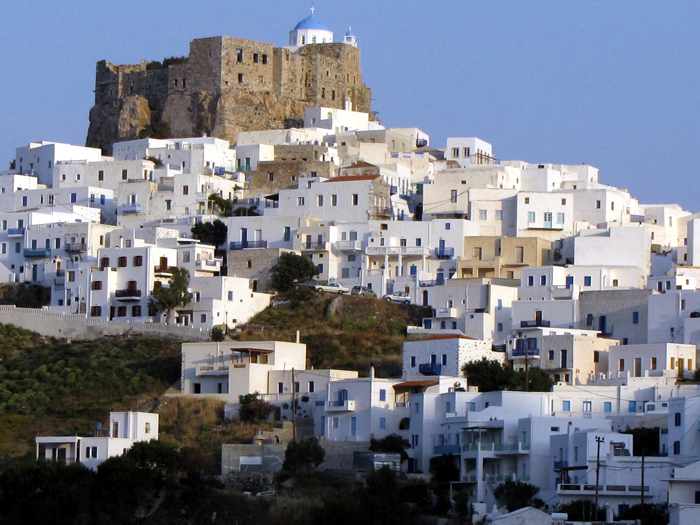
    Chora and the castle on Astypalia island

    Chora and the imposing castle on Astypalea island 


  • My favourite videos of Greece from 2019

    Share

    My Sifnos by Nikos Panou is my favourite video of 2019; it makes me smile and feel good every time I watch it. Panou deftly captures the essence of an amazing Greek holiday experience — the pure joy, wonder and exhilaration of exploring a beautiful destination (in this case, Sifnos island) and discovering the delights of its people, food, culture and atmosphere.


    You know that December is drawing to a close when you see just about every media outlet — TV and radio shows, newspapers, magazines and websites — presenting lists and rankings of “the best” and the “top moments/ memories/ things/ whatever” of the year.  Seeing “best of 2019” features everywhere I looked inspired me to compile one myself this week while I was organizing the many hundreds of bookmarks I had accumulated on my web browser this year.

    Rather than move links for my favourite videos into folders where I probably would forget all about them, I’m posting them here for my readers to enjoy (and to give me an easier way to find them for repeat viewing or future reference).


    In Greece Story –The Best Places in Greece? Pawel Worsztynowicz captures striking aerial scenes from 28 beautiful places in Greece, including Athens, Sounion, Crete, Corfu, Meteora, Halkidiki, the Peloponnese, Skiathos, Skopelos, Symi, Santorini, Thirasia, Ios, Kos, Eubea, Rhodes and Zakynthos.  (Notes accompanying the video on YouTube provide a chronological list of locations shown.) Pawel compiled the film following nearly a year of travels across Greece, so you can just imagine the stories he can tell about the places he visited.


    Out of the countless clips I have seen in the past 12 months, I have selected just over two dozen to highlight in this post. I liked these best of all either because they show sights and scenes familiar to me from our own past vacations, or because they depict destinations on my travel bucket list. All were released or published sometime during 2019, and none run longer than 10 minutes.

    I have organized the clips into alphabetic order starting with the videos of Amorgos island, below, and continuing on page 2. Included are films of: 

    ♦ Andros

    ♦ Athens

    ♦ Corfu

    ♦ Crete

    ♦ Donoussa

    ♦ Hydra

    ♦ Ikaria

    ♦ Ios

    ♦ Karpathos

    ♦ Kavala

    ♦ Lesvos

    ♦ Meteora

    ♦ Milos

    ♦ Monemvasia

    ♦ Mykonos

    ♦ Patmos

    ♦ Samos

    ♦ Santorini

    ♦ Skopelos

    ♦ Syros

    ♦ Vatheia in the Peloponnese

    I love The Island‘s dramatic cinematography, which superbly captures the mountain, coast and village scenery on Amorgos. This film by Igor Popović also contains excellent views of the incredible Chozoviotissa Monastery, built against the face of a cliff high above the sea.


    I thoroughly enjoyed Amazing Amorgos, Greece, a delightful and entertaining aerial film in which Joerg Daiber captures the island’s magnificent sights and scenery using time lapse and tilt shift photography techniques. 


    This film by I Viaggi Di Michele is narrated in Italian; however, you don’t need to speak or understand the language to enjoy the beautiful Andros scenery. Sights and locations shown in the 11.5-minute video include Chora, the Tis Grias castle, Tis Grias to Pidima and Achla beaches,  the Tourlitis lighthouse, Korthi Bay, Batsi village, the Monastery of Zoodochos Pigi and the Panachrantos Monastery, and the Pithara waterfalls. 


    If there are any videos from 2019 that you enjoyed, but don’t see featured in this post, feel free to post their links in the comments section so other readers and I can check them out.


    CONTINUED ON PAGE 2
  • Skiathos, Lefkada & Paxos top Conde Nast list of best Greek islands to visit in 2020

    Share

    This photo gallery video profiles Conde Nast Traveller magazine’s 23 choices for best Greek islands to visit in 2020


    Thinking of taking a holiday on a Greek island in 2020, but aren’t sure where to go? To help you decide, the U.K.’s Conde Nast Traveller magazine has compiled a list of what it believes are the 23 best islands to visit (out of more than 200 possible choices).

    Selected by “regular isle-hopper Rachel Howard,” The Best Greek Islands to Visit in 2020 feature article rates Skiathos as #1, Lefkada #2 and Paxos #3.

    Skiathos is described as the smallest but most popular of the Sporades islands, and as a favourite with families for its “baby powder-soft sandy beaches and laid-back vibe.” 

    “Lefkada’s main town, flattened by an earthquake in the 1950s, won’t take your breath away, but those famous cliff-backed beaches, Egremni and Porto Katsiki, sure will,” the article says of its second-place selection.

    Meanwhile, “Paxos packs a big punch … for its electric blue sea and three dinky harbour towns, each one so pretty it’s impossible to pick a favourite,” Howard writes.

    Her Top 23 round-up includes a scenic photo from each destination, two or three paragraphs of text describing highlight features and what each island is considered “best” for, and suggested accommodations.

    Besides Lefkada and Paxos, the ranking includes:

    ♦ four other major Ionian islands: Kefalonia, Corfu, Ithaca and Zakynthos;

    ♦ the Cyclades islands of Milos, Serifos, Amorgos, Mykonos, Santorini, Folegandros, Syros, Naxos, Tinos and Sifnos;

    ♦ the Dodecanese islands of Rhodes, Symi, Astypalia and Patmos;

    ♦ Hydra;

    ♦ Chios;

    ♦ Crete.

    The online article concludes with a gallery of 16 photos showing scenes from some of the islands. Curiously, there is a picture from Andros, even though that island didn’t win a spot in the Top 23.

    A much bigger blooper is the photo that purports to illustrate top choice Skiathos. The magazine’s photo editors mistakenly chose a picture of Elia beach on Mykonos instead of the Skiathos strand with the same name. Another photo boo-boo is a picture captioned as Petra beach on Patmos; the posted image actually shows Grikos beach.

    Below are videos I’ve selected to give some additional photographic insight into the  islands that ranked in Conde Nast’s Top 3:

    Meet Skiathos: Something for Everyone is a 6-minute film produced by Ionian & Aegean Island Holidays Ltd., the Greek National Tourism Organisation, and Ellie Patrikios


    Lefkada island 4K is a 4.5-minute video published by bikisek1979


    Discover Paxos is a 2-minute clip from Agni Travel