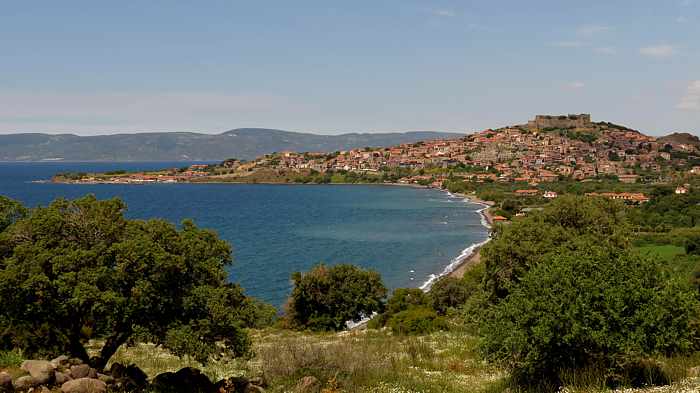
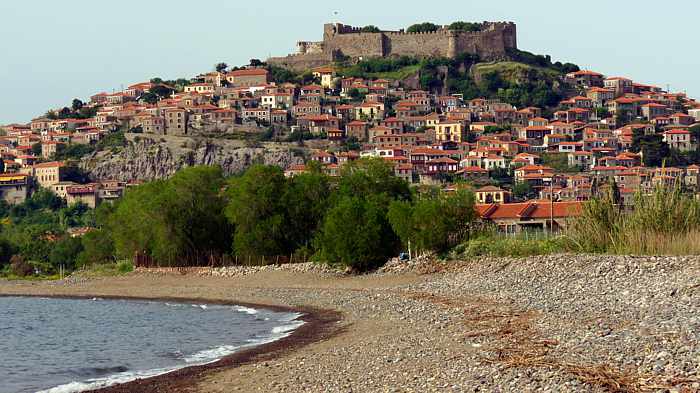
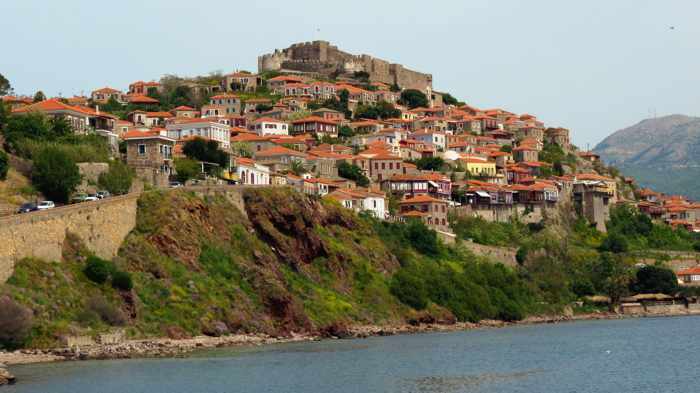
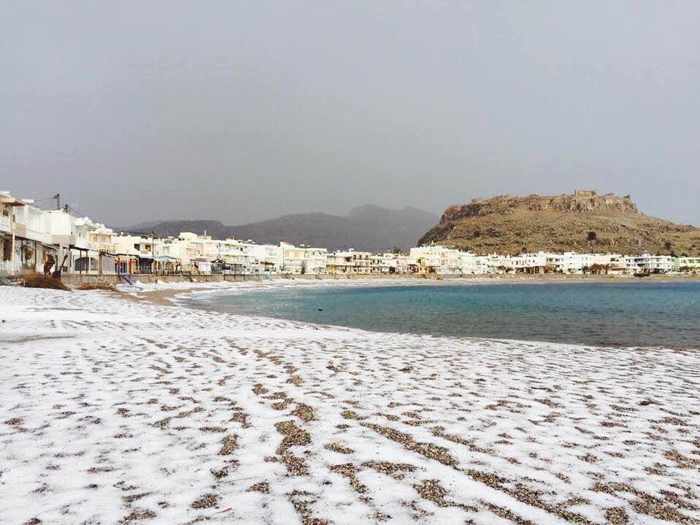
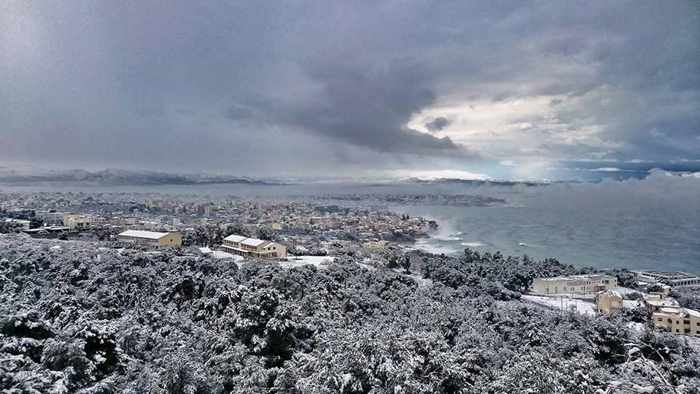
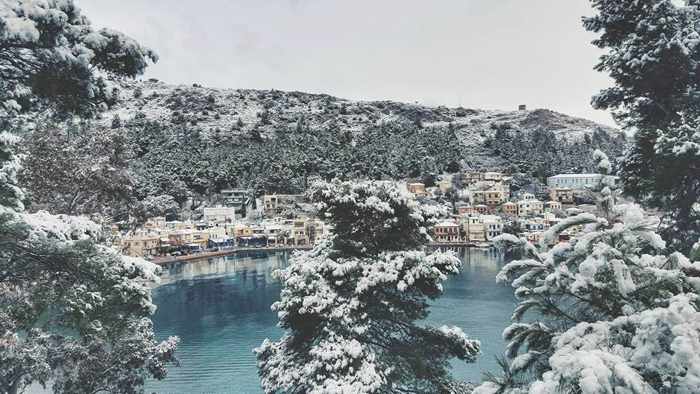
Views of Molyvos from a highway lookout point two kilometers south (top), from the local beach (center) and from the harbour jetty (bottom). Also known as Mithimna, the town is situated near the northern tip of Lesvos, and is one of the island’s premier attractions and visitor destinations.
Cobblestone streets and lanes. Elegant stone and wood buildings with red-tiled roofs. Cozy cafes, bustling bars and traditional tavernas. Charming shops, chapels and churches. A picturesque fishing boat harbour and a long sandy beach. Byzantine and Ottoman-era historical influences. An imposing hilltop castle. Lovely views of the Lesvos coastline and the Northeast Aegean Sea, plus parts of the nearby Çanakkale province of northwest Turkey. Molyvos has all this and more — everything you’d expect from a town that dates back to 700 B.C.
This year, we visited Lesvos, and spent the first half of our island holiday — 8 full days and nights — at Molyvos. Initially, we were concerned this might be too long, but friends and regular Lesvos visitors assured us we wouldn’t get bored. They were right, of course: Molyvos suited us to a T. Its sublime natural and architectural beauty, comfortable atmosphere, historic character and friendly locals quickly showed us why Molvyos has legions of fans who faithfully return year after year. Molyvos has such an alluring charm, you just can’t help but fall in love with it.
If you haven’t been to Molyvos before, my collection of photos on page 2 of this post will give you a good impression of what you could expect to see while wandering around this marvellous town.
Please click on the link below to begin your tour of Molyvos!
Greece gets front-cover prominence on the cover of the Lonely Planet newsstand issue for May 2018
The secret’s out: I had a strong hunch I might find something interesting to read about Greece when I walked into the magazine department at my local bookstore yesterday. When I turned into the travel section, my premonition instantly proved accurate — standing at eye level on the front shelf was the latest edition of Lonely Planet, its cover graced with a photo of a blue-roofed Greek Orthodox church illustrating its “Secret Greece” feature story.
In another pleasant delight, I realized I had seen that very same church in person — on Astypalea, during our island hopping holiday in 2009.
Astypalea is one of seven islands featured in Lonely Planet’s May issue and, in another curious coincidence, the article about it recommends staying in the very accommodations where we spent several nights: Fildisi Boutique Hotel.
The magazine highlights two other islands we have been to — Hydra and Sifnos — and, in yet another surprising stroke of serendipity, spotlights four more that I had been seriously considering for our upcoming vacation: Lesvos, Chios, Ikaria and Kythera. (We have already made plans to spend our time in and within sight of the Peloponnese, but Lonely Planet suddenly has me wondering if I may have made a mistake.)
The main focus of the magazine’s Great Escape cover feature is the Northeast Aegean group of Greek islands; specifically, Lesvos, Chios and Ikaria. Stepping ashore on these particular isles “introduces olive farmers and wild honey, hidden villages and untouched beaches, and perhaps the secret to long life,” the feature story introduction says.
Reading the Lesvos profile quickly made me crave Greek cuisine, though I should have expected that given the article’s headline: “Savour the many flavours of Greece on Lesvos, from olive oil to ouzo and orange wine.”
The second feature story invites readers to “discover a centuries-old tradition of mastic cultivation and the fortress-like villages that grew rich from it” in southern Chios.
The third main article introduces Ikaria, one of the world’s unique Blue Zone locations where residents “enjoy longer lives than anyone else in Europe.”
One-page mini profiles for Astypalea, Kythera, Sifnos and Hydra appear in the magazine’s “Secret Greece” feature as examples that, “even in the well-known Greek island groups,” visitors can find “the odd place that’s little changed over the decades.” Each profile includes short thumbnail descriptions for “Why am I going?”, “Where should I stay?”, “What am I eating?”, and “What am I drinking?”
The island articles are all good reads, and just might entice you to consider the Northeast Aegean for a future trip to Greece, especially if you haven’t considered that region of the country before. (They probably will make you feel peckish for Greek food and beverages, too.)
See if you can find a copy of the magazine at your local newsstand before it sells out.
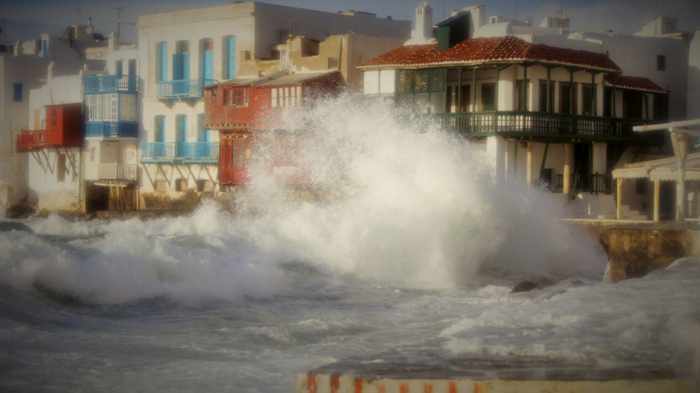
Surf sprays two storeys high as roaring waves crash ashore at the Little Venice area of Mykonos Town, flooding the entire seaside strip of cocktail bar terraces. This photo was posted on the Mykonos LIVE TV Facebook page on January 18, the day gale-force winds raged across much of Greece.
Storm scenes: When wild winter weather swept across Europe this week, Greece wound up in the path of powerful winds that pounded some places, including Syros island, with gusts reaching as high as 122 kmh — the equivalent to force 12 on the Beaufort wind scale.
The fierce winds raged relentlessly on Thursday January 18, toppling trees on several islands, damaging one of the iconic windmills on Mykonos, and preventing planes from landing at Syros airport. The storm disrupted ferry travel and shipping, too, as rough seas forced the cancellation of many sailings as well as the closure of the ports at Lavrio and Rafina. At Piraeus port, the passenger ferry Panagia Agiasou broke away from its moorings during the tempest, while waterfront areas at Mykonos Town, and Kini Beach on Syros, sustained damage from massive waves that walloped the shore.
[adToAppearHere]
Although most residents stayed indoors to avoid the incessant blasts of wind, which made walking perilous and even driving difficult, some did venture out to observe nature’s fury and photograph the stormy conditions. I found numerous pictures and videos on social media showing skies filled with massive dark clouds, and huge waves crashing onto seafronts and beaches in Mykonos, Paros, Naxos, Syros, Rhodes, Lesvos, Samos, Skyros, Skopelos, Ithaca, Paxos, Kefalonia, Nafplio, Athens and elsewhere. Many of the images showed that, even in ferocious weather, the scenic beauty of Greece’s coastal areas still stands out.
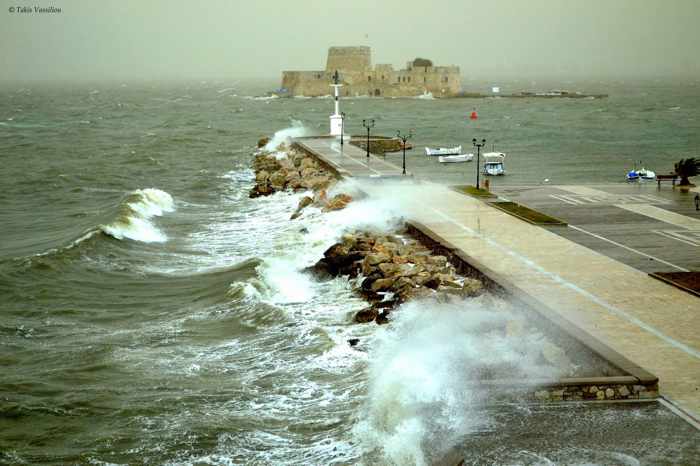
Takis Vassiliou shot this view of the Nafplio waterfront and Bourtzi sea castle, and shared the image on his Nafplio Kalimera page on Facebook
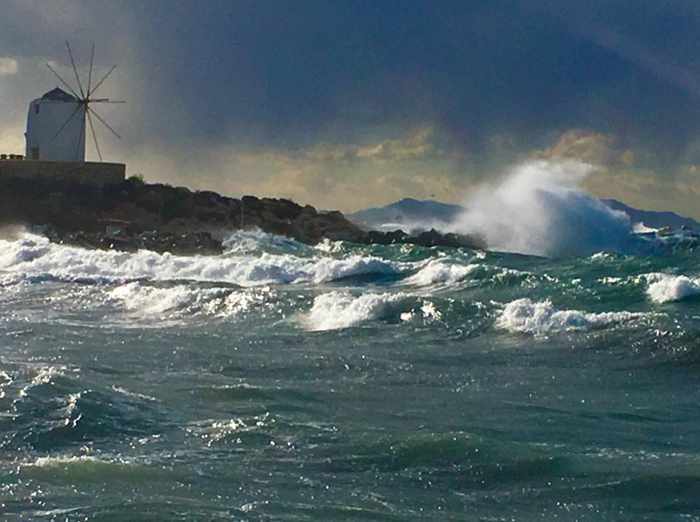
Maria Alipranti captured sunlight illuminating stormclouds and waves at the Parikia waterfront on Paros. Her photo, and more than 20 others she shot, were shared on the ΠΑΡΟΣ like page on Facebook.
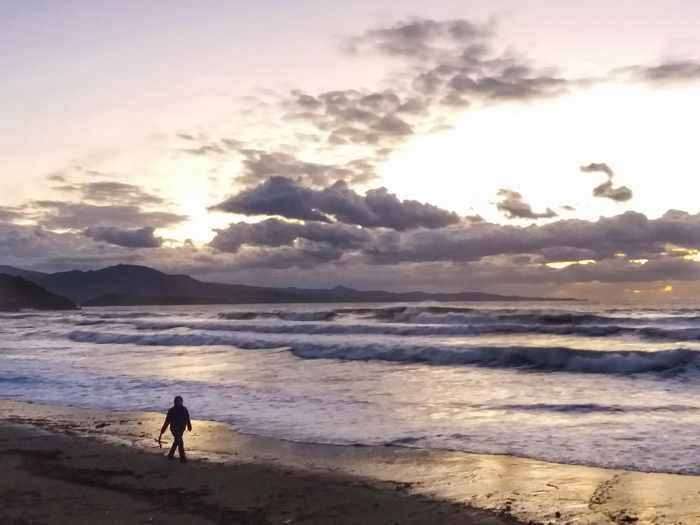
Eleonora Pouwels photographed this scene of waves, stormclouds and sunset at Psiriara beach on Lesvos
Please click on the link below to turn to page 2, where I have posted more photos and several videos that were shared on social media.
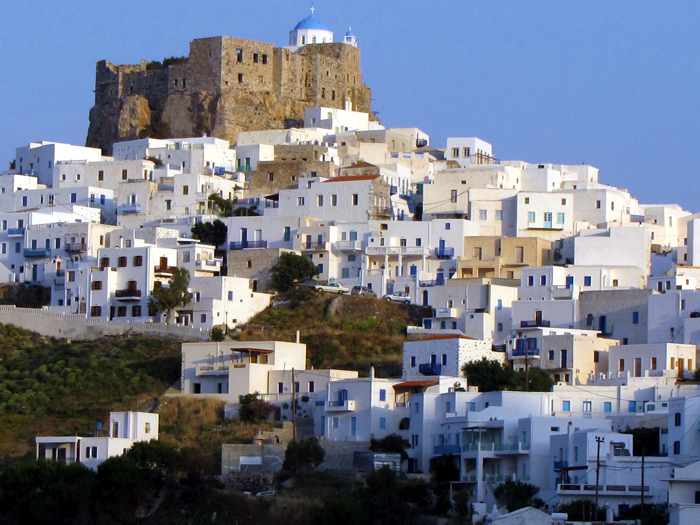
A Venetian castle towers above Chora village on Astipalea island. The quiet and unassuming Dodecanese island boasts beautiful scenery, some of which you can see in the video featured in my post Aspects of Astipalea.
Budget friendly: Are you considering a trip to Greece this summer, but wondering where you can go to avoid draining your bank account paying for food and accommodations at expensive destinations like Mykonos and Santorini? Although it’s possible to holiday on a tight budget on both those islands. as well as other high-profile destinations, there are numerous alternatives that offer great Greek holiday experiences at considerably cheaper prices. You’ll find some excellent suggestions in the article Best low budget summer destinations in Greece, published by the informative and insightful travel website HIP GREECE.
The article lists more than a dozen islands plus one mainland Greece resort area that won’t break the bank, and offers brief descriptions of highlight attractions at each place, with links to additional in-depth articles about some of the destinations.
The spotlighted destinations include:
♦ The Small Cyclades islands of Iraklia, Koufonissia (Pano and Kato Koufonissi), Donousa and Schinoussa
♦ Kythira
♦ Serifos
♦ Tinos
♦ Ios
♦ Ikaria
♦ Astipalea
♦ Lefkada
♦ Skopelos, and
♦ Parga, a picturesque coastal resort area near the town of Preveza in western Greece.
You can read the complete HIP GREECE article by clicking here.
[adToAppearHere]
We’ve been to three of the recommended islands — Astipalea, Ios and Tinos — and have had brief peeks at the Small Cyclades during port stops on a ride from Amorgos to Naxos on the Express Skopelitis ferry. We would agree that all are good choices for travellers visiting Greece on a budget. We haven’t yet been to the other destinations cited by HIP GREECE, but several friends have told us Kythira, Serifos and Ikaria are wallet-friendly, while others have said the same for the Small Cyclades. However, we were surprised that Naxos wasn’t mentioned — we have found it to be the most reasonably priced island of all we have been to so far and it remains one of our favourite places to visit in large part for that reason. (See my article Our Top 15 reasons to visit Naxos for further information about that wonderful island).
Keep in mind that the main tourist period in Greece runs from late April until early October, with July and August being peak travel season. July and especially August also happen to be the most expensive months to visit, so if you’re on a limited budget, try to schedule your vacation for April, May, June, late September or early October, when prices tend to be much lower. Hotel rates usually skyrocket for August, and hostel, camping and cheaper basic accommodations typically tend to book up early in the year. If you can only travel during peak season, make arrangements for your accommodations as soon as possible to secure the lowest prices.
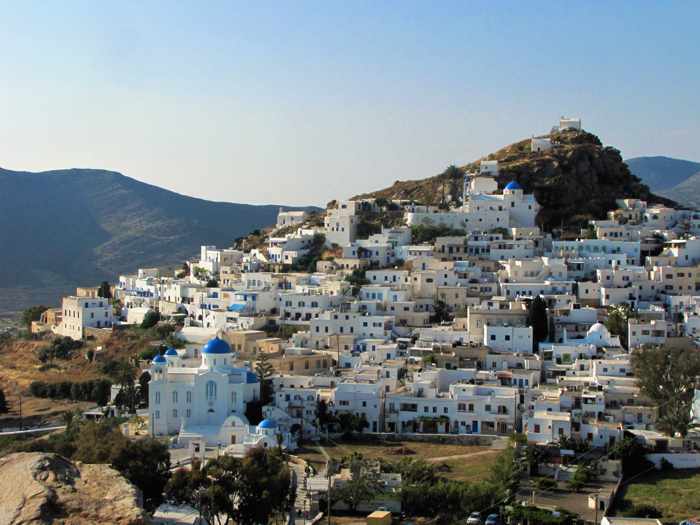
Chora village on Ios is chock full of restaurants and bars, while the island is blessed with numerous gorgeous beaches including Mylopotas (which is walking distance from Chora) and Manganari.
Η χιονισμένη Ακρόπολη από ψηλά (The snowy Acropolis from above), is a 1-minute video filmed for the Eurokinissi news agency. It shows drone views of the Acropolis, the Parthenon and nearby historic sites following a light snowfall in Athens in early January 2017
Winter wonders: I previously published a 2-part post containing dozens of photos of winter scenes from Greece — pictures that had been shared on social media after severely harsh northern weather systems brought freezing temperatures and snowfalls to many parts of Greece, including islands, the Peloponnese, and the mainland. Dozens of winter scene videos have been published online, too, and in this post I’m sharing some of the many films that I have enjoyed watching.
On this page you’ll find films showing breathtaking aerial views of snowy Athens, Kastoria, Kavala, Ioannina and Nafplio. The videos on page 2 feature stunning storm and après-snowfall scenes from Alonissos, Skiathos, Skopelos, Sparta, Thessaloniki, Volos, Evia, Chios, Crete, Naxos, Lake Plastiras near Karditsa, and more of Athens and Nafplio.
[adToAppearHere]
International news reports about the snow and cold weather that struck Greece and other European countries earlier this month, along with the scores of snow photos and videos shared on Facebook, Instagram, Twitter and YouTube, have surprised many people around the world who don’t realize that Greece gets winter weather, too.
Many mistakenly believe Greece enjoys balmy temperatures and sunny skies year-round, so some people have been absolutely astounded to see pictures showing snow on beaches, monuments and villages they have visited during summer trips to Greece. (In the various Greece travel forum pages on TripAdvisor, I regularly see posts from people who are planning Greek island holidays for winter months because they believe it’s a good time to visit for swimming, sunbathing and beach parties. I would love to see the looks on their faces when they see videos like the ones in this post — or actually show up at a Mykonos beach in mid February!)
[adToAppearHere]
While the winter scenery in these videos is amazing to see, it simply confirms that Greece looks marvellous and is well worth visiting even in the off season. The island and mainland landscapes, the historic ruins and monuments, and the cities, towns and villages are breathtaking all year long.
If you can’t make it to Greece in spring, summer or autumn, why not consider a winter trip? You’ll find the scenery is just as lovely as it is in peak travel season, the locals are warm and friendly, and best of all — there are no crowds.
Studiotrasias created this superb aerial film of gorgeous winter scenery at Kastoria
These drone views of Kavala were filmed by Tetracopterakias after the city endured three consecutive days of snowfalls
Nikos Roussis captures the winter beauty of Ioannina in this 4.5-minute film
Captivating aerial views of Nafplio, filmed by Kostas Ko
Please click on the link below to view more videos on page 2 of this post.
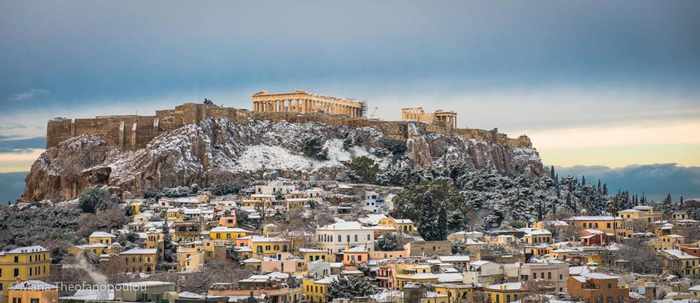
Maria Theofanopoulou captured this beautiful photo of the snow-dusted Acropolis in Athens on the morning of Tuesday January 10. She shot the image from a rooftop vantage point at the Electra Metropolis Athens hotel.
Surreal snow scenes: Since the Christmas holiday period, I have been fascinated viewing hundreds of images of stunning winter scenery that people throughout Greece have been sharing on social media. Although the news feed for the MyGreeceTravelBlog Facebook page is usually filled with breathtaking photos of beautiful beaches, stunning seasides, charming villages and historic monuments, I have been surprised to see that familiar places look almost completely different under dark, stormy skies and blankets of crisp white snow.
At times the pictures of snow-covered beaches, ruins and villages in Greece have seemed surreal to me, especially since there is almost no snow anywhere near my home in downtown Toronto. Scenes of streets knee-deep in fluffy soft snow are something I would expect from most places in Canada this time of year, but not on Greek islands like Skiathos, Skopelos or Evia!
[adToAppearHere]
I find the images particularly impressive because they show how spectacular Greece looks even in extremely severe weather during a season few tourists get to see and experience.
If, like me, you have only visited Greece during spring, summer or fall, you probably will be pleasantly surprised to see just how striking and amazing various regions looked during the cold snap that has gripped much of the nation since Christmas.
Below are photos of wintry scenes in several popular Greece destinations, followed on page 2 of this post by dozens of photos from Athens, Rhodes, Chios, Evia, Skiathos, Skopelos, Skyros, Sparta, Mystras, Lakonia, Corinth and Ioannina. Part 2 includes photos from Crete, Nafplio, Epidaurus, Thessaloniki, some of the Cyclades and Ionian islands, plus various locations in the Peloponnese and mainland Greece. With links to scores of additional snow pictures and videos, this two-part feature is one of the most comprehensive collections of Greece winter storm photos you’ll find in one spot.
(Please note that I have done my best to credit the original photographers for each image. However, it wasn’t always possible to trace back all sources. if you notice an incorrect attribution for any of the pictures, please let me know and I’ll be happy to correct the photo credits.)
So bundle up and enjoy a photo tour of winter wonderlands in Greece!
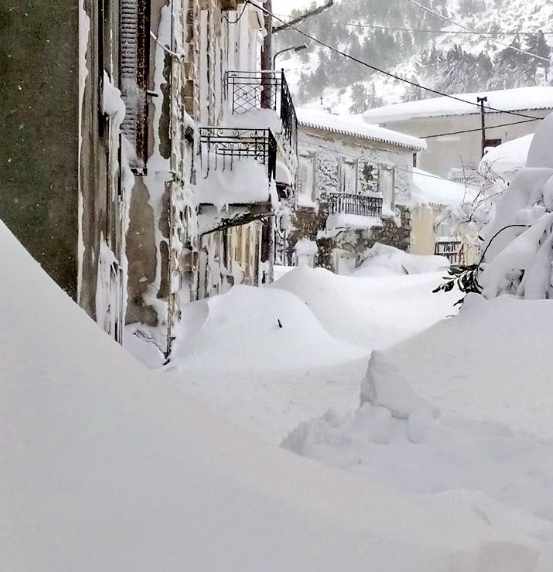
Evia island (also spelled Evvoia and Euboea) was one of the places hardest-hit by snowfalls, with some regions receiving nearly 2 meters of white stuff. Constantinos Mg photographed this snow-filled street in Kymi.
It looks like a scene from the Arctic, but this actually is Mandraki beach on Skiathos, photographed by Nikos Mavropoulos
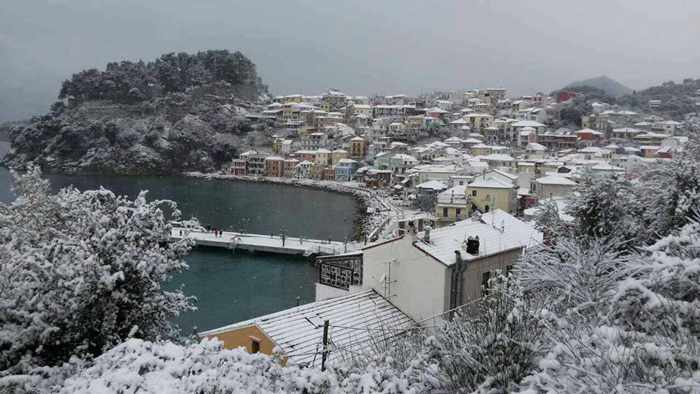
Parga looks pretty all dressed in white. This image of the popular seaside resort in northwestern Greece was shared on the Meteo Gr Facebook page
.
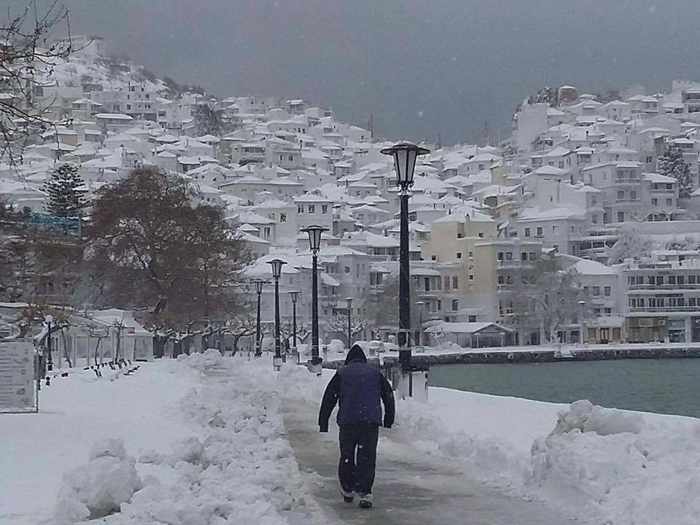
This photo of snow on Skopelos island has been widely shared on social media, including the Meteo Gr page on Facebook
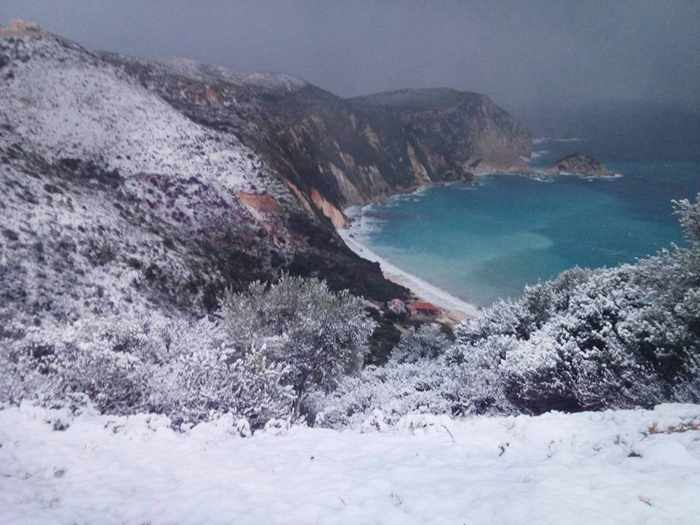
Myrtos beach on Kefalonia after a snowfall. The image appeared on the Amazing Greece / Incroyable Grèce Facebook page.
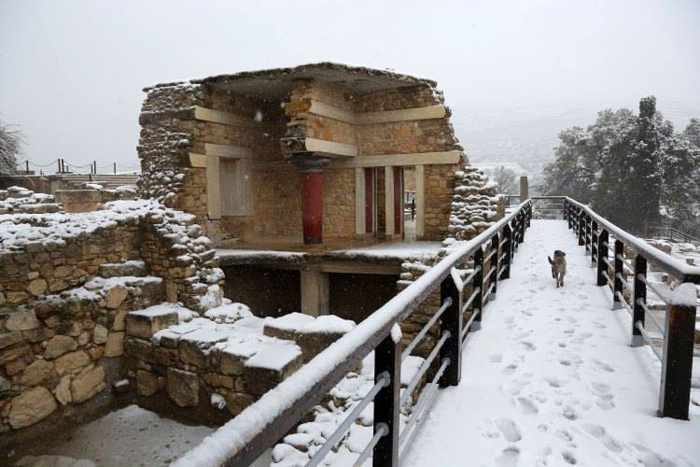
Snow blankets the Palace of Knossos near Heraklion, seen in a photo from the My Crete Guide page on Facebook
A Christmas Eve view of Charaki beach on Rhodes, seen in an image shared by the Rhodes Through My Eyes page on Facebook
Léandrou Simeonidis captured this breathtaking scene as stormclouds filled the sky above the city of Chania on Crete
It looks like a scene from a Christmas card, but it’s a photo by George Zournas showing Lagada village on Chios island after a snowfall
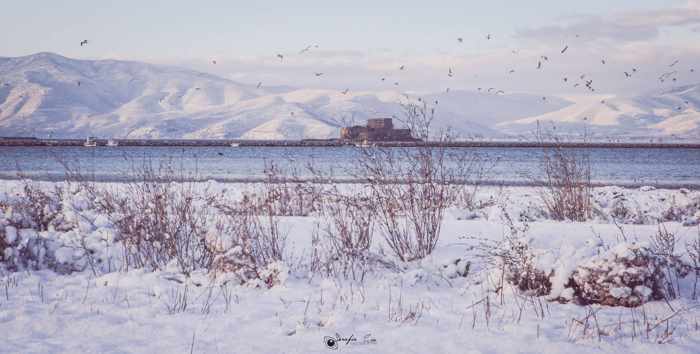
The Bourtzi sea castle at Nafplio is surrounded by snowy mountains and white landscapes in this image by Σεραφείμ Ζίου
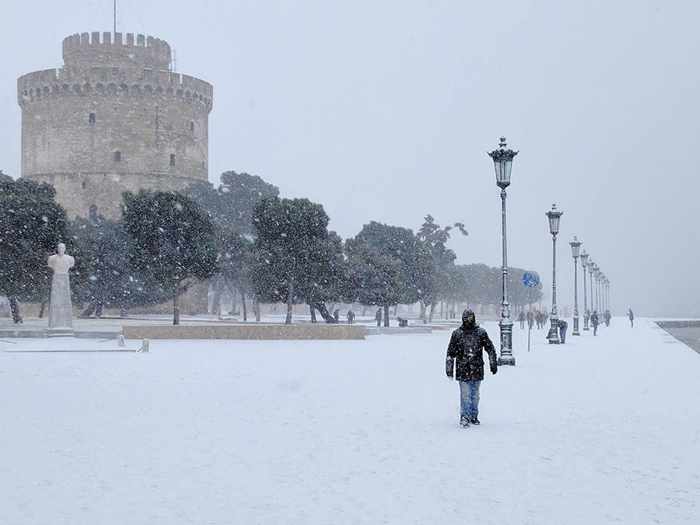
Αλέξανδρου Παπαδόπουλου took this photo of the Thessaloniki waterfront during a snowstorm
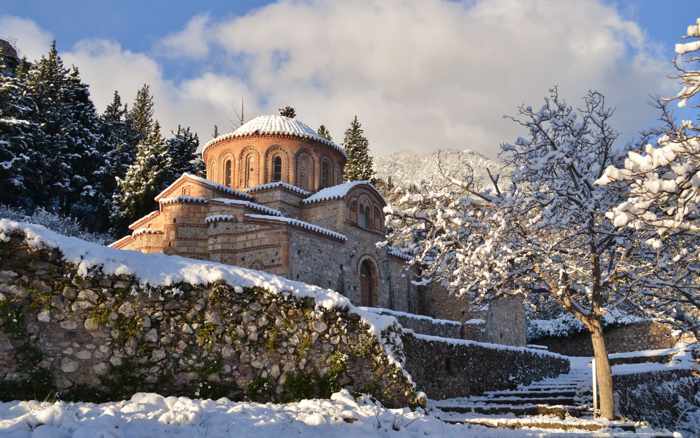
Sunshine illuminates one of the churches at Mystras, a UNESCO World Heritage Site near Sparta. The image appears in a collection of Mystras snow photos published on the Evrotas blog of landscape photography from the Sparta region.
Please click on the link below to view more photos on page 2 of this post.
Kokkari Village 2016 features breathtaking bird’s eye views of the scenic seafronts and harbour at Kokkari village on Samos
Picture-postcard perfect: We’ve got a lot of happy memories from our trip to Samos six years ago, and some of the best are from our visit to Kokkari one afternoon.
We had rented mountain bikes in Vathy for a day, and cycled to Kokkari to get a first-hand look at the village mainly because an online acquaintance had recommended it as a “must see” spot on the island. She warned me that it’s “super-popular” with tourists, but said we would love it nonetheless because “it’s just so gosh-darned pretty and picturesque — everything looks like a picture on a postcard.”
She wasn’t kidding when she cautioned us about the “touristy” side to Kokkari — we couldn’t believe the astounding number of bar, cafe and taverna signs we saw on the popular dining strip along the village harbour. (Take a quick peek at the photos in my posts Kokkari’s waterfront restaurant row, and What’s cooking in Kokkari? and you’ll see what I mean.) Although the signage suggested there might be cutthroat competition between the village’s dozens of eateries, we found Kokkari had a surprisingly laid-back atmosphere, and we didn’t encounter any of those annoying restaurant touts who try to coax and cajole people into patronizing some establishments on Naxos, Kos and Mykonos.
Gorgeous scenery and photo opps galore
My friend was absolutely right about the village’s picture-postcard appeal, too. There was gorgeous scenery all around, and photo opportunities galore — striking beach and coastal scenery, quaint lanes and alleys, the colourful village harbour, and the impressive backdrop of Mount Karvouris. We’ll certainly pay Kokkari another visit next time we’re on Samos.
The video I posted above, which was produced by the aerial photography firm Reel Drone, shows much of the village and coastal scenery that we found so captivating back in 2010 — even though it is, of course, filmed from a completely different perspective than tourists get to see while strolling around the area.
If you have been to Kokkari before, the video will probably bring back pleasant memories of your own. If you haven’t visited it yet (or haven’t even been to Samos), I’m sure you’ll enjoy the 2-minute aerial tour and find it inspiring for future holiday planning.
Kokkari website links
And just in case you might be thinking about a trip to Samos, the people at Reel Drone have offered the following helpful links to online information about Kokkari:
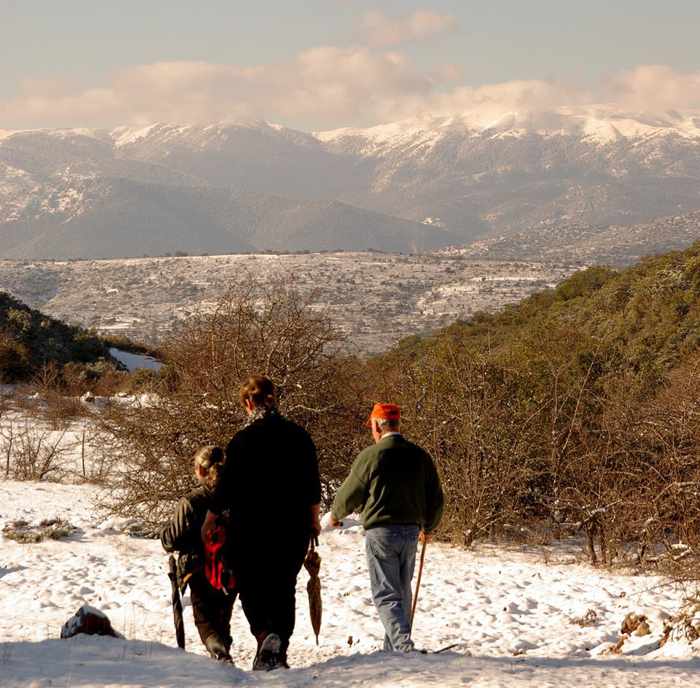
A light layer of snow on the ground didn’t deter participants in a Greece on Foot walking tour from enjoying the awe-inspiring mountain and valley scenery in the Arcadia region of the Peloponnese on January 24 …
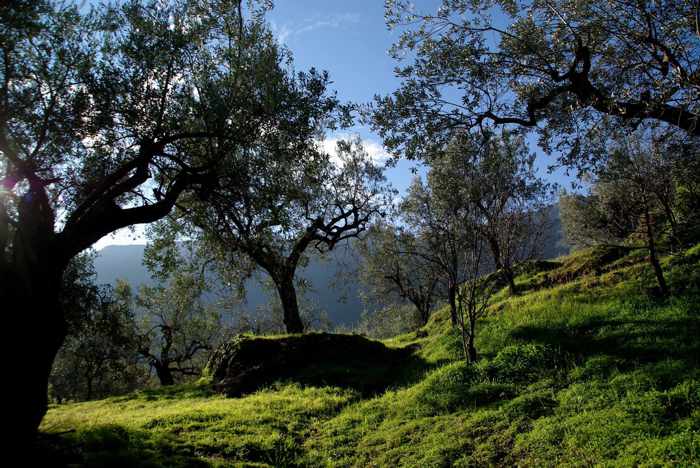
… nor did cold temperatures just two days later, when walkers got to trek through vibrant green olive groves like this one under brilliant sunny skies. (Photos provided courtesy of Greece on Foot tours.)
Winter wonders: Take a winter vacation in Greece? Sure! Why not?
The seething crowds of summer tourists have long since disappeared, as have the scorching temperatures and the startling high prices of peak season. There’s no waiting in long queues for seats on buses or in restaurants, and no jostling with mobs of organized excursion groups or gaggles of selfie-snapping sightseers at monuments and museums. Hiking paths are almost deserted, and roads aren’t clogged with tour coaches. The magnificent historic and natural scenery remains glorious despite the drastic change in seasons, the legendary Greek hospitality continues unabated, and the food is superb as always.
Of course, winter is the wrong time to visit if your primary holiday preferences are swimming and water sports, lounging on beaches, or all-night-long dancing and carousing at bars, clubs and beaches on Mykonos, Ios or any of the other legendary Greek “party islands.”
But you’ll still find dynamic nightlife in Athens and Thessaloniki, cities which abound in world-class dining, shopping, entertainment and cultural activities all year round. And if you’re a winter sports enthusiast, you can challenge your alpine mountaineering or snow kiting skills on Crete, or go snowboarding and downhill skiing at Kalavrita or one of several other major resorts on the Greek mainland.
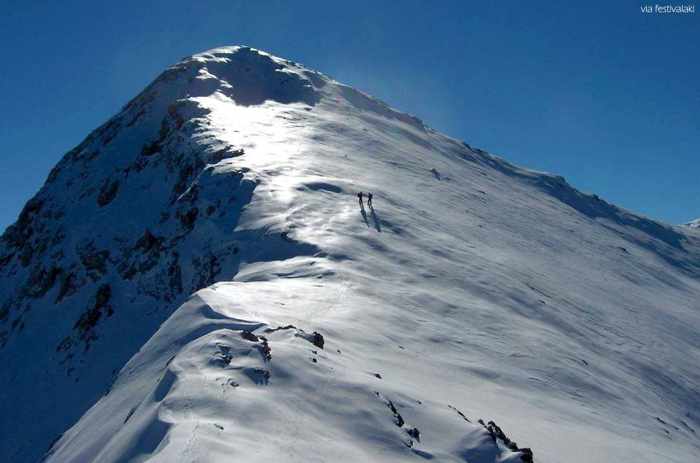
Two alpine mountaineers ascend the steep snow-covered peak of Mt Dikti on Crete, in this image shared on Facebook in late January by Festivalaki: Cretan festival of Arts & Culture. The organization’s Facebook post said mountaineering in Crete offers “a wonderful experience combining alpine terrain with breathless views of both the Libyan & Aegean sea.”
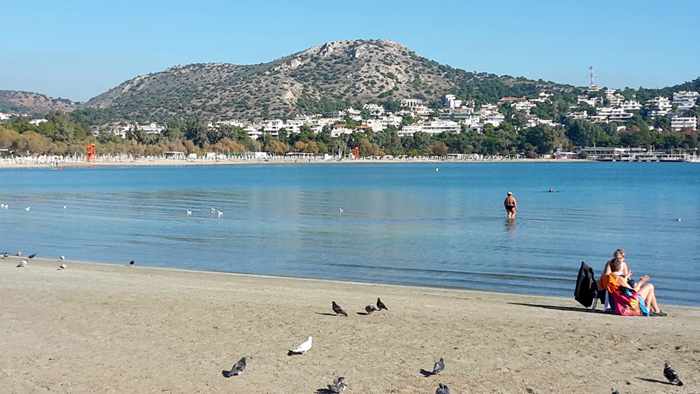
A beach near the Vouliagmeni beach suburb of Athens is seen in this December 29 2015 photo by John de Castelberg. Most tourists might find the sea too chilly for a winter dip, but the scenic beach- and café-lined coast of the Athenian Riviera is pleasant to visit throughout the off season.
Main tourist season is April to October
For people like me and my partner, who couldn’t bear either the blistering heat and sun or the heaving hordes of tourists in midsummer, winter could well be one of the best times to visit Greece. So why, then, have we travelled there only in spring or fall?
That’s a question we have been pondering a lot lately. We used to believe it was better to travel during the regular tourist season, which generally starts in late April and winds down by the end of October (particularly on the islands). In fact, most of our Greek holidays have been fairly early in the season, typically sometime between mid-May and early June. But we have gone twice in the autumn — we went island hopping in the Cyclades in late September 2007, and we explored Naxos and Athens during the first half of October 2013.
What we like about our spring trips in particular is the palpable local excitement and anticipation for the new travel season and approaching summer period, an atmosphere we find invigorating and refreshing after our long winter hibernation at home in Canada. Also, the weather is usually perfect for some of our favourite holiday activities — hiking and walking, and dining outdoors (especially near the sea). We weren’t keen to visit Greece during the off-season because we were worried we might not enjoy it as much with colder temperatures, inclement weather and few tourists around.
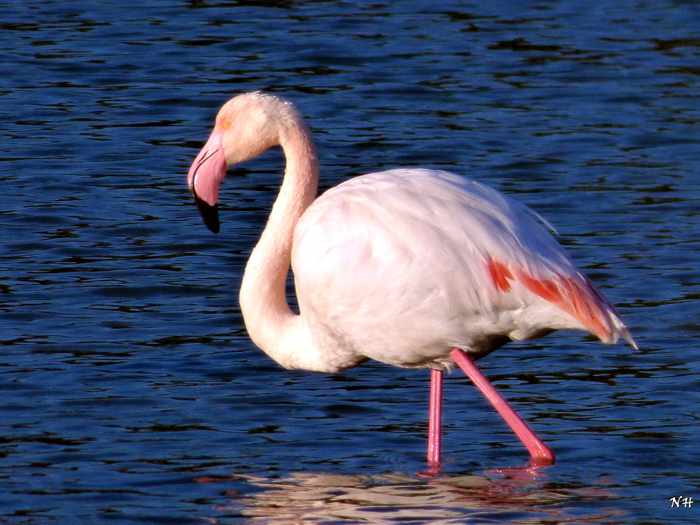
Winter shouldn’t keep us away from Greece — it didn’t stop this pretty pink flamingo and a dozen of its feathered friends from visiting the Alyki wetland reserve on Samos island for several days at the end of January 2016. Local photographer Nikolaos Housas captured this splendid image on January 27 and shared it on the Samos Island public group page on Facebook.
Social media show the winter appeal of Greece
But recently we’ve really been warming up to the idea of a winter getaway to Greece. What changed our minds? In two words: social media.
With their photos on Facebook, Flickr and Twitter (some of which I will share with you on page 2 of this post), friends, acquaintances and dozens of people we don’t even know have shown us that Greece can be just as delightful and charming in winter as it is during spring, summer or fall. In fact, they have demonstrated that it’s a terrific time to see the country’s wonderful sights and scenery either on foot or by driving around, and it can often even be comfortable to eat outdoors, or at least sit outside with a coffee to people watch and enjoy the scenery. What’s more, colourful Carnival celebrations held each February and March in scores of villages and towns provide traditional festive fun and excitement we wouldn’t find in spring.
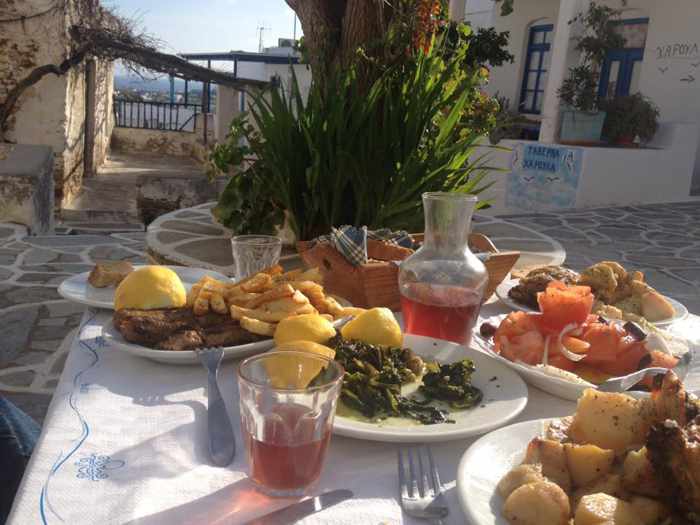
We thought we would miss eating outdoors if we took an off-season trip to Greece. But occasional mild weather means outdoor dining can be possible even in winter, as this photo posted by the Parosweb Facebook page attests. Taken on January 21 2016, the picture shows a table laden with delectable dishes of home-cooked Greek cuisine in the courtyard at Haroula’s Taverna in Marpissa village on Paros.
A place to escape our usual winter blahs
Of course there can be gloomy days with rain, cold temperatures, gale-force winds and even snowstorms, as I have reported in posts on December 31 2015, January 17 2016, and January 23 2016. But we get unpredictable and occasionally severe weather conditions at home, too. Yet we continue to drag ourselves through our December and January doldrums, and the brutal February blahs, daydreaming about Greece and counting the days until we can go back. Why not just battle the blahs by getting a winter fix of Greece instead? With luck we might encounter pleasantly mild weather conditions, as you’ll see in many of the photos below. At worst, it will feel almost like winter back home — but at least we will be passing the time enjoying the off-season beauty in our favourite travel destination. We’re already looking into the possibility of doing exactly that next December or January.
Please click here or on the link below the following picture to turn to page 2 and see some of the photos that have convinced us we’re long overdue for an off-season trip to Greece. Fingers crossed that we’ll be posting our own winter pictures at this time next year.
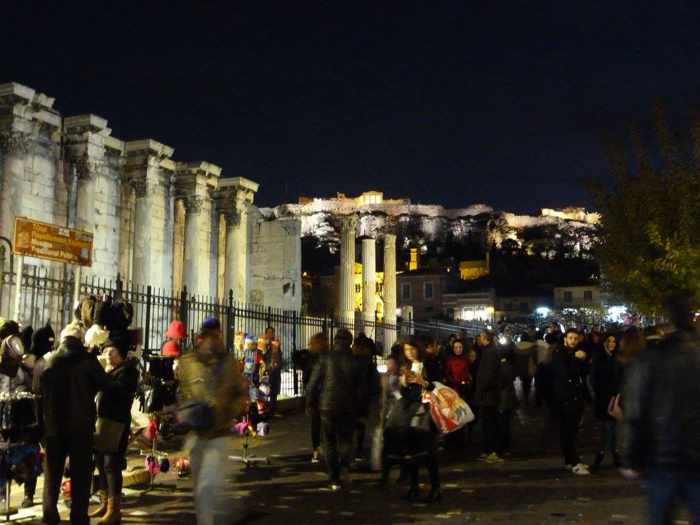
Athens is a bustling year-round travel destination, as evidenced by the throngs of people strolling past historic monuments in the center of Athens, just below the illuminated Acropolis and Parthenon (upper right). Wendy Gilops captured this scene on December 27 2015.