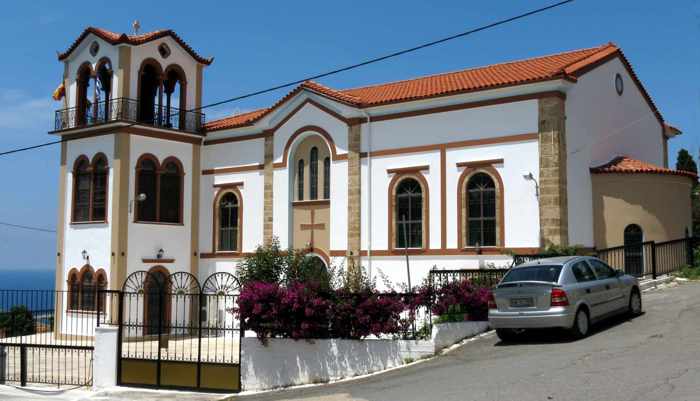
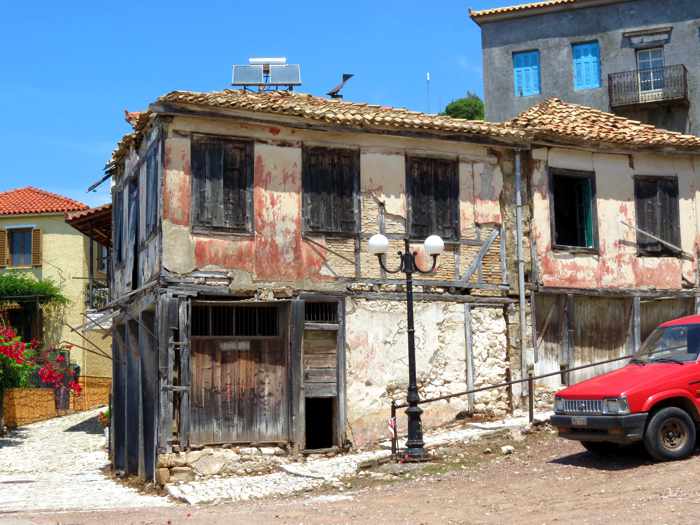
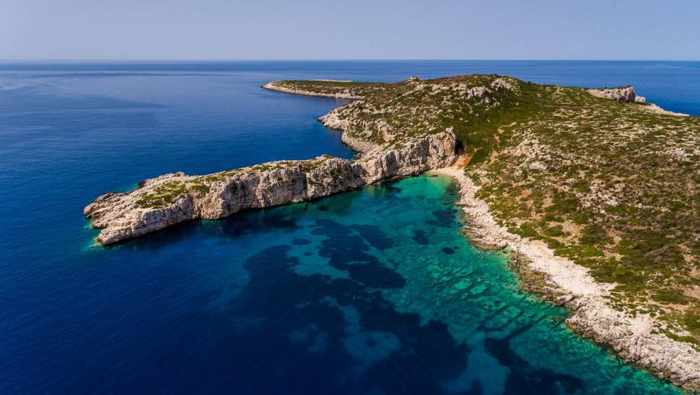
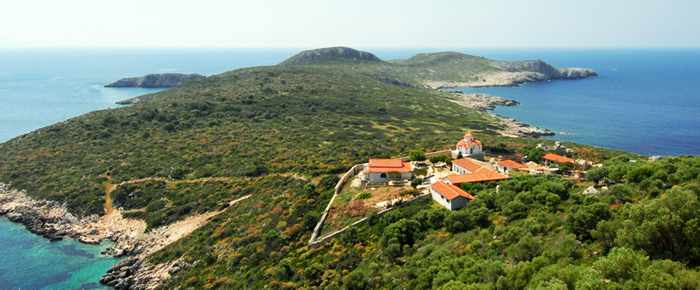
Beautiful coast and village scenery abounds in Mani, The Luxury of Remoteness — a 4.5-minute video by TAK Films & Frames
Rugged beauty: Thanks to amazing experiences in the Peloponnese during three visits in the past three years, the region has become one of our favourite holiday destinations in Greece. Though we have covered considerable ground, there’s one significant part of the Peloponnese remaining on our bucket list — the Mani.
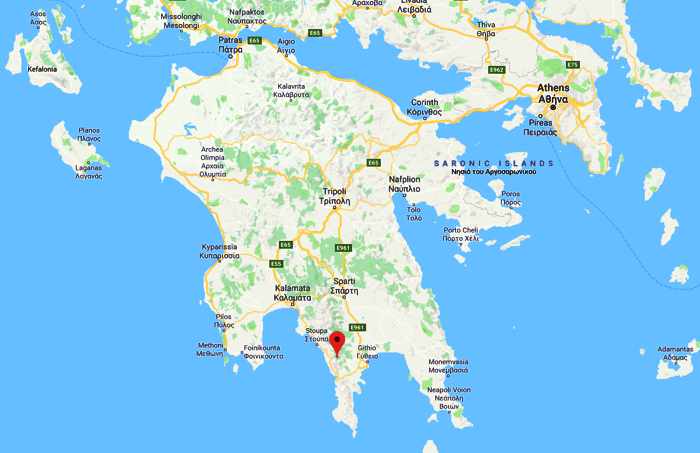
A rugged and remote peninsula, the Mani appeals to us not only because it’s off the busy tourist routes, but also since its scenic highlights include marvellous coastal landscapes, picturesque fishing ports, charming Byzantine churches and historic ancient sites, and fascinating fortified villages like Vathia, which boasts a striking skyline of imposing stone tower houses.
We’re even more keen to visit the Mani after viewing the video above, which was produced by TAK Film & Frames and posted to its Facebook page just two days ago.
Should watching the 4-and-a-half-minute film pique your own interest or curiosity in the Mani, here are a few articles and online resources you can peruse for further information, inspiration and advice:
♦ Inside the Mani — an online guide to travel in the southern Peloponnese;
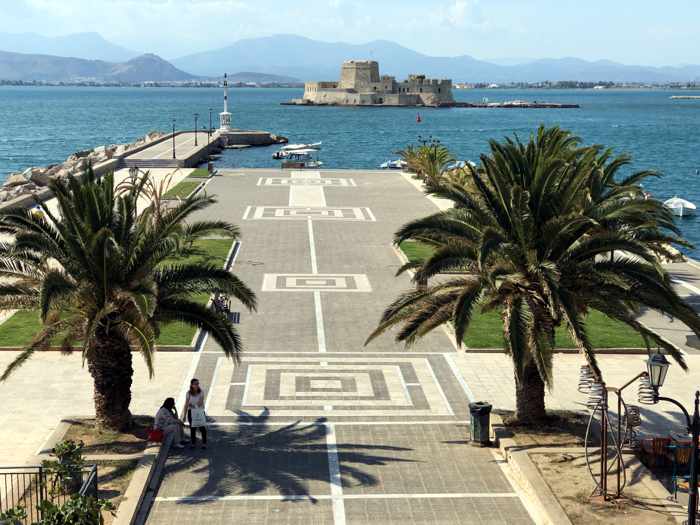
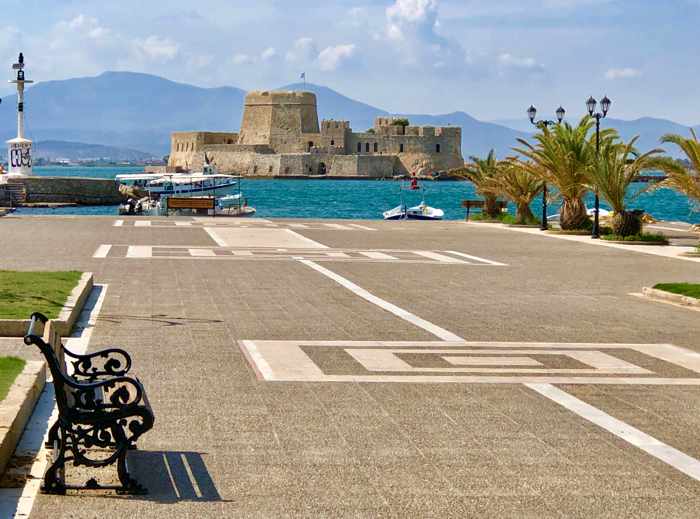
Nafplio waterfront view to the Bourtzi sea fortress
Back again: Exactly two years ago, we travelled to Nafplio for the first time and spent a full week exploring areas in and around the town. We liked it so much we decided it was high time to come back for a return visit. And here we are, enjoying Nafplio just as much as we did the first time. It truly is one of our favourite places in all of Greece.
Below are some sights and scenes from our first couple of days in the historic Old Town district of the picturesque seaside town. I will publish more images in separate posts.
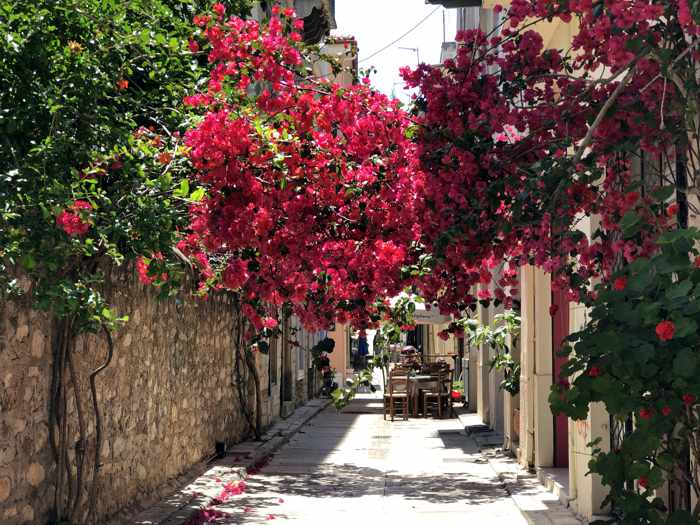
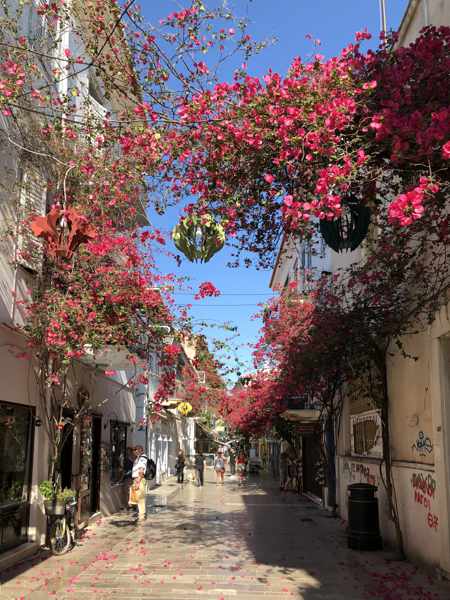
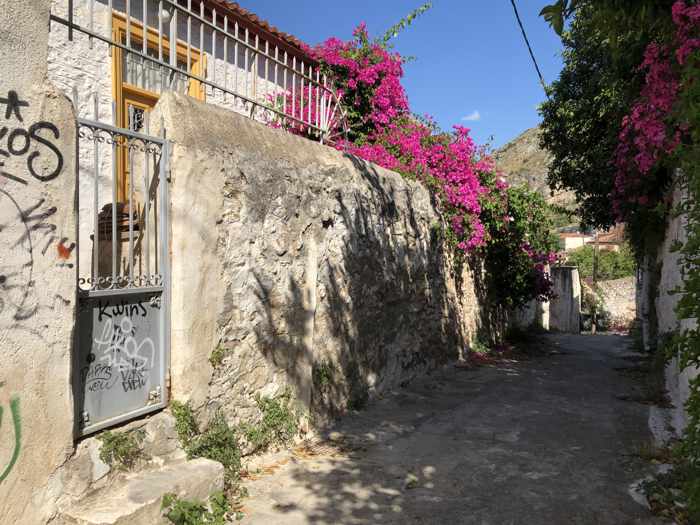
A canopy of bougainvillea in a lane in the Old Town district of Nafplio
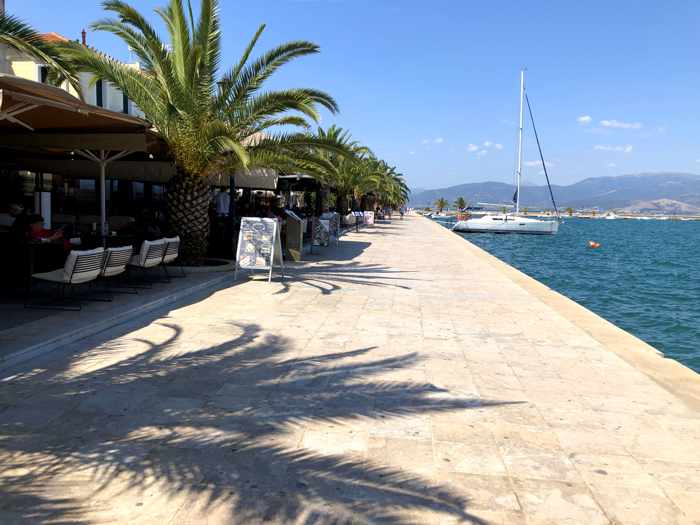
Cafes and palm trees along the Nafplio waterfront promenade
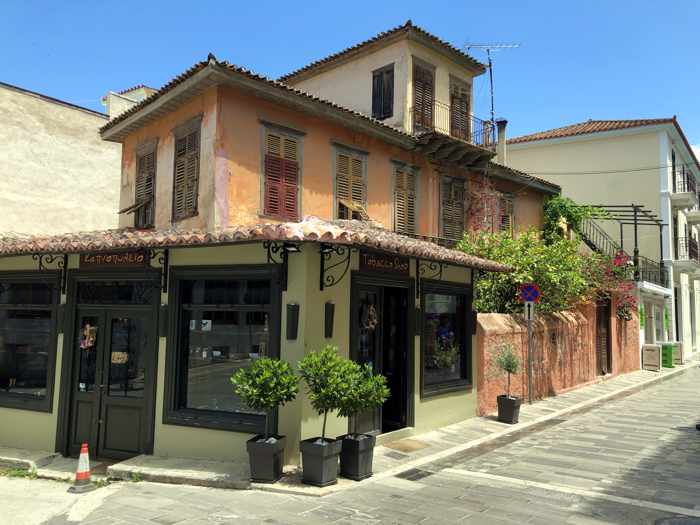
A rustic building on a street corner in the Nafplio Old Town
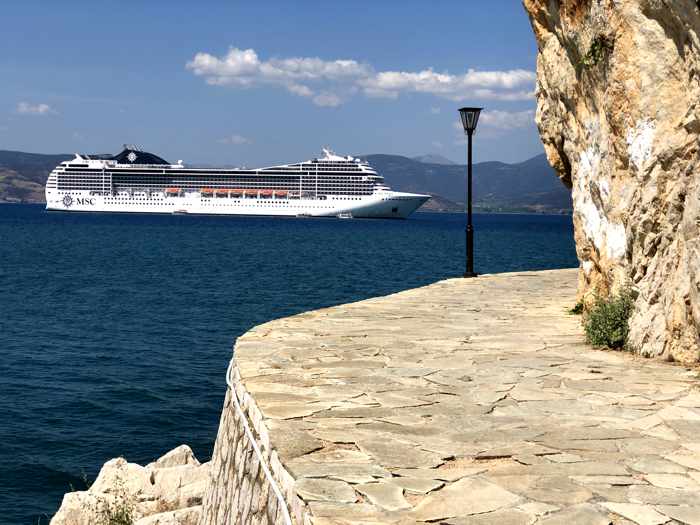
The MSC Poesia cruise ship, viewed from the Arvanitia coastal promenade. Daytrippers from the cruise gave the Old Town a lively buzz, but didn’t overcrowd the streets or make the town feel uncomfortably busy in any way.
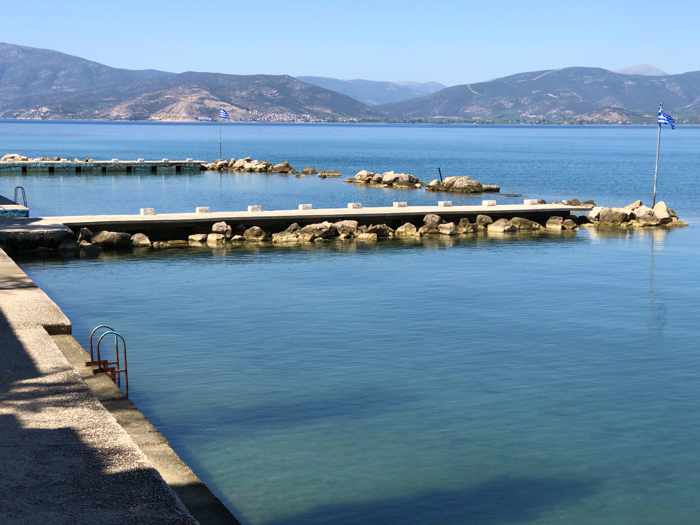
The Banieres swimming area on the Nafplio waterfront is a popular place for locals to sunbathe or take a dip in the sea
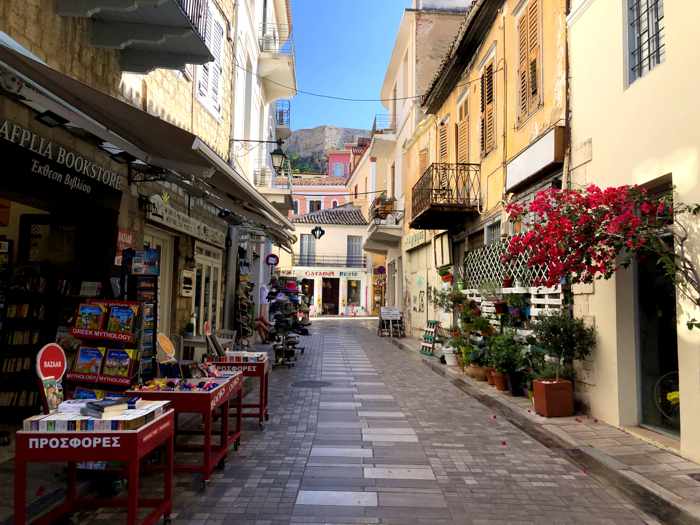
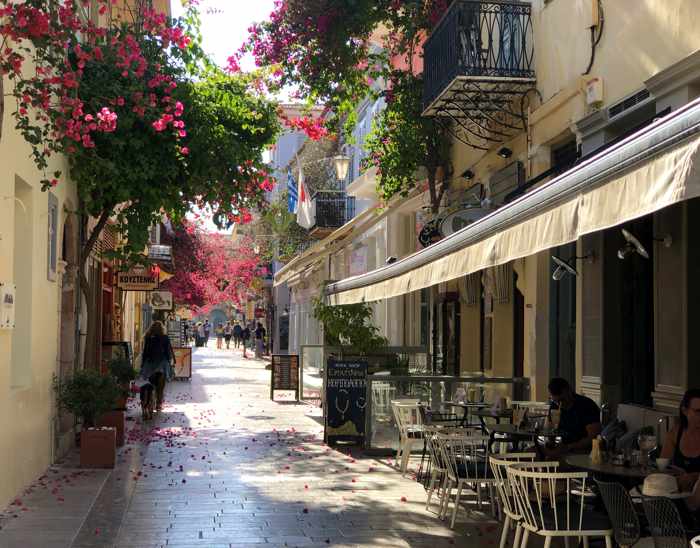
One of the colourful pedestrian streets in the commercial area of the Old Town
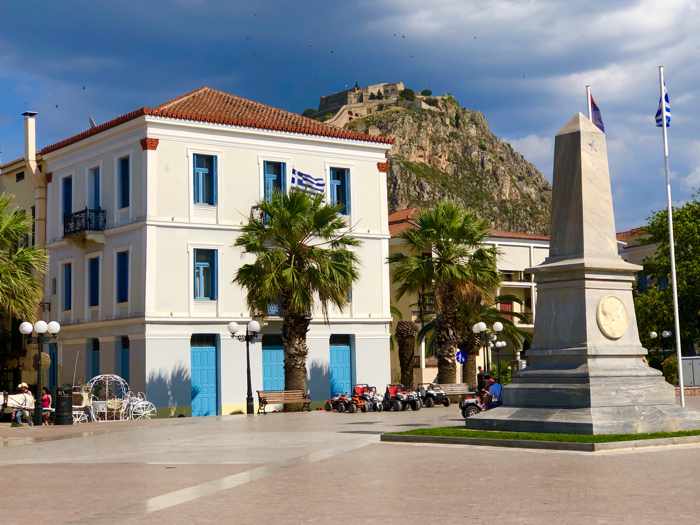
The Palamidi Castle (top) and the historic Land Gate, the original main entrance to the Nafplio Old Town
An evening view of the Old Town, from a point roughly two-thirds of the way up the nearly 1,000 steps to the Palamidi Castle
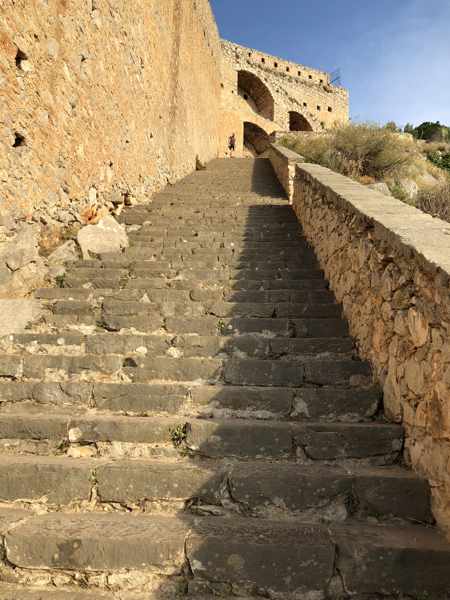
A steep flight of steps leading to the mountaintop Palamidi Castle. I counted 80 stairs on this particular stretch of the climb to the top.
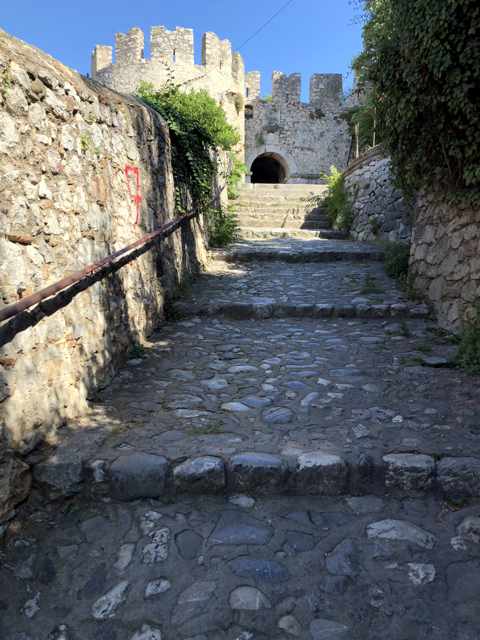
It’s much easier to reach the Acronauplia fortress, one of the three castles at Nafplio, since considerably less stair climbing is involved. This is the stepped path leading from the upper Old Town to one of the Acronauplia entrance portals.
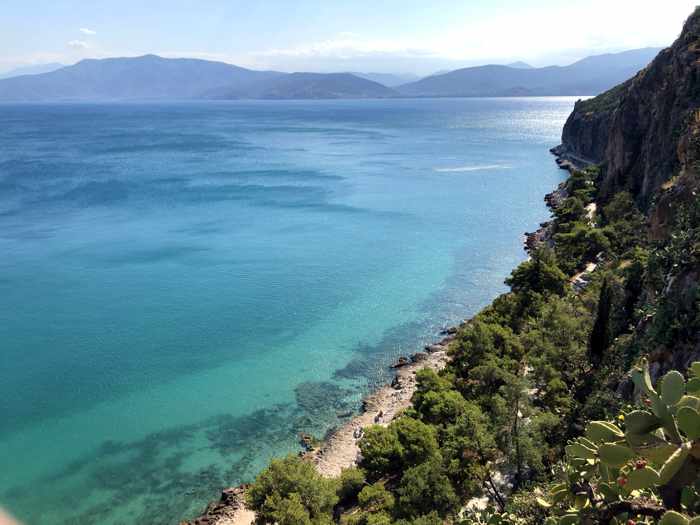
Coast and sea views from the Acronauplia fortress
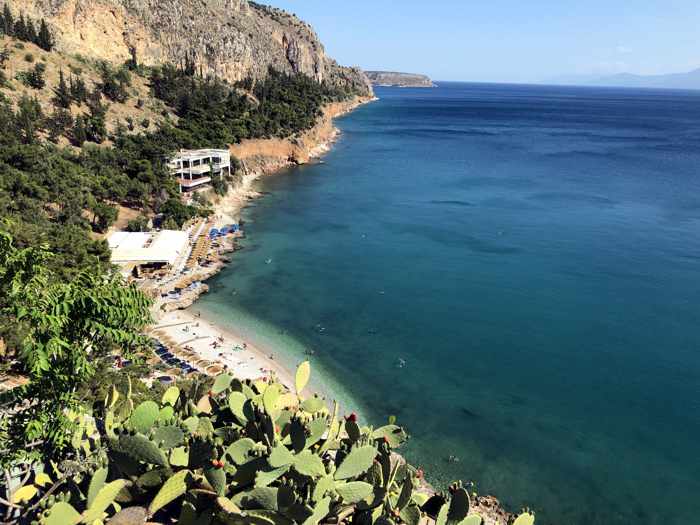
Acronauplia fortress views of the sea, coast and Arvanitia beach
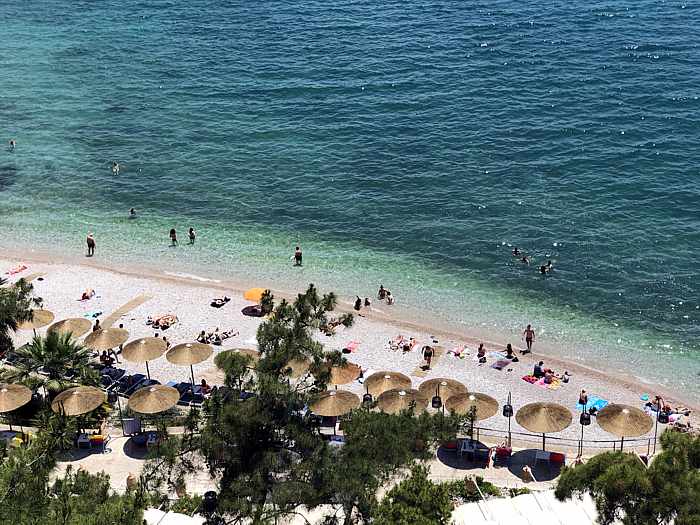
Part of Arvanitia, a stone and pebble beach that’s popular with locals and tourists alike since it’s only a short walking distance from the Old Town
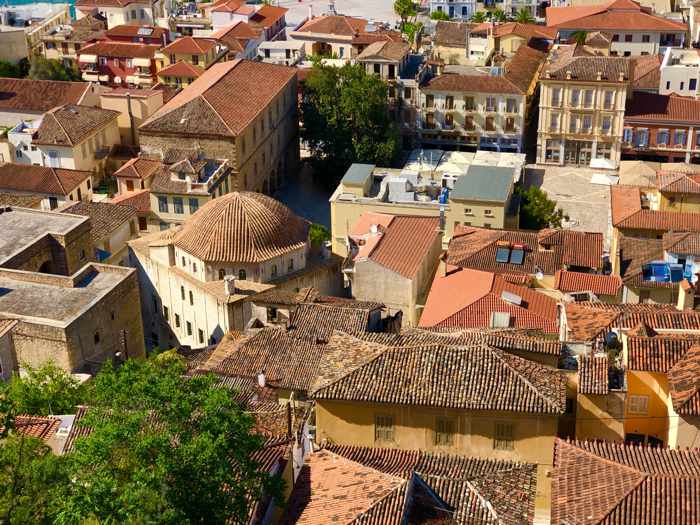
From a vantage point in the Acronauplia fortress, a view of Syndagma Square (upper right) and the first Greek Parliament building — the building with the domed roof at center left. Nafplio was the capital of Greece from 1823 until 1834, when the Parliament was relocated to Athens.
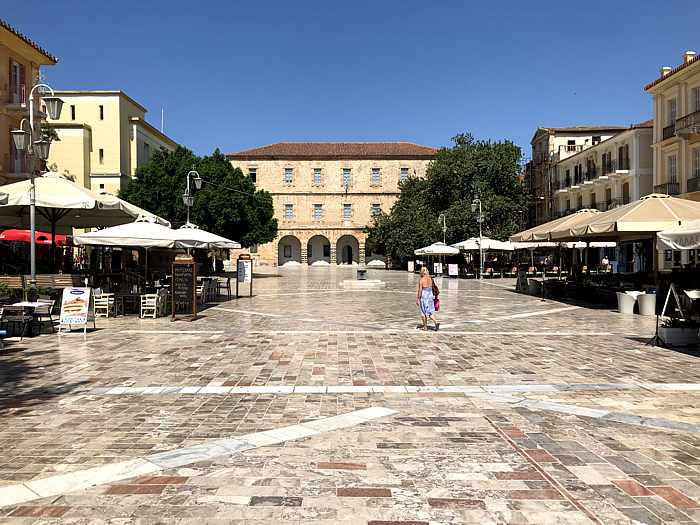
A quiet morning moment at Syndagma Square, which is lined with cafes, shops, restaurants and the archaeological museum (top)
A street in the pedestrianized commercial area of the Old Town
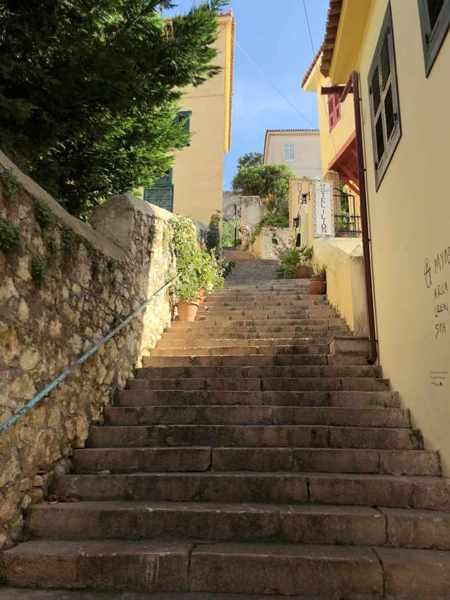
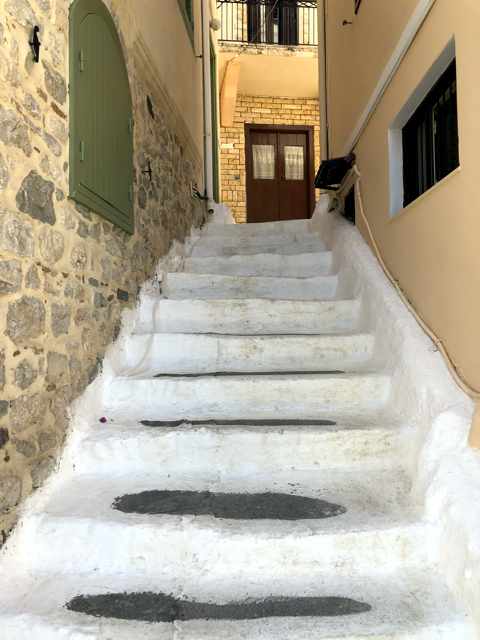
A long flight of steps on a hillside lane in the Old Town
Part of Kapodistriou Street, where our accommodations were located
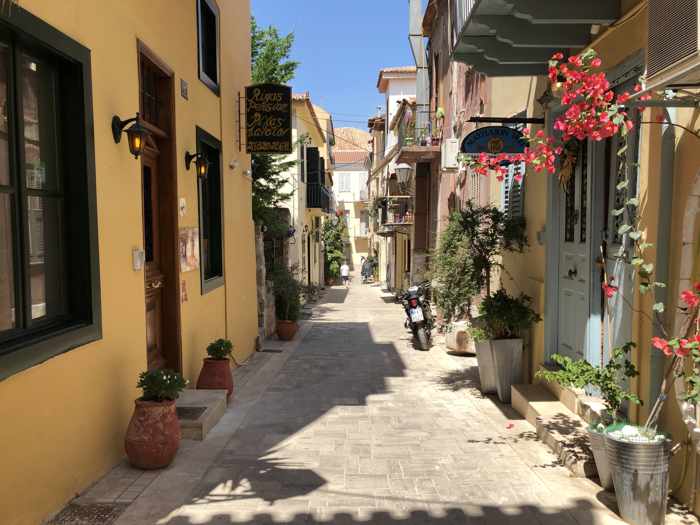
A lane near the top of the Old Town’s hillside area
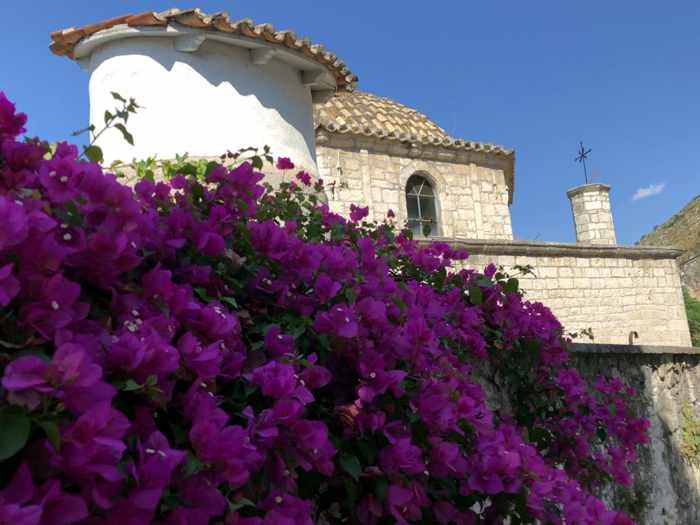
A peek at the exterior of the Catholic church in the Old Town
Philellinon Square and the memorial to the French soldiers who fought for Greece in the country’s war of independence
A restaurant patio along one of the main pedestrian streets in the commercial heart of the Old Town
Steps in a narrow hillside lane in the Old Town
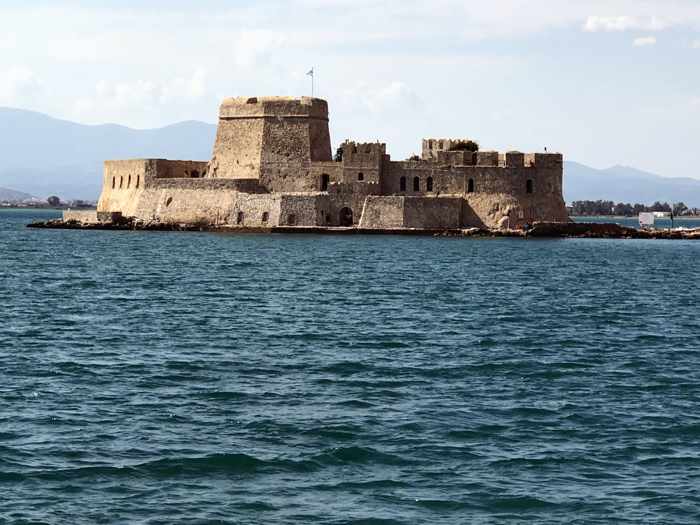
Nafplio waterfront view to the Bourtzi sea fortress
People can take a small excursion boat to visit the castle. The trips are offered daily and cost €4.50 per person; they include a 20 minute stop for a walkabout on the castle islet (the interior of the fortress is closed for maintenance construction) and a short ride along the waterfront so passengers can enjoy sea views of the Old Town.
The Arvanitia coastal promenade and the Banieres swimming area of Nafplio
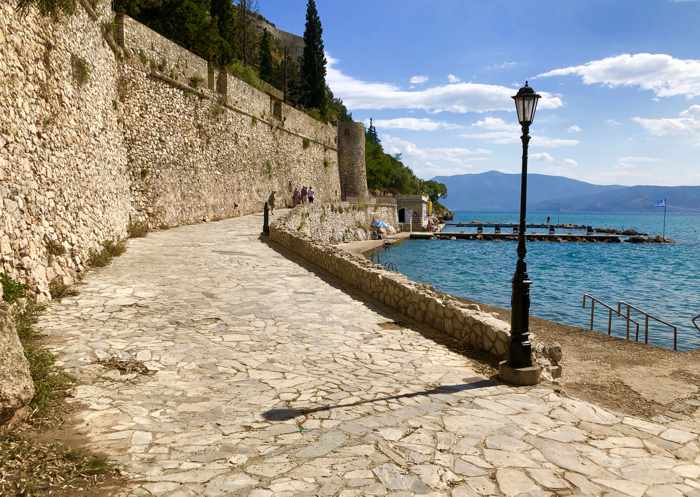
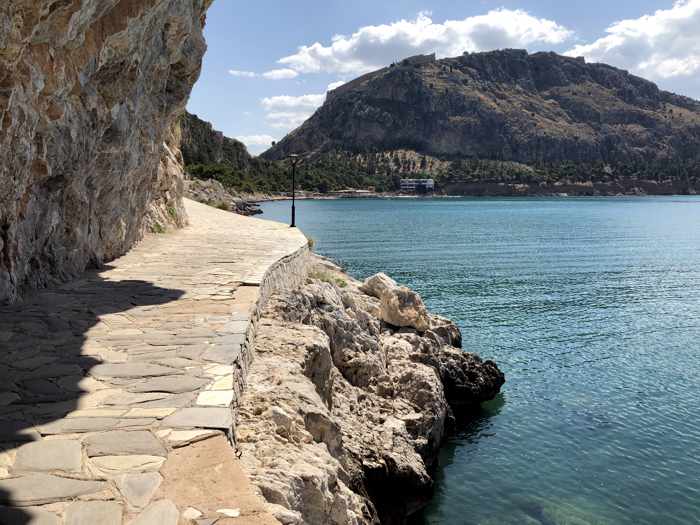
A tree-shaded section of the Arvanitia coastal promenade that leads from the Nafplio Old Town to Arvanitia beach
View from the promenade toward Arvanitia beach and the Palamidi Castle, partially visible on the mountain peak at upper right
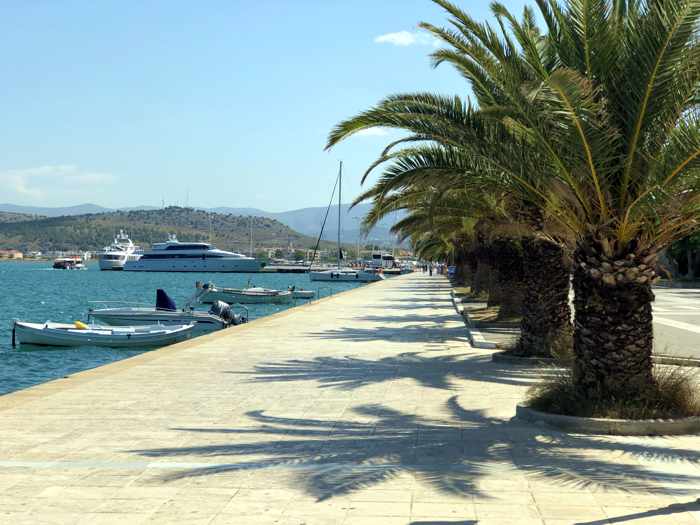
The waterfront promenade is lined with palm trees on one side, and boats on the other
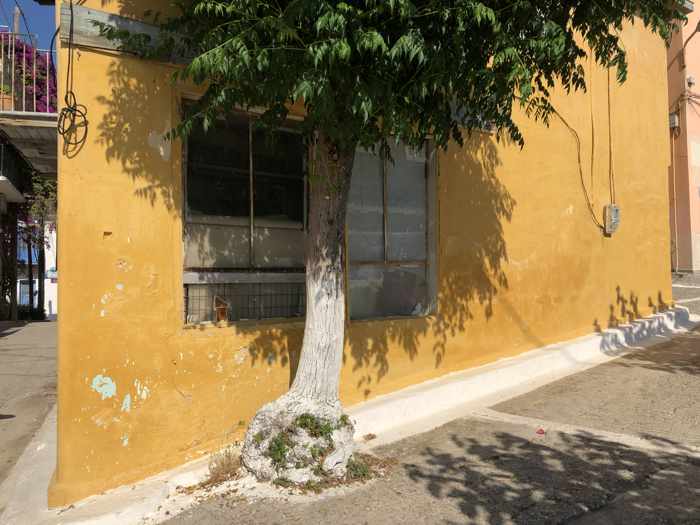
A rustic corner building on a hilltop in the Old Town
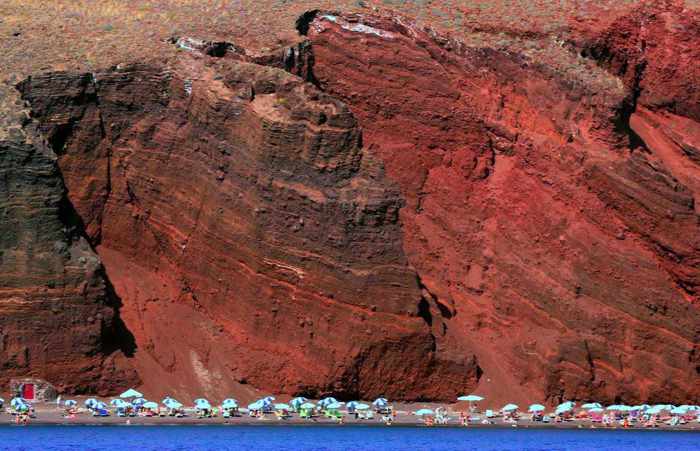
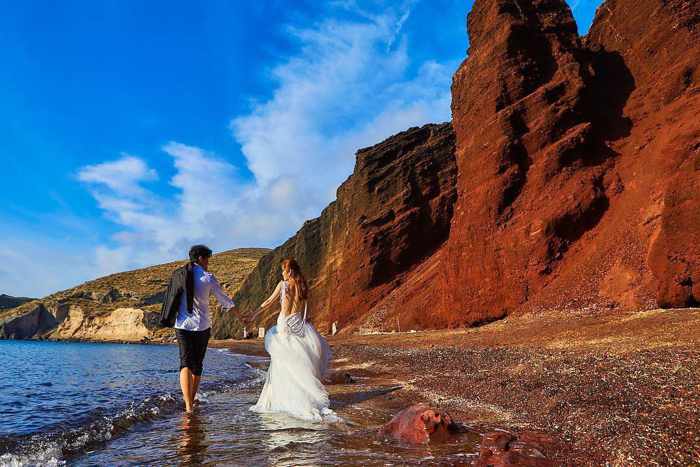
With its breathtaking backdrop of soaring crimson cliffs, many tourists regard Santorini’s Red Beach as one of the top “must-see” attractions on the island. This image appeared on the Travel to Santorini page on Facebook.
Red Beach has officially been closed to the public since 2013 because of rockfall risks, but thousands of tourists ignore warning signs and visit regardless. This photo, posted to Facebook by Hui Lin, shows a newlywed couple walking in the water at Red Beach on February 25 2018.
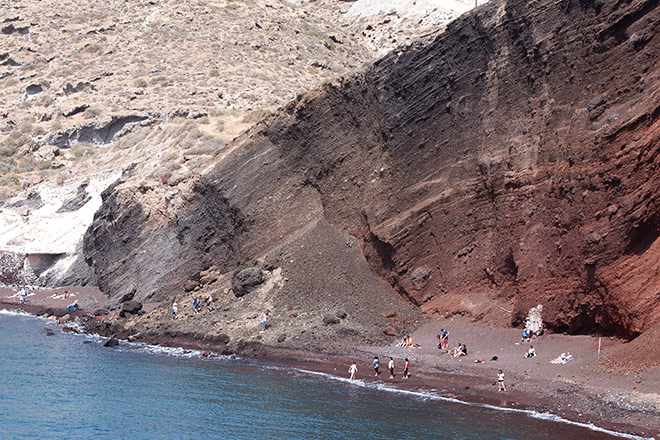
Luckily, no-one was injured when a landslide struck Red Beach on April 13 2018. This photo by Costas Konstantinidis shows the huge pile of sand and rock debris that slid onto the southern end of the beach. The photo appeared in Greek news stories reporting on the latest rockfall.
Beautiful but dangerous: “Attention! Danger of landslides. No entry.”
That’s the warning on signs posted along the access path to Santorini’s world-famous Red Beach, but each year thousands of tourists have ventured down to the beach regardless, to sunbathe, swim and shoot those all-important “I was here” selfies.
Scores of people will probably visit Red Beach again this year, even though a landslide in mid-April confirmed there’s an ever-present danger that sections of the tall crimson cliffs that tower above the beach could collapse on them at any time.
Widely considered to be one of the most beautiful and unusual beaches in the world, Red Beach resulted from the natural erosion of the cone of a small volcano. Comprised of loose layers of slag (volcanic cinder), the cone’s steep southern slope developed large cracks and fissures during seismic and volcanic activity; eventually, sections of the slope crumbled and slid seaward, creating the dramatic cliffs that rise above the stone and pebble shore today.
The cliffs have been studied extensively by geologists and volcanologists from Greek universities and the Institute for the Study and Monitoring of the Santorini volcano, who concluded that further erosion cannot be stopped or prevented. Since landslides are unpredictable and instantaneous, they urged island authorities to take steps to keep people from visiting Red Beach and potentially putting themselves in harm’s way.
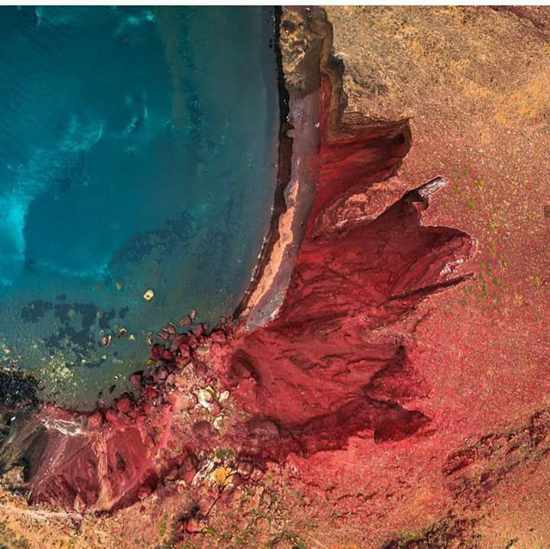
This aerial image shows how the slopes of a former volcano cone have caved in and crumbled onto Red Beach over time. The photograph has appeared on many social media sites, including the Akrotiri and Knossos community page on Facebook, but I haven’t been able to find the original source to give proper credit for the image.
The island municipality did close Red Beach to the public after a major landslide occurred in August of 2013, but most tourists have simply walked past the “no entry” signs that were put up. It’s possible many of the travellers weren’t aware there have in fact been major rockfalls, or perhaps they have thought the risk of one occurring during their visit was so infinitesimal it wasn’t worth worrying about. After all, if it was so dangerous, why would local and national travel and tourism businesses continue to recommend that people go there?
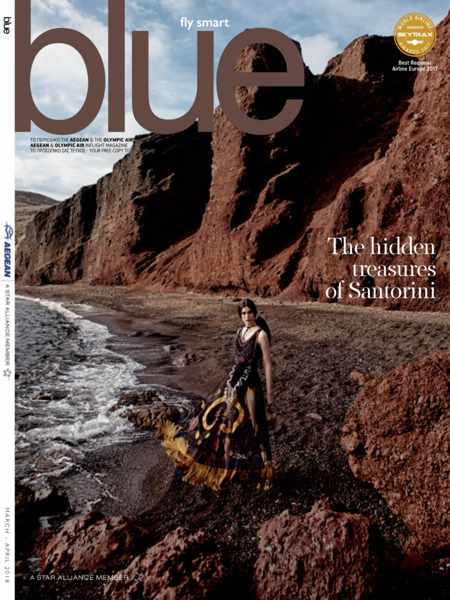
Valid point indeed, since some Santorini tour agencies offer boat trips to the beach, while a variety of island hotels and travel businesses regularly encourage visits to Red Beach in photos and comments posted on their social media accounts. Enterprising local residents also have set up rental lounge chairs and umbrellas on the beach, along with a snack canteen — apparently in blatant violation of local regulations. And Aegean Airlines recently raised some eyebrows when it featured Red Beach on the cover of its in-flight magazine for March & April 2018, and in several photographs accompanying its feature story “The hidden treasures of Santorini” (one of the pics showed a female fashion model posing in front of a debris pile from a small landslide).
Will anything change as a result of the most recent rockfall, which occurred on April 13?
According to reports posted on the Greek news and information websites Atlantea and LIFO, among others, the latest landslide prompted island authorities to issue a press release reminding people that “access to the Red Beach is forbidden” — as it has been since 2013 — so the beach remains off-limits for sunbathing, swimming, walking and other activities.
“The area has been marked with warning signs, and it is urged by all those involved with tourism to respect these prohibitions in order to avoid accidents,” the municipal press release is quoted as saying.
But since the “no entry” signs have been ignored for several years already, the municipality ultimately may have to consider installing physical barriers to ensure that people keep off the beach. As of this writing (on April 30 2018), tourists were still live-posting photos and reviews of Red Beach on their various social media pages, with some commenting that they noticed the hazard signs but went onto the beach anyway because they saw other people there.
The cover photo for the March/April 2018 Aegean Airlines in-flight magazine shows a fashion model posing near rocks at one end of Red Beach. There are more shots of models on the beach in the magazine’s photo feature on Santorini’s natural “hidden miracles.”
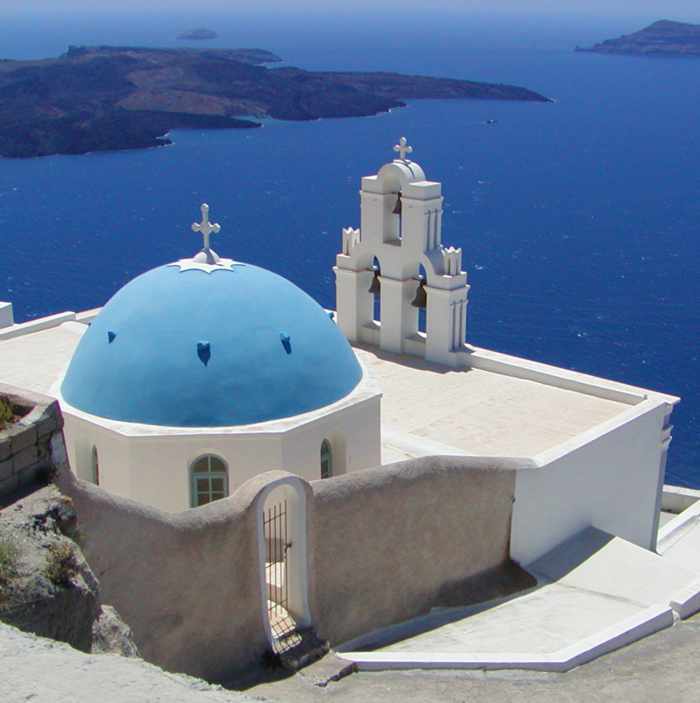
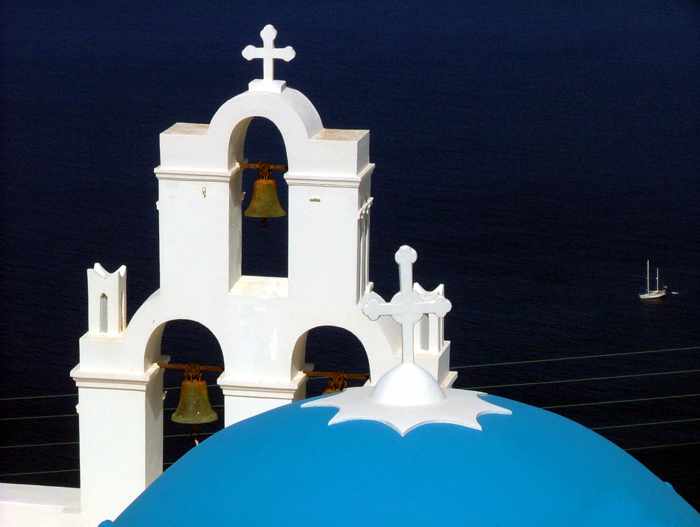
Photos of Agios Theodori Church have inspired countless people to visit Santorini and other places in Greece — or to dream of going there
Greek Islands Icons & Landmarks is a series of occasional posts about curious, unusual and extraordinary sights and places we have seen on our travels in the Greek Islands
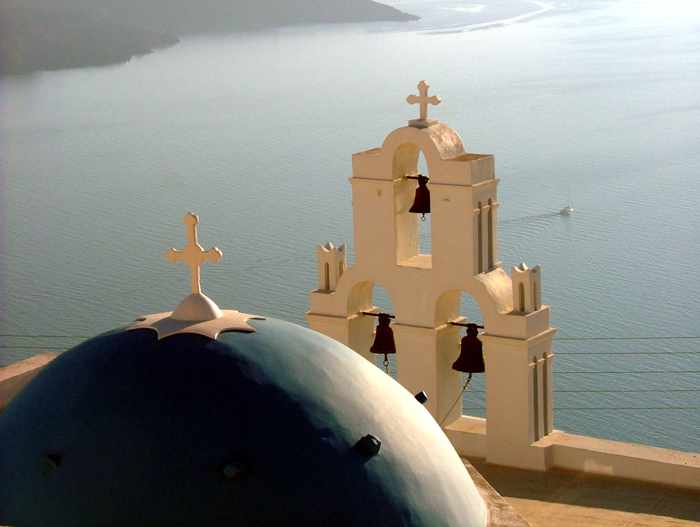
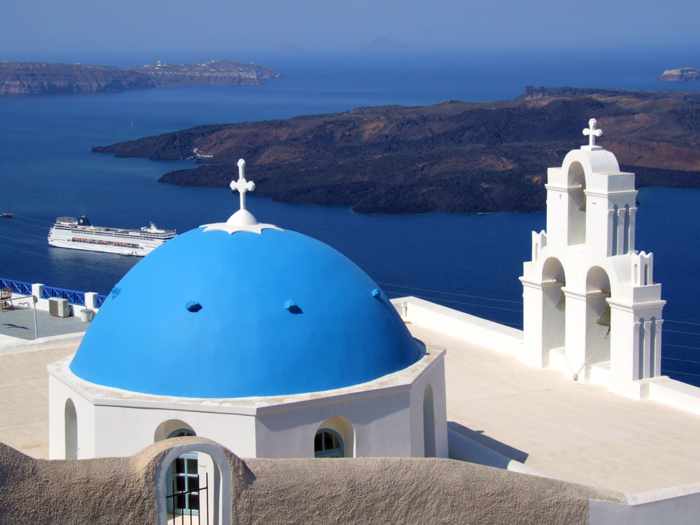
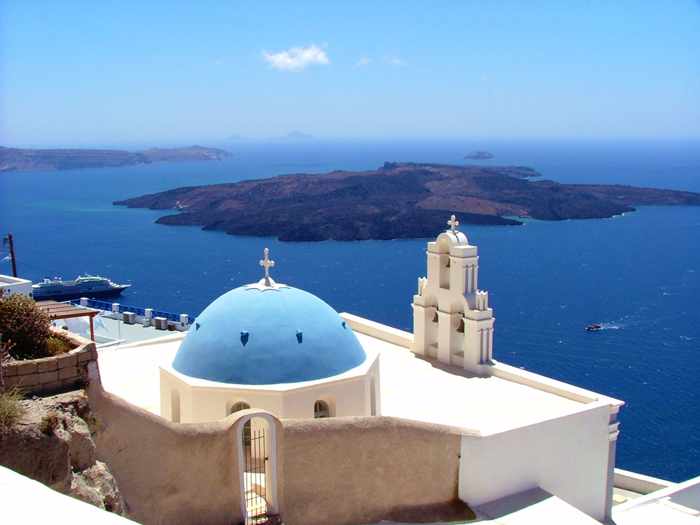
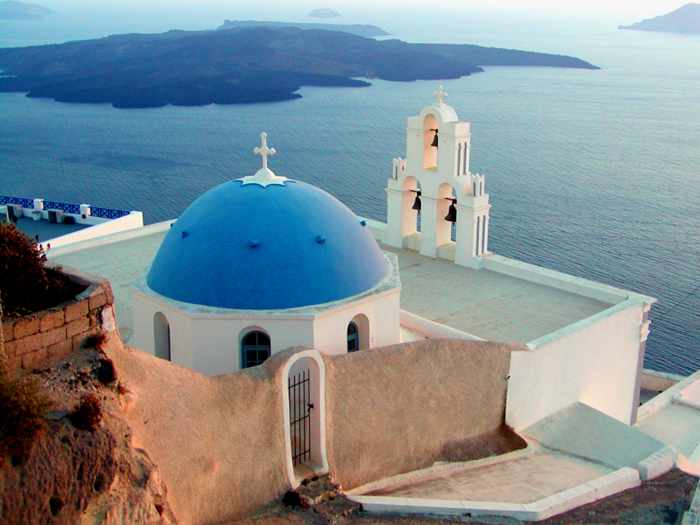
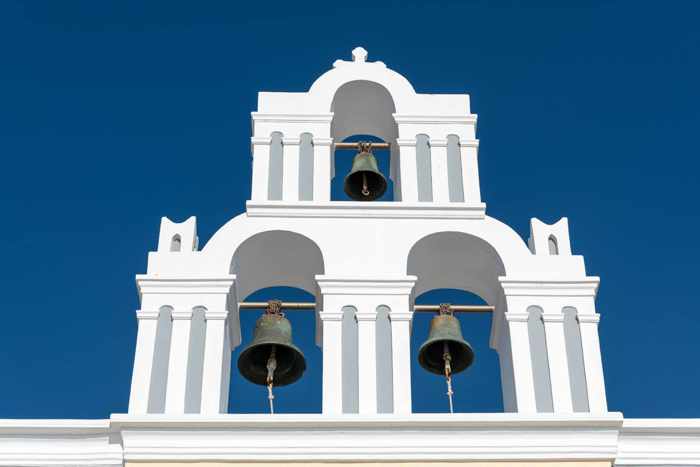
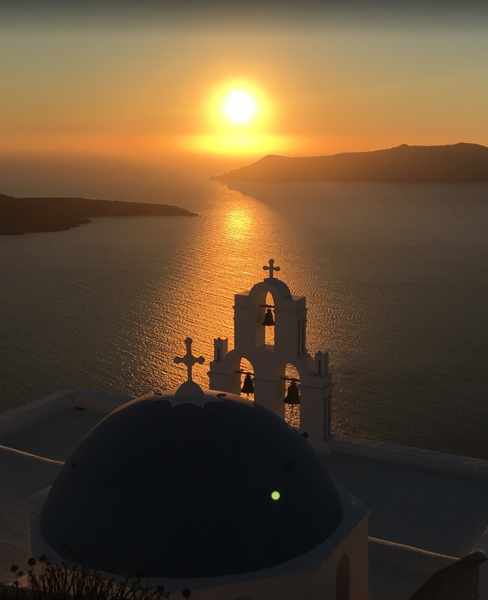
Celebrity dome: It’s a quintessential image of Greece: a cute white chapel with a shiny blue dome, accompanied by a white belfry with three bells, sitting high above the sea on Santorini.
It’s called Agios Theodori, but like thousands of other churches in Greece, few people outside the country know its name. Nevertheless, it’s a familiar sight to millions around the world, since photos of the church have appeared for decades on travel posters, tour materials and in guidebooks, newspapers and magazines. Along with the Acropolis in Athens, that little whitewashed, blue-domed church is one of the main images people associate with Greece.
I recall seeing pictures of Agios Theodori in the early 1980s, first at restaurants in Windsor, Ontario and Detroit’s Greektown, and then at travel agencies and restaurants along Danforth Avenue in Toronto’s Greektown, which was just a few blocks from where I was living at the time. That was long before I ever considered going to Greece, but the pictures of that blue-domed church stuck in my mind.
[adToAppearHere]
Over 20 years later we finally made it to Greece, and Santorini was the last stop on our island-hopping holiday. Although I hoped we would see the famous blue-domed church, I didn’t know where to look for it. I figured that if we came across it while exploring the island, that would be great, but if we didn’t get to see it on this trip, perhaps we would some other time.
Imagine my surprise and delight when, only minutes after checking in to the Santorini Palace Hotel in Firostefani, we walked to the tip of the caldera cliff nearby to check out the views — and saw Agios Theodori church just a few meters directly below us. I was slightly stunned at first; it felt like the familiar image I had seen in print so many times had suddenly come to life before my eyes.
So was it as breathtaking and impressive as I had anticipated, after seeing it in photos all those years? You bet! There was absolutely no disappointment here — the live view was spectacular. And to think the church was only a few dozen meters from the front door of our hotel! Now what were the odds of that happening?
We saw Agios Theodori church again, on each of our subsequent visits to Santorini, and it was still impressive to see. If we ever go back to the island I’m sure we’ll pass through Firostefani so we can take another look.
[adToAppearHere]
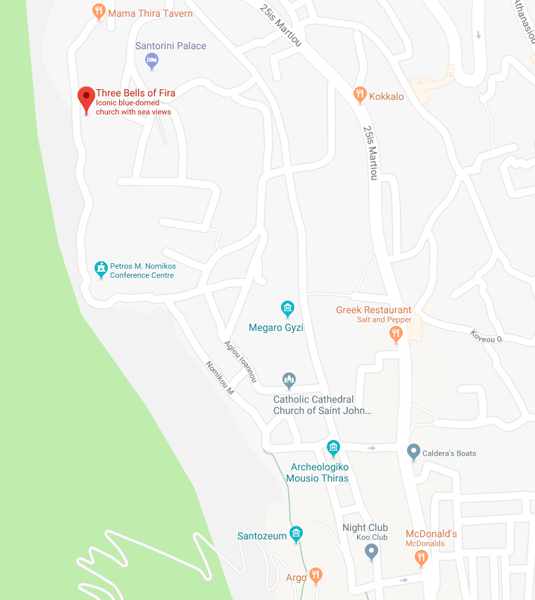
Below are several photos I found online, showing the church from perspectives we didn’t manage to photograph ourselves. There’s also a map indicating where Agios Theodori is located, should you want to see it in person yourself.
The Agios Theodori belfry is seen in an image from the Petr Svarc Images page on Facebook
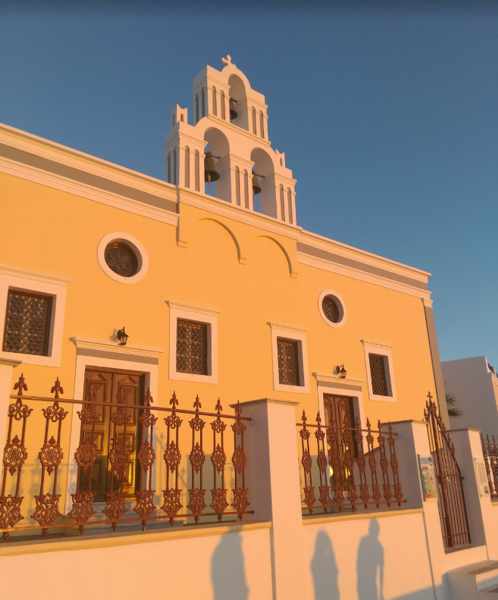
The front of Agios Theodori church as seen from “street” level — actually, from the footpath that winds along the top of the caldera between Firostefani and Fira. Ting Lin shared this photo on Google Images.
Also from Google Images is this photo by Charles Cheng, capturing Agios Theodori at sunset
Agios Theodori church is marked as “Three Bells of Fira” on Google maps, but it isn’t in the town of Fira — it’s a 10- to 15-minute walk away if you follow the clifftop footpath from the cable car station and walk north toward Firostefani (keeping the sea on your left side). To see it from the “travel poster and guidebook perspective,” make your way to the Santorini Palace Hotel. From the hotel entrance, walk up the short slope toward the sea, and head for the low wall at the edge of the parking area. Look down to your left, and enjoy the view!
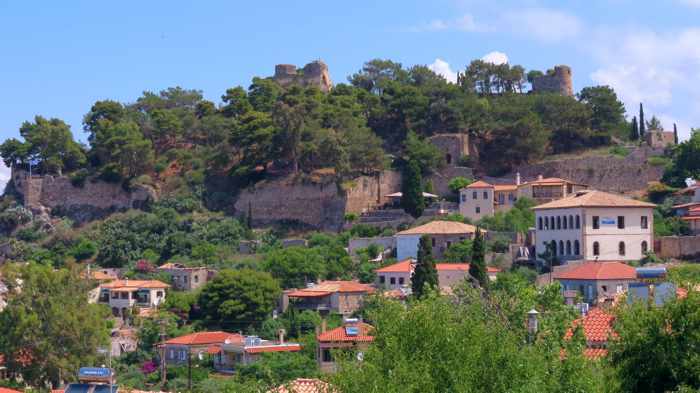
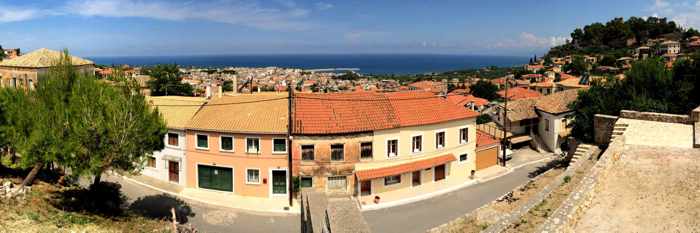
Houses on the hillside below the ruins of the Castle of Kyparissia, which was built during the 13th Century
Impressive introduction: On the fourth day of our May 2017 road trip through the western Peloponnese we discovered another charming town to which we will have to pay a longer return visit sometime: Kyparissia.
We had scheduled Kyparissia for just a sightseeing stop during our drive from Marathopoli to Katakolo, yet within minutes of stepping out of the car we were already wishing we could stay longer than just the afternoon.
That strong first impression came from the quick realization that Kyparissia has all the key features and characteristics we find particularly appealing in a small Greek town: beautiful scenery and views; a castle and lots of old buildings that convey a strong sense of history; plenty of intriguing lanes and streets to wander and explore; picturesque buildings and interesting architecture; inviting places to have coffee, dine, and do a bit of browsing or shopping; and a comfortable “I feel at home here” ambiance.
However, with fewer than five free hours before we would have to hit the road again, we knew we were only going to scrape the surface of all that Kyparissia and its surrounding area have to offer. Still, we enjoyed everything we did manage to see and do in our limited time, and we were glad we had included the town as one of the stops on our journey. We would consider Kyparissia to be a “must see” destination for anyone undertaking a driving tour like the one we did through the western Peloponnese, and we think it definitely deserves more than a quick look around.
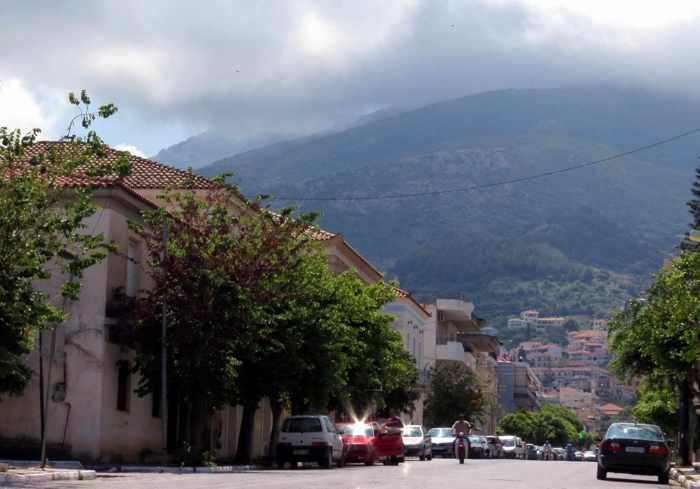
When we arrived at El. Venizelou Street in Kyparissia in late morning, clouds above the nearby mountains suggested we might get rained on. But most of the clouds cleared away, leaving us with bright sunshine all afternoon.
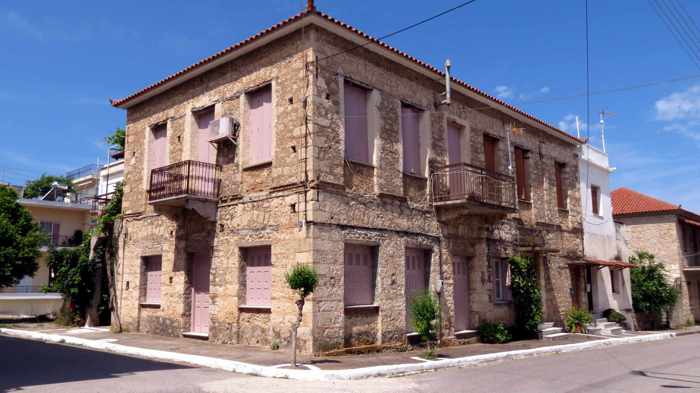
We’re drawn to old buildings, whether derelict or restored, and we found the facade of the former National Bank building — now a historic landmark — right across the road from where we parked the car upon arriving in Kyparissia
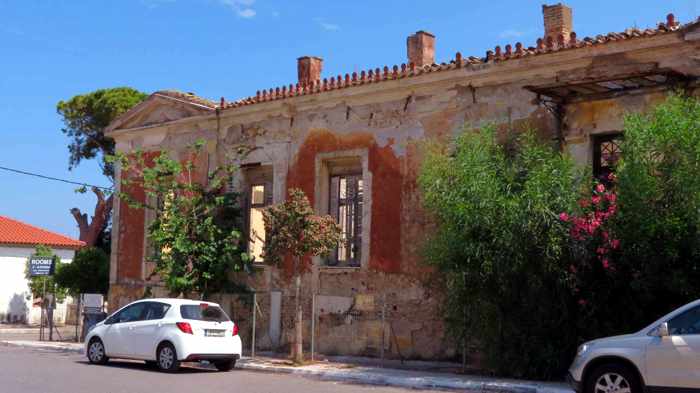
We found this once-elegant edifice near the National Bank, and spotted many more charming old buildings throughout the town
Upon arrival in Kyparissia, we parked briefly on El. Venizelou Street in the lower town so we could have a look around and check out a few of the shops. The road was lined with a mix of commercial and residential buildings from different architectural design eras, including elegant old buildings, some of which — like the former National Bank — were in derelict condition, and others that were either in excellent shape or appeared to have been painstakingly restored. They gave us a sneak peak of the wide variety of building design styles and construction periods we would soon encounter in Kyparissia’s Ano Poli, the historic hilltop Old Town, where we had planned to spend most of our time.
Our next stop was Eleni Chameri Street, the main road in the Old Town, where we found on-street parking close to the Memorial of the Fallen. The war monument is situated in a small square with amazing views that include the Castle of Kyparissia off to the right, and the entire town below, extending all the way down the hill to the sea.
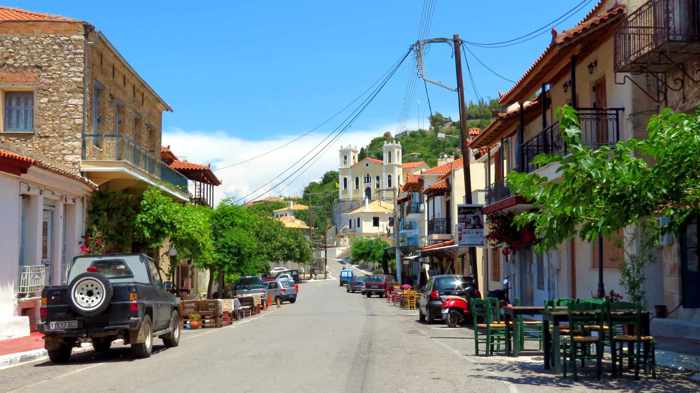
A view along the Eleni Chameri Street, the main road of the Ano Poli / Old Town district of Kyparissia
From the square where the Memorial of the Fallen monument is located, visitors can see the Castle of Kyparissia (upper right) and the town below
From the memorial we walked to the Castle of Kyparissia, located at the opposite end of Eleni Chameri Street. We strode through the open gate (there is no ticket booth at the entrance) and climbed steps and trails up the hillside to see what remains of the ancient fortress. Apart from the external fortification walls, only a few stone buildings still stand on the site — but none are open to the public. It doesn’t take long to wander around and explore the grounds, but the castle is worth a stop, especially for its wonderful views of Kyparissia and the surrounding area.
Kyparissia Castle has excellent views of the upper town …
… the lower town and the sea to the southwest …
… and the lowlands, mountains and Messenian coast stretching to the north as far as the eye can see
After our castle hike we returned to Eleni Chameri Street and made a beeline for Algo-rithmos Cafe Bar, where we sat in the shade at one of the tables out front to have coffees and rest our legs. Refreshed from our coffee break, we all set out on our separate ways to explore the Old Town and vicinity. There was little traffic and only a few people out and about, so the neighbourhood was exceptionally quiet and peaceful. It was nice not having to jump out of the way of passing cars and trucks, or jostle past other pedestrians, while observing the scenery and taking photographs. The place is probably bustling during July and August, so we were glad we got to enjoy the town’s scenic streets and lanes without hordes of tourists teeming about.
The Old Town’s streets and lanes are lined with a fascinating mix of meticulously maintained houses …
… a few beautiful churches …
… and numerous derelict or dilapidated buildings bursting with charm, character and — in many cases — tremendous renovation potential
We regrouped back at Algo-rithmos for another coffee break a couple of hours later, then did some souvenir shopping across the street at Messinia Gi, a store which carries an extensive selection of food, beverage, fashion and souvenir products made locally in Messenia. After more walking around, we all agreed it was time to call it quits on sightseeing, and find a nice spot for lunch. We chose Palia Agora, which is located just a few doors down the street from Messinia Gi, where we sat outdoors and enjoyed a variety of delicious mezes. I will tell you more about Messinia Gi and Palia Agora in a separate post.
The fabulous meal brought our brief Kyparissia visit to an end on a high note. We reluctantly piled back in the car for the drive to Katakolo, where we would spend the night before heading to the port at Kyllini to catch a ferry to Kefalonia. We’ll go back to see more of Kyparissia another time. We’ve got to — it’s exactly the kind of place where we enjoying spending vacation time.
Please click on the link below to turn to page 2, where I have posted more photos of the Old Town and castle, as well as a video of the castle and its views.
Located just one nautical mile from the town of Marathopoli in southwestern Messenia, Proti Island is a popular day trip destination for swimming, snorkeling, scuba diving, rock climbing, cliff jumping and trekking. This aerial photo of Proti Island is from the website for the Artina hotels in Marathopoli.
Lagouvardos, shown in this aerial video by Giannis Mpantes, is a long golden sand beach less than 3 kilometers from Marathopoli. It’s considered one of the top surfing spots in Greece, and also attracts enthusiasts of windsurfing, SUP, canoeing and other watersports.
Surf’s up!: In a recent post I noted that the quiet, laid-back town of Marathopoli is an ideal base for travellers wishing to explore Methoni, Pylos, Navarino, Voidokilia and other popular places in the Messenian region of the southwestern Peloponnese.
Even closer to the town are two noteworthy destinations that draw active travellers seeking scenic spots for outdoor sports activities such as swimming, surfing, windsurfing, snorkeling, scuba diving, rock climbing, trekking and fishing.
Uninhabited Proti Island, which dominates sea views from the town, is approximately one nautical mile away and can be accessed in summer on boat trips from Marathopoli harbour. The tours take passengers to secluded coves, including Grammeno Bay, and stop at picturesque Vourlia beach for sunbathing, swimming, snorkeling or jumping into the sea from rocks and ledges along the rugged coast.
This aerial video of a boat trip to Vourlia beach on Proti island is from the website for Proti Cruises, which offers a variety of daily “mini cruise” excursions from Marathopoli
The Monastery of the Assumption of Gorgopigi is one of the sights that hikers might encounter while walking some of the trails on Proti Island. This photo appears on the websites for Lagouvardos Apartments and other Marathopoli-area businesses.
Trekkers can explore Proti Island on three designated hiking routes, while rock climbers can test their skills on the challenging cliffs and coastal rock formations. Fishing trips and sunset tours also are available.
For those curious to see what lies beneath the waves, Ionian Dive Center offers scuba diving excursions to such island sites as the Anouar shipwreck in Vourlia Bay, the Tiganakia wall and cavern, the Blue Hole cavern with stalactites, Callens Valley and the Beacon Cove.
This video by Ionian Dive Center will take you to the Blue Hole, one of the sights that scuba divers could explore during excursions to Proti Island
This photo from the official Marathopoli tourism website shows an aerial view of the long strip of golden sand at Lagouvardos beach
Lagouvardos Beach is only 3 kilometers from Marathopoli so it can easily be reached by car, bicycle or even walking. The Culture Trip website has included Lagouvardos on its list of The Best Surfing Spots in Greece, while travel publications and online guides regularly recommend the beach for windsurfing, stand up paddle boarding (SUP), swimming, canoeing and other watersports. Equipment rentals and lessons are available from the Beach Break surf club at Lagouvardos.
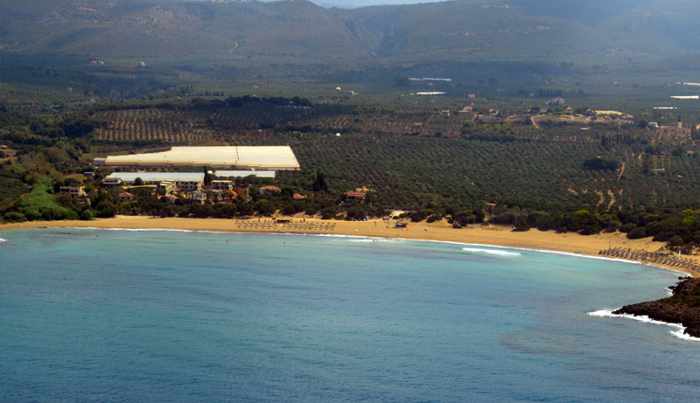
For beach lovers and watersports fans who don’t mind driving a little farther afield, some of Messenia’s most beautiful and world-famous beaches — including Vromoneri, Mati, Romanos, Golden Sands Divari, and the incomparable Voidokilia — are situated within a span of just 7 to 15 kilometers.
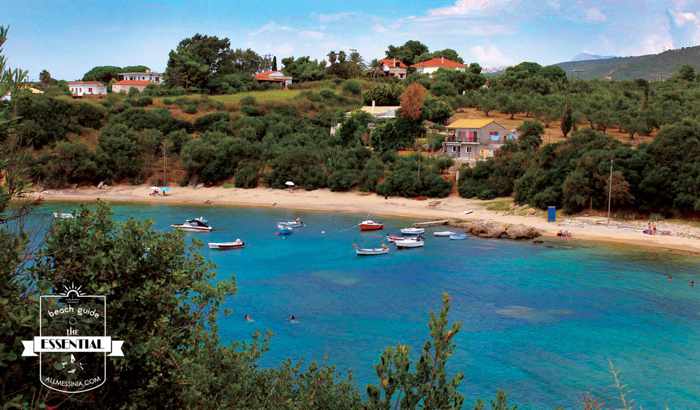
Just 7 kilometers from Marathopoli is Vromoneri beach, seen in an image from AllMessenia.com
Located about 9 km from Marathopoli is gorgeous Mati beach, seen in this aerial video by KOABeach Pool Bar
Additionally, the Marathopoli area is ideal for bicycling and mountain biking, while two globally renowned 18-hole courses at nearby Costa Navarino offer golfers the opportunity to tee off in spectacular settings.
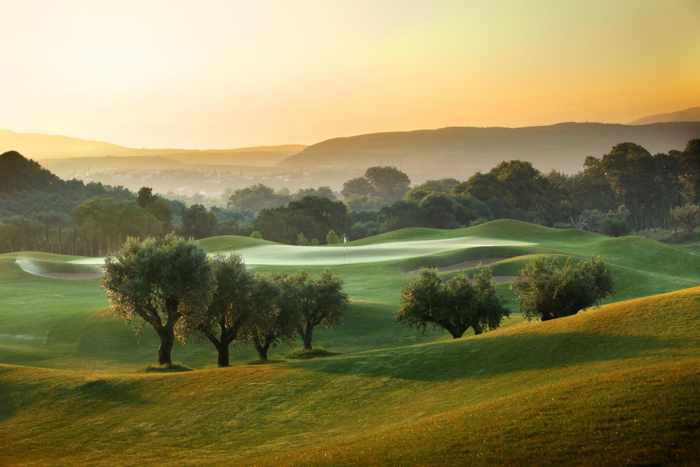
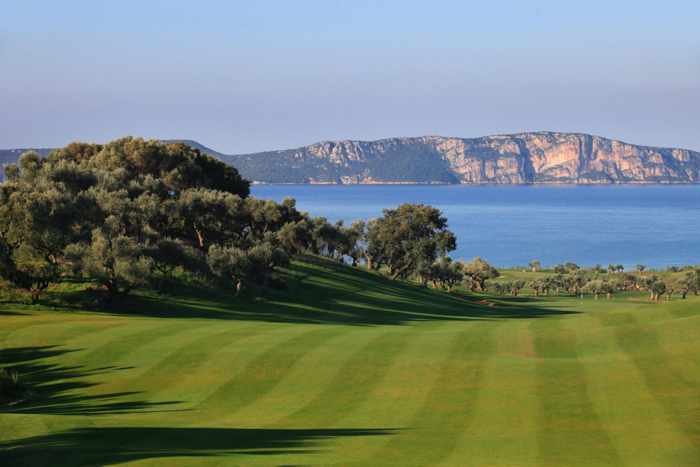
Award-winning world-class links await golf enthusiasts at Costa Navarino, just 13 km from Marathopoli. The green pictured above is on The Dunes Course, while the one below is on The Bay Course. Both images are from the Costa Navarino Facebook page.
More stunning photos and extensive information about the two golf resorts can be found in the golf section of the Costa Navarino website.
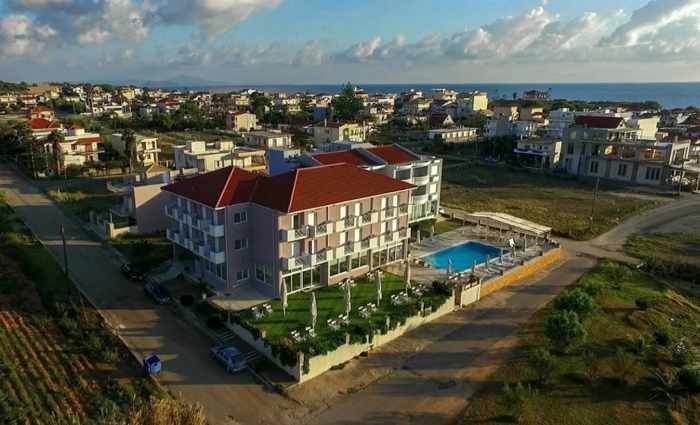
We enjoyed our spacious, comfortable rooms at the Artina Hotel, seen here in an aerial image shared on Google by Nikos Tsiak
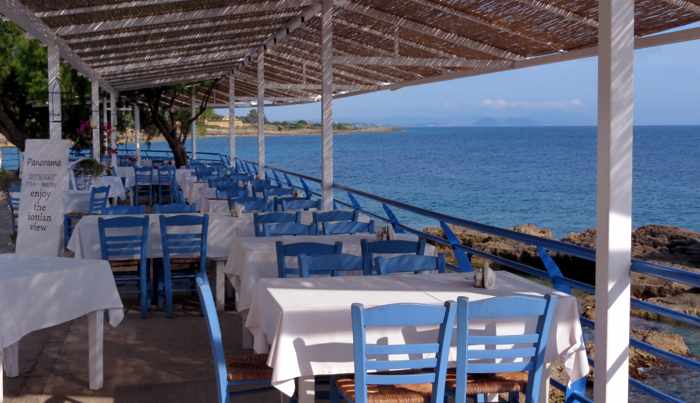
On our first night in Marathopoli, we had dinner on this seaview patio at Panorama Fish Tavern Restaurant …
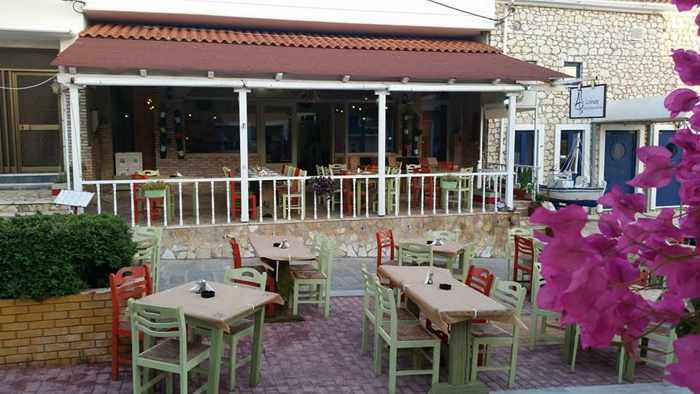
… while the next night, we enjoyed mezes at Artoinos Μεζεδοπωλείο, seen in a photo from its Facebook page
Great food & accommodations: We ate well and slept well during our brief 2-night stay in the small seaside town of Marathopoli last spring. Our only disappointment? Not having more time to enjoy our lovely hotel room longer, or to try other restaurants besides the two where we had delicious dinners.
As I mentioned in my March 20 2018 post describing Marathopoli, we had chosen to base ourselves in the town so we could easily access top sites and attractions in Messenia during our road trip through the region.
Though Marathopoli has fewer than 700 residents, it has a surprising variety of accommodation options, ranging from a budget-friendly campground to 2-star hotels, studio apartments, and luxury suite hotels. Choices include:
♦ the 15-room Hotel Rania (shown as Rania Apartments on Google Maps);
♦ the two-star Porto Marathos, a 33-room property with single, double and triple rooms, as well as four apartments;
♦ Artina Hotel and Artina Hotel Nuovo, two connected hotel buildings with apartment-style suites and a shared swimming pool, breakfast room, and gym;
♦ Megalos Kampos Hotel & Resort, a property offering four large studio apartments and two maisonettes;
♦ Pefkides, a complex of five separate luxury apartment residences that share a large garden area and a swimming pool;
♦ Agrikies Country Retreat, a complex of four maisonette guest houses that can accommodate up to 5 persons each;
♦ Camping Proti, a full-service campground with spaces for tents and trailers, and facilities that include a cafe-bar, minimarket, TV room, swimming pool, laundry, kitchen and shared refrigerators and freezers;
♦ Esperides, a complex of five independent holiday apartments;
♦ Faros Luxury Suites, a seaside hotel with 11 kitchenette-equipped luxury apartments;
♦ Mesogeios Hotel, a group of studios and apartments situated between Marathopoli and Lagouvardos beach;
♦ Lagouvardos Apartments, a collection of seven small, furnished houses near Lagourvardos Beach;
♦ Edem Suites, a collection of standard and family-sized maisonettes near Lagourvardos;
♦ Dialiksari Villas, a complex with six individually decorated houses, and
♦ Messinian Horizons, a complex of 5 luxury maisonette villas situated about 3 km south of Marathopoli.
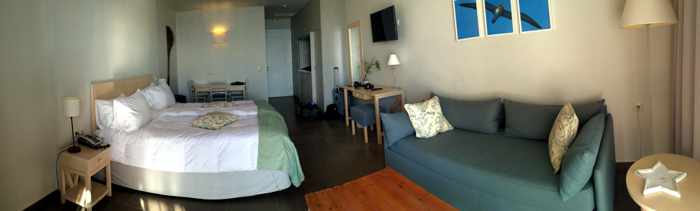
Our travel companions had suggested we all stay at the Artina Hotel Nuovo, and it proved to be an excellent choice: the location was good; the breakfast buffet was enjoyable; the sea and sunset views were wonderful; and our spacious, well-appointed rooms were extremely comfortable. The nightly rates were very reasonable, too. I would love to stay there again. (You can see photos of our room and the hotel on page 2 of this post.)
For dining, we were again spoiled for choice and had to decide from such top-rated restaurants as:
(A bright new arrival on the Marathopoli dining scene, Opos Palia (Όπως Παλιά_Μεζεδοπωλείο-Ψησταριά), didn’t open until after our visit.)
For a late dinner on our first night in town, we went to Panorama Fish Tavern on the restaurant and bar strip that residents call The Sidewalk. Every dish we ordered — the calamari, horta, grilled local cheese, and meatballs — was tasty and enjoyable, while the service was very good.
The next night we chose Artoinos Mezedopolio, which had received great reviews on travel websites and restaurant apps. Our selections there included skordalia, gigantes, chick pea balls, spetzofai sausages, fried pork in white wine, and pleuvrotos mushrooms. We loved everything and would be hard-pressed to list a favourite, but all of us agreed that the sausages and mushrooms were stand-out dishes. The wine and service were excellent to match. Artoinos would probably be the first place we’d go for dinner next time we return to Marathopoli.
And what about the Marathopoli nightlife? We didn’t experience any of it ourselves, but the town does have a lively bar and nightclub scene, especially during the main summer travel months. Popular spots for drinks, music and partying include:
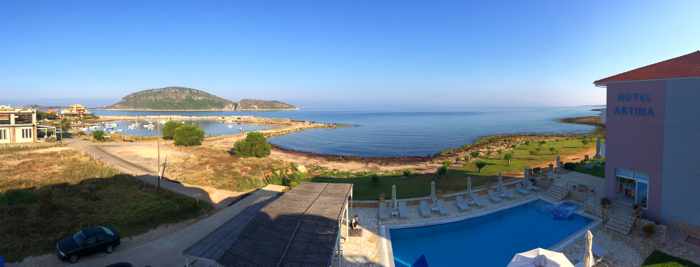
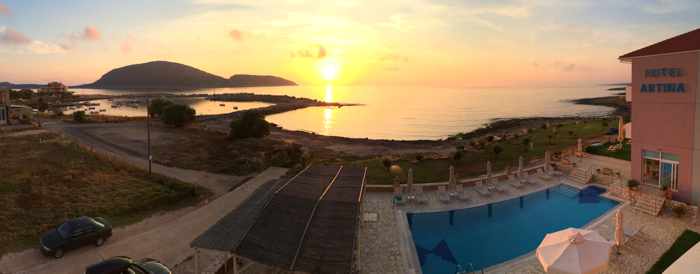
If we had stayed out late for a night on the town, though, we certainly would have enjoyed coming back to the Artina Nuovo to crash in our super-comfy beds and awake to the calming panoramic views of the harbour and sea.
Below are panoramic photos I shot on my iphone, showing the interior of our spacious room at the Artina Nuovo as well as the morning and sunset views from our balcony:
More photos of our room and its views, plus pictures of the hotel, can be viewed on page 2 of this post. Of course, more photos and information about the Artina Nuovo, and its sister Artina Hotel, as well as online booking, can be found on the official hotel website.
For customer reviews of the various places to eat in the town, check the Marathopoli restaurant listing on TripAdvisor.
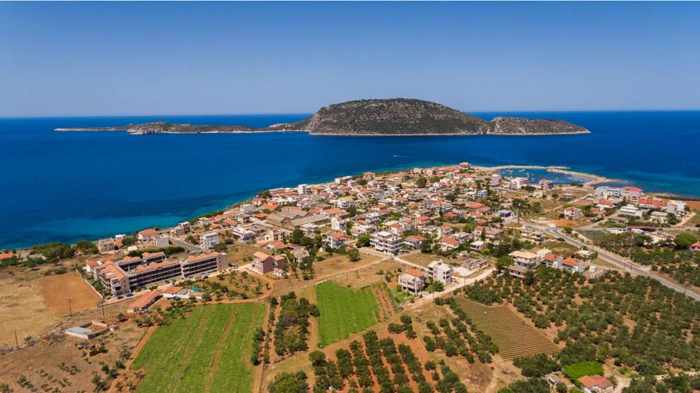
An aerial view looking west toward the town of Marathopoli and Proti Island. The photo is from the website for Marathopoli’s Artina Hotel Nuovo, where we stayed two nights while visiting historic sites, towns and attractions on a road trip through the Messenia region of the southwestern Peloponnese .
Great location: I didn’t know anything about Marathopoli when our travelling companions suggested we use the small seaside town as a base during two days of our road trip in the Messenian region of the Peloponnese last spring. Quite frankly, I didn’t know exactly where it was or what was there, and I doubt I had even heard of the place before they mentioned it.
What we discovered when we got there, on Day 2 of our trip, was a quiet, laid-back town that was a perfect spot to unwind after busy days of driving, hiking and sightseeing. And, just as our friends had pointed out, it was very conveniently located. All of the major attractions we wanted to see — Methoni Castle, Voidokilia beach, the old castle of Navarino, and the town of Pylos — were less than 40 minutes away. Many more historic sites, beaches and natural attractions we didn’t have time to visit were within reasonable driving distances as well, including The Palace of Nestor; Golden Beach – Mati and Vromomeri beach; and the Valta waterfall, Neda River, Polylimnio lakes and waterfalls, Gialova wetlands, and more.
[adToAppearHere]
From a tourist perspective, Marathopoli isn’t a particularly remarkable town in and of itself. Although it’s located on the coast, the built-up area of businesses and residences is spread across flat terrain, so it doesn’t boast a naturally picturesque and scenic setting like the more famous Messenian hillside towns of Pylos and Kyparissia. Its streets aren’t as photogenic, since there are no cobblestone lanes lined with rustic old houses and impressive historic buildings to stroll around.
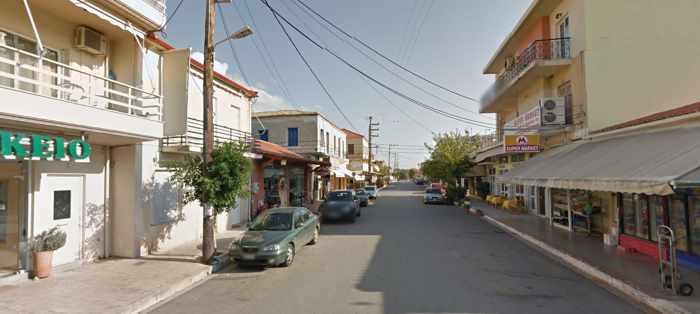
When we arrived at Marathopoli and passed through the main section of town on the way to our accommodations, we found a compact commercial strip with three supermarkets and several other shops catering to the local residents, a couple of cafes and tavernas, and a number of vacant storefronts. The business area, which occupies just a couple of short blocks, is fairly basic and nondescript — it hasn’t been fancied up with boutique shops, hipster cafes and trendy wine bars geared to upmarket travellers. From what I recall, it didn’t have any shops selling T-shirts and tacky cheap souvenirs, either. The town seemed unassuming and refreshingly “non-touristy,” at least at the low season time we were there. (It could be a slightly different story during the peak travel months of July and August, though.)
A Google Streetview photo of the business area along Marathopoli’s main street
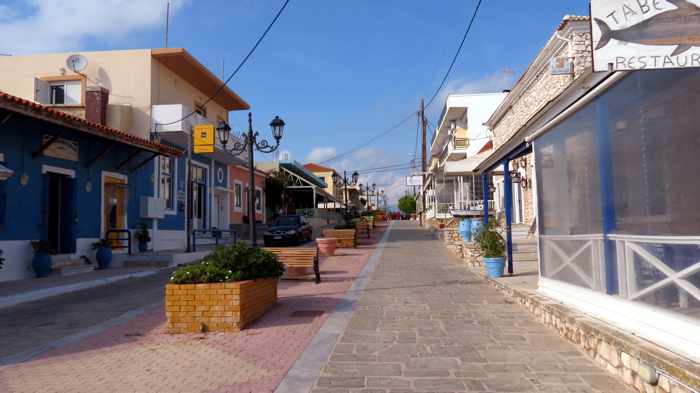
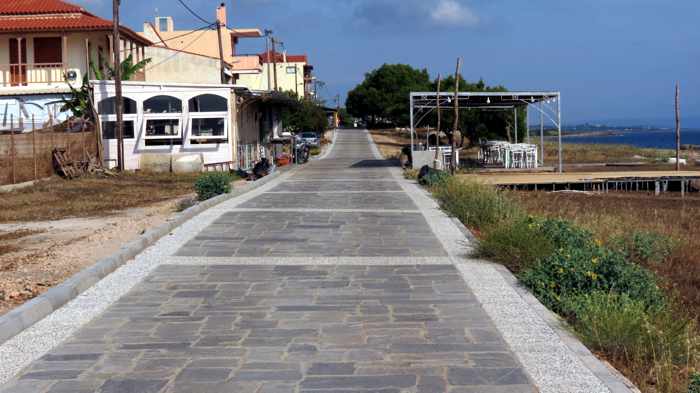
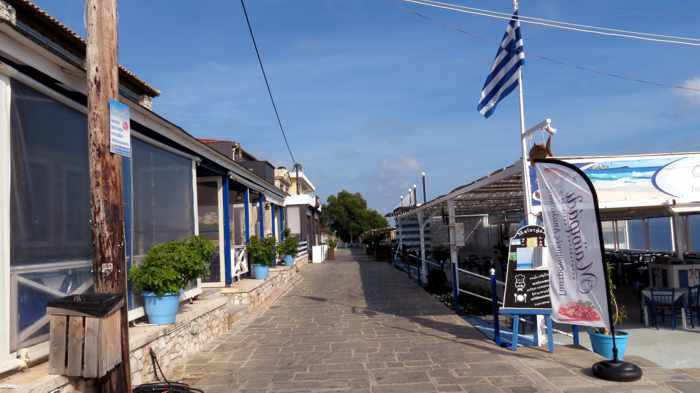
However, Marathopoli does have an attractive pedestrian zone just off the main drag, where visitors will enjoy going for coffee, drinks or dinner, or to take walks with views of the sea and Proti Island. One block, which leads from the main street toward the sea, has been pleasantly landscaped with brick and flagstone pavement, benches, planter boxes, and old-style streetlamps. Restaurants, a few shops and a bank occupy the buildings along both sides of the block. The street intersects with a flagstone-paved pedestrian walkway (Πεζόδρομος — pezodromos) that extends along the seafront all the way to the town harbour. Locals refer to it in English as The Sidewalk, and it is the town’s go-to area for a good selection of fish tavernas, traditional Greek restaurants, coffee shops and bars, many of which have open-air patios along the seafront. We found the pedestrian areas incredibly quiet in daytime and early evening, but humming with people and activity at night, once all of the restaurants had opened.
Visitors will find a bank, shops and restaurants on this block-long pedestrian street which leads from the main road toward the seafront
The pedestrian promenade known locally as The Sidewalk overlooks the seaside and extends from the restaurant zone all the way to the town harbour
The Sidewalk offers a variety of dining options, including cafes, fish tavernas, restaurants and bars, most of which have patios on the seaside
But The Sidewalk isn’t what draws tourists to Marathopoli. The two main attractions for visitors are Proti Island and Lagouvardos beach, both of which are easily accessed from town. Proti is reached on excursion boats from the Marathopoli harbour, and offers swimming and cliff jumping at secluded Vourlia beach, trekking on a variety of island trails, rock climbing, snorkeling and scuba diving. Lagouvardos is a large golden-sand beach about 3 kilometers from town, and is popular for board and wind surfing, stand up paddle boarding, swimming and other water sports. (More information about Proti and Lagouvardos will appear in an upcoming post.)
If you’re planning to travel in western Messenia and looking to stay in a mellow, realxed location with appealing attractions close by and plenty more within reasonable driving distance, take a closer look at Marathopoli. For us, its location just couldn’t be beat. Our only regret was that we didn’t spend another night or two there; we never made it to Lagouvardos, and at the time of our late May visit the tour boats to Proti Island had not started operating. But we did enjoy the town’s unhurried, low-key atmosphere, excellent dining, and beautiful sea and sunset views.
To see more of Marathopoli, take a look at the aerial video below, then turn to page 2 where I have posted photos that we shot while wandering around the town and enjoying the almost traffic-free streets.
Aerial views of Marathopoli and Proti Island are featured in this 2-minute video by Nikos Tsiak