
Page 32 of 109

Milos recasts its magical spell

Share

Tsigrado beach Milos

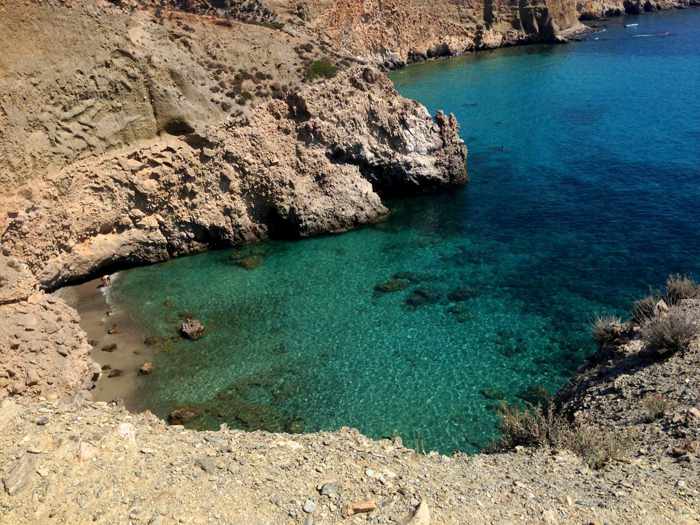
With dozens of unique beaches, like the cliff-enclosed Tsigrado cove 


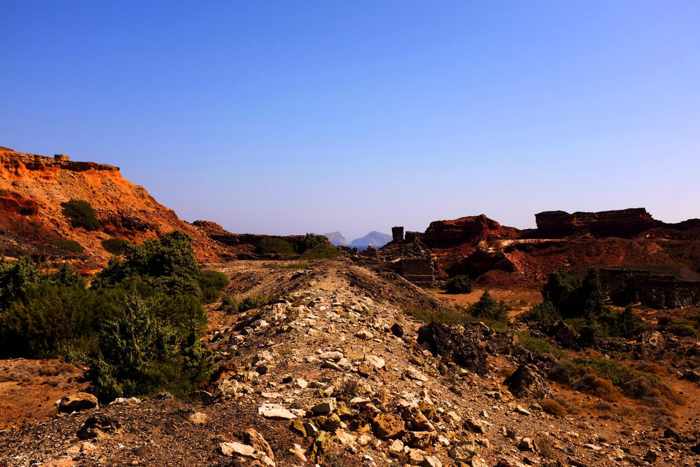
Cape Vani on Milos

  an astounding array of natural scenery and rugged terrain, such as the Mars-like landscape at Cape Vani


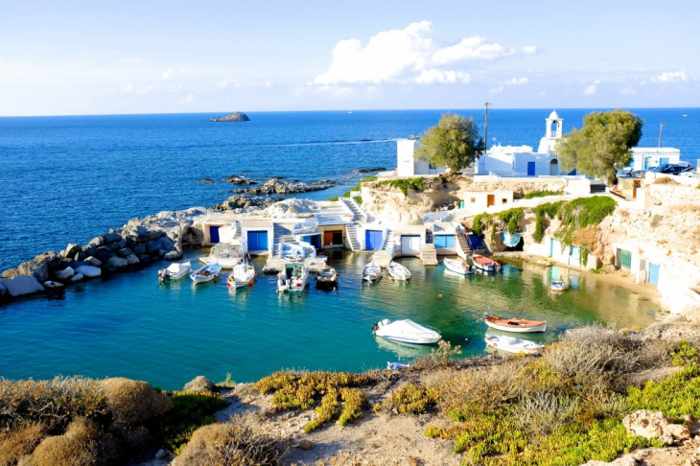
Mandrakia village on Milos

 picturesque seaside fishing villages, like Mandrakia


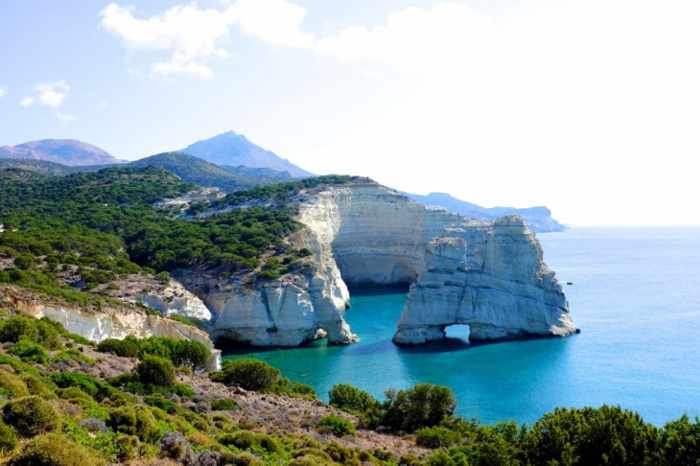
Kleftiko coast at Milos

… spectacular coastal scenery, like the breathtaking cliffs and offshore rock formations at Kleftiko


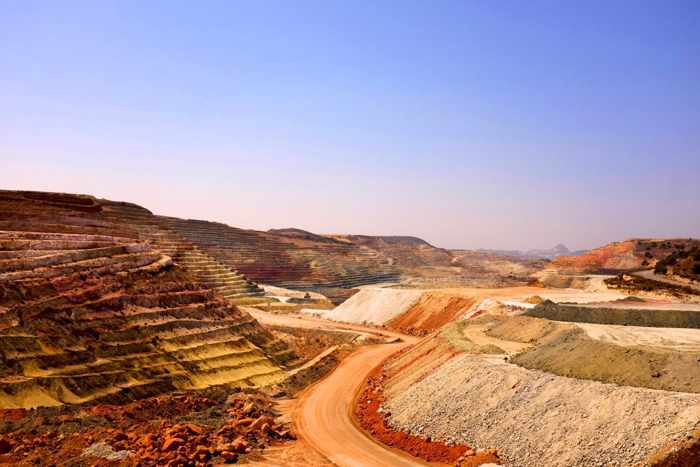
Ageria mine site on Milos

 colourful mining sites, like the Ageria open pit operation 


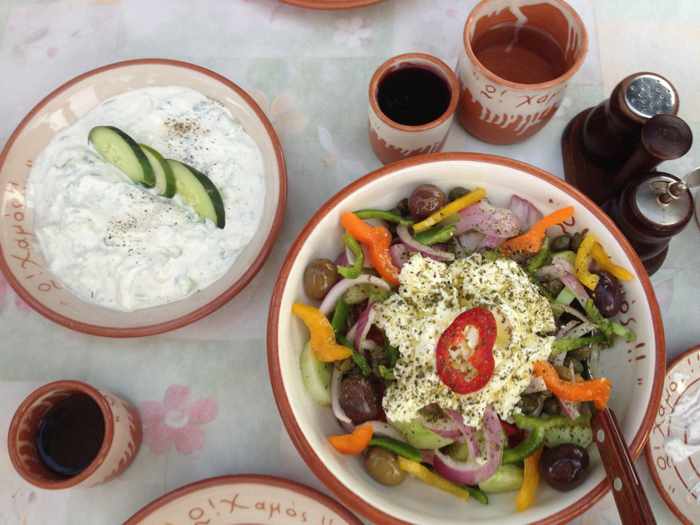
O Xamos restaurant Milos

and superb Greek cuisine served at restaurants like O Xamos!, it’s easy to understand why travel blogger Dace was drawn to Milos two years in a row. (All of the photos in this post are by Dace and originally appeared on her website, Dace Travels. They are reposted here with her kind permission).


Well worth repeating: My regular readers know how much I enjoy Milos — I’ve published numerous posts about the island in the last several years, along with dozens of photographs we shot during two separate visits.  I’m always keen to hear and read what other travellers think of it, in particular to see if they had similarly delightful experiences (the feedback has been overwhelmingly laudatory, I’m happy to report). I also like to hear people’s impressions of places they managed to see in parts of Milos we haven’t yet explored ourselves since it gives us ideas about new places to check out next time we go back.

So when I discovered a Milos trip report link in a post on the TripAdvisor Milos forum, I was excited to read what the writer had to say, and to view her holiday photos. Clicking on the link actually was a double treat because it took me to not one but two separate trip reports for Milos, posted by Latvian writer Dace on her personal blog, Dace Travels.  


[adToAppearHere]


I was very pleased to find that both reports were packed with gorgeous photos and enticing descriptions of numerous Milos destinations that we haven’t yet seen (in large part because we haven’t rented a vehicle on either of our trips to the island, so we’ve been limited to what we could access by bus, taxi or walking, and couldn’t reach many of the remote areas that Dace drove to in her 4×4.)

In her first post, Greece: The beauty of Milos, Dace explains that she chose Milos after reading about it on a “hidden gem” list for Greece. 

“What a great choice it was!,” she wrote. “The island has 70 different beaches, it’s not overcrowded by tourists; the western part is more wild while the eastern part is more developed. We spent 6 days there but it was not enough.”  But in those six days, she saw a variety of places I’ve only read about in online travel guides — Thiafes beach, Tria Pighadia, Kolymbissionas, Amoudaraki and Manddrakia.


Spellbinding nature, beaches and good food

In her second report, Greece again. Yes to Milos!, Dace reveals why she returned to Milos for another holiday. “So why Milos again? It really got its spell on us, so much of beautiful nature and beaches and good food :),” she wrote.  (I totally understand; the exact same features drew us back to Milos for our own second visit.)

Once more, Dace posted lots of beautiful photos and descriptions of even more amazing places I haven’t seen, leaving me feeling a strong tinge of envy. Those spots included Cape Vani, Voudia Bay, Pollonia, and a slew of splendid beaches — Angathia, Agios Ioannis, Triades, Firiplaka, Paleochori, Plateina, Agio Kyriaki and Tsigrado. 

Both reports are fascinating and fun to read. Dace has a great sense of humour, so I chuckled at some of her stories (like the “quad people” they encountered at some beaches) and cringed at another (her account of a stomach-churning ferry ride to Milos).  And of course there’s dozens of photos of stunning Milos scenery that are bound to make you dream about going there yourself.

Click here to read Dace’s first report, and then click here to read about her return visit. (The second report includes photos and information about her stay in Athens, too, and elsewhere on her blog you can read about her trip to Santorini.)
A teasing glimpse of Korthi

Share

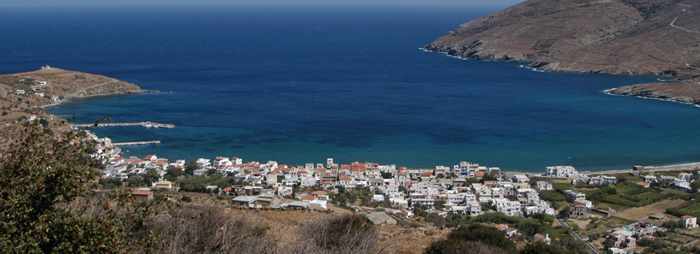
Ormos Korthious photo from islandandros.com

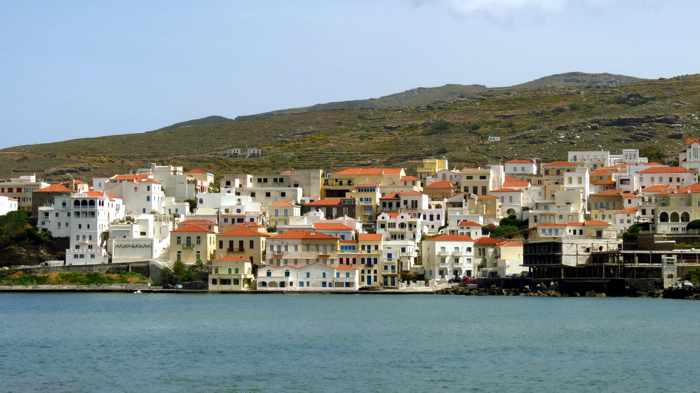
Korthi Bay and the village of Ormos Korthiou are seen in a photo from the Andros travel and information website Island Andros.


Quick peek: Have you ever experienced that nagging feeling, while travelling from one scheduled holiday destination to the next, that you’re missing out on some really worthwhile sights and attractions you simply don’t have time to stop and visit along the way? We certainly did during our trip to Andros last spring.

After spending 3 nights in Andros Town at the beginning of our vacation, it was time to move on. Our friends had to return to Athens, and they agreed to drop us off at our next stop — a hotel near the resort area of Batsi, on the northwest coast of Andros — while they drove to Gavrio port to catch their ferry back to the mainland. 

So that we could all see a little more of Andros during the drive, we avoided the most direct highway route from Andros Town to Batsi and detoured to the south, following a highway that winds through the island’s Korthi region. The plan was to stop at the fishing harbour and seaside village of Ormos Korthiou to have a coffee before resuming the drive to Batsi.

Click here or on the link under the next photo to turn to page 2 of this post, where you can continue reading about Korthi and view more pictures of some of its top  attractions.

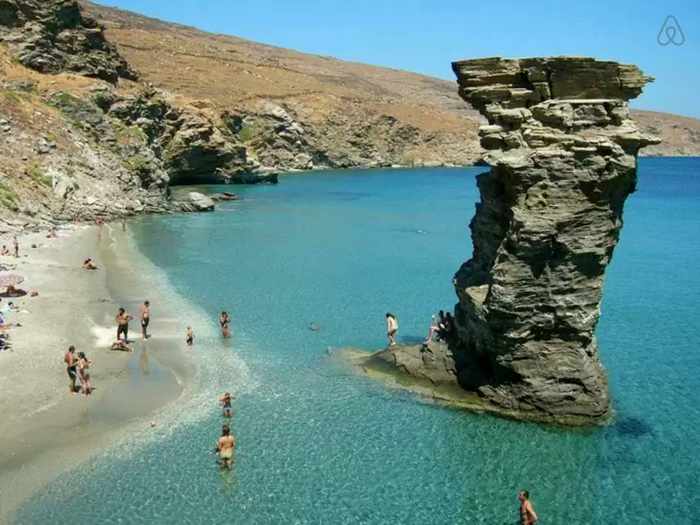
Grias Pidima beach Andros

One of the iconic sights we didn’t get to see in Korthi was Tis Grias to Pidima beach (also called Old Lady’s Leap), shown in this photo from airbnb.gr.  Pictures of the sandy beach and its towering stone pillar can be found on scores of postcards, websites and travel publications for Andros.


CONTINUED ON PAGE 2

Tips for budget travel from Turkey to mainland Greece

Share

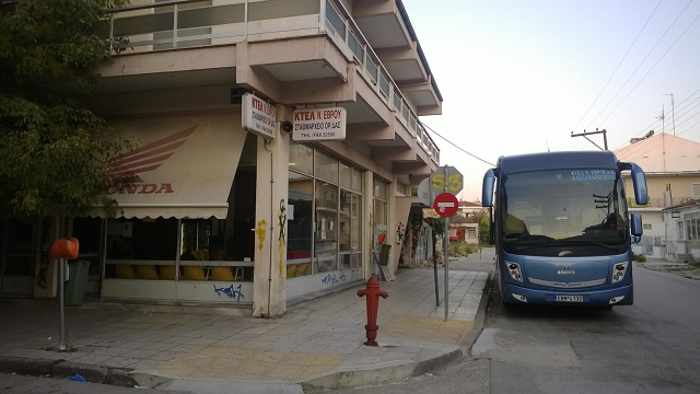
Orestiada Bus Station

The bus station at Orestiada, a town in eastern Greece near the Turkish border, is seen in a photo by EcoTripSos.com. The website’s “Travel Tips for Greece” guide provides detailed information about local bus travel. 


Survival Guide: Readers occasionally email me for advice on ways to travel overland from Turkey to mainland Greece, and onward to some of the Greek islands. They are typically younger travellers who intend to backpack throughout Europe, as well as individuals who simply want to combine trips to Turkey with a budget-friendly foray into parts of Greece. 

Since I haven’t been to Turkey yet and have never travelled east of Athens to the Greece-Turkey border, I haven’t been able to answer their questions. But an information-packed article published by EcoTripSos should be a valuable research rescource  for anyone seeking economical ways to travel to Greece from Turkey.

Founded by Turkish travel enthusiasts Özge Çetinkayar and Kutay Uzun, EcoTripSos is an online guide offering advice on budget and eco-friendly travel, particularly for inexperienced or beginner travellers.

On November 15, they published Travel Tips for Greece, a photo-illustrated “Greece Survival Guide for Travelers.” It recounts a 10-day journey to seven Greek villages and cities, including Kastanies, Orestiada, Alexandroupolis, and Thessaloniki on the eastern Greece mainland, plus Heraklion, Rethymno and Chania on the island of Crete. The guide describes how the travellers crossed the border at Pazarkule (9 km from the city of Edirne in Turkey) to reach the Greek town of Kastanies, used local bus transportation to travel onward to Alexandroupolis and Thessaloniki, and from the latter city flew to Crete and back. 

Besides providing practical information about how to use Greece’s intercity and local city bus systems (including how and where to buy bus tickets), the article describes air travel between Thessaloniki and Crete,  and offers myriad useful tips about hotels and “Daily Life in Greece from Travelers’ Eyes,” including such topics as food, beer, water and wi-fi service. 

Click here to read the EcoTripSos Guide to Greece.

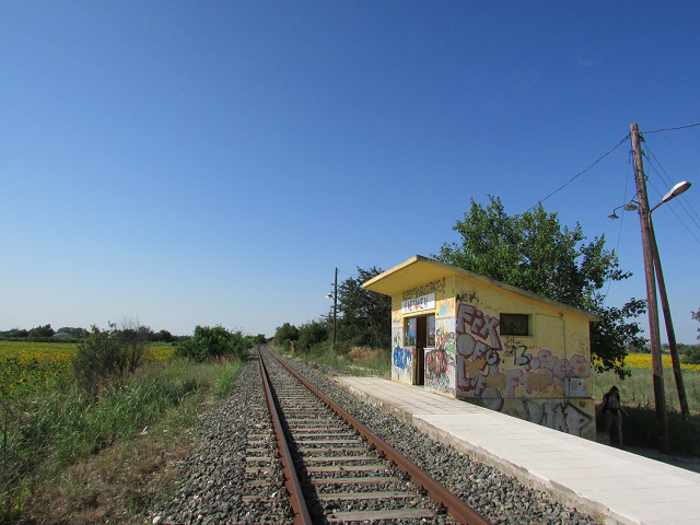
Kastanies railway station

The tiny train station at Kastanies, near Greece’s border with Turkey


Strolling around Stenies

Share

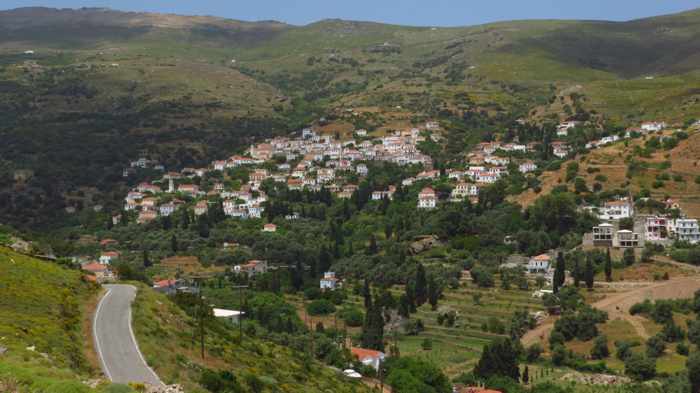
Stenies village on Andros

Approaching the Stenies mountainside settlement on Andros island


Valley village:  There is much to see in the mountain and valley areas near Andros Town (also called Chora) on Andros Island. In fact, visitors could easily spend several days sightseeing and exploring the surrounding countryside by car or, if they prefer, by foot (the island boasts a network of nearly two dozen sign-posted walking and hiking trails, several of which start in or near Chora).

Unfortunately, we didn’t have that much exploration time at our disposal. During the first two days we stayed at Andros Town in late May, we spent much of our time in and around Chora itself. But on our third (and final) day, we ventured a little further off to do some hillside hiking in Stenies village and vicinity.


Stenies village on Andros

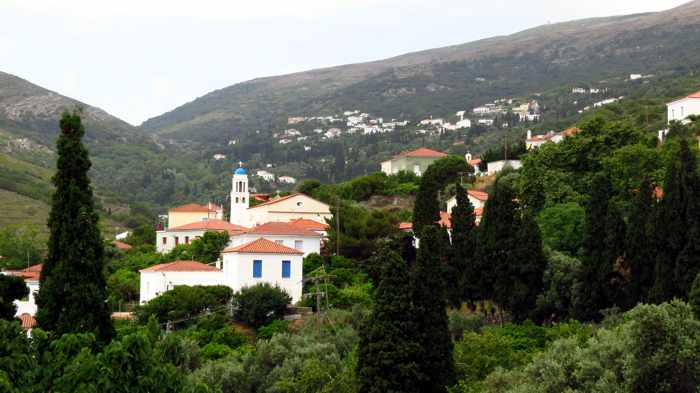
At Stenies, visitors can stroll past churches, red-roofed houses and palatial private villas nestled against verdant valley hillsides …


Bistis-Mouvelas Tower House on Andros

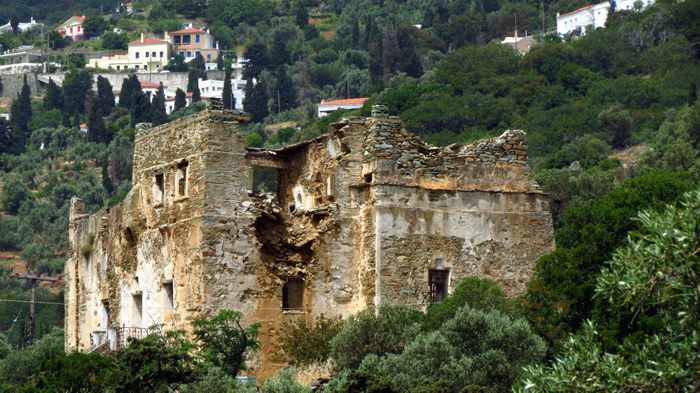
… and see historic ruins, including the crumbling Bistis-Mouvelas tower house, which dates from the 17th Century


Situated less than a 20-minute drive from Andros Town, Stenies is a residential settlement area that stretches across rolling hillsides in a mountain valley verdant with flowers, greenery and towering Cyprus trees. Blue-domed churches and large houses with red tile roofs rise from the leafy slopes,  while several sprawling estates with palatial private villas indicate that Stenies is a popular valley enclave for the affluent. Besides recently-built and still-under-construction stone mansions, the hillsides are home to some crumbling old buildings, including the Bistis-Mouvelas tower house, which was built in the 17th Century.  And on the coast at nearby Gialia Bay are two beaches — the pebbly Empros Gialia, and the sandy Piso Gialia, where travellers can stop for a meal on the seaview terrace at Gialia Restaurant and Snack Bar.

We spent several hours at Stenies, where we wandered along a series of paved paths and dirt trails that meandered up and down hills, past attractive homes, over mountain streams and across grassy fields, eventually making our way to and from the Bistis Tower. After working up hearty appetites hiking in warm temperatures under a mixed sky of sun and clouds, we drove to Drosia restaurant in the village of Menites for a midafternoon lunch break. (Staff at the Andros Town hotel where our travelling companions were staying had highly recommended we drop by Drosia for a meal. We enjoyed it as much as they had promised we would.)


Drosia Restaurant at Menites Andros

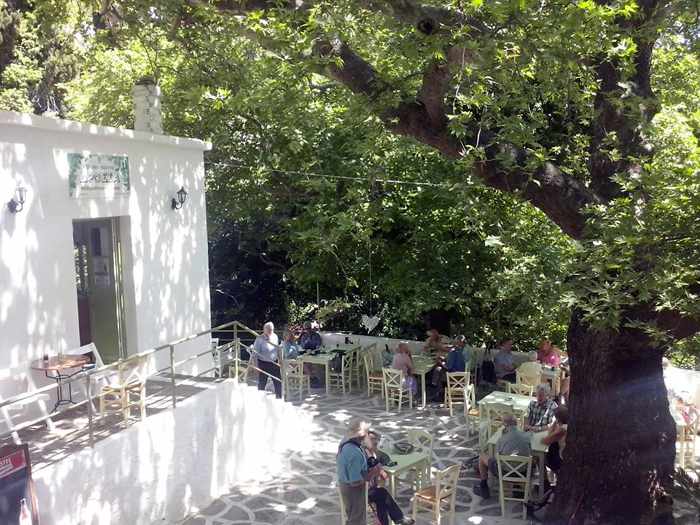
Part of Drosia restaurant’s very pleasant tree-shaded patio is seen in this photo from the Drosia Facebook page


Drosia’s outdoor terrace was as delightful as its delicious food — shaded by soaring trees, the patio is perched on the edge of a ravine through which streams cascade down the steep slopes. As we sat amidst thick vegetation, with the sound of water rushing in the creeks below us, it truly felt like we were in a lush island oasis — something we’ve never experienced on predominantly barren other islands in the Cyclades, like Mykonos, Ios or Santorini. 

It was just a short — but sweet — visit to Stenies and Menites, and we realized we had merely scratched the surface in terms of the multitude of things to see and do in both areas. We hope we get the chance to go back and  see more.


I shot this short video from the mountain road that took us to Stenies. It shows views of the mountainside settlement as well as nearby Gialia Bay. Click on the arrow to start the video.


Please click on the link below to turn to page 2 of this post, where you can read more about our day and view some of our photos of Stenies and Menites.  You can see full-size versions of the pictures, along with dozens more, in my Stenies and Menites album on Flickr.

CONTINUED ON PAGE 2

Our brief stay at Irene’s Villas in Andros Town

Share

Irene's Villas on Andros

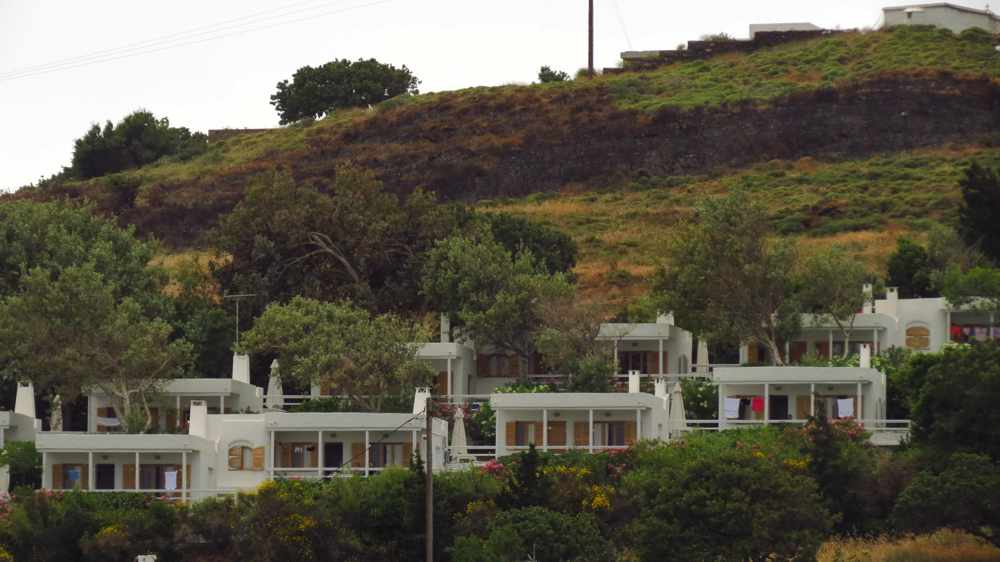
Irene’s Villas is a collection of self-catering studio apartments on a hillside above Nimborio beach. We spent 3 nights here in late May.


Hilltop hideaway: First stop on our island-hopping holiday this year was Andros, where we spent  three days with friends who, like us, were visiting the island for the first time.  They had researched accommodations and shared a short-list of three options they were considering in Andros Town. They ultimately booked at their first choice, Anemomiloi Studios, but by the time I contacted that property, there was no availability in our budget range. So we settled for our second choice, Irene’s Villas, and used their website’s online booking form to reserve a studio.


Irene's Villas Andros

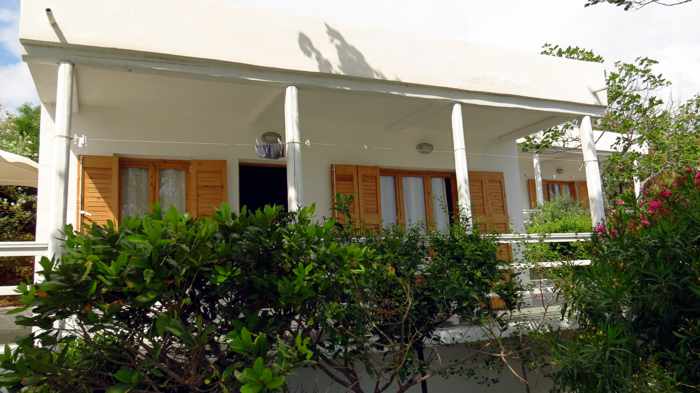
Exterior view of the front of our apartment at Irene’s Villas. The studio was spotlessly clean, comfortable and quiet.


Irene's Villas Andros

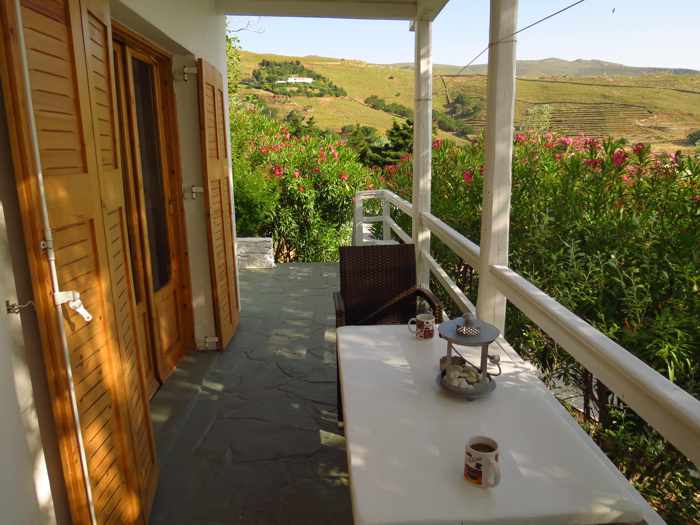
What we liked the most about our studio was the long sea- and mountain-view veranda out front, where we enjoyed having breakfast and coffee


Please click on the link below to continue reading our review of Irene’s Villas, and to see our photo slideshows of the property and nearby area.

CONTINUED ON PAGE 2

Two of Lefkada’s top beaches buried by landslides during November 17 earthquake

Share

Egremni beach on Lefkada

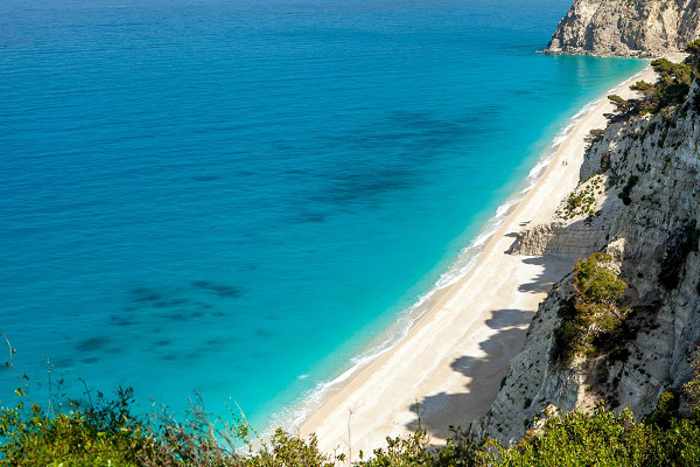
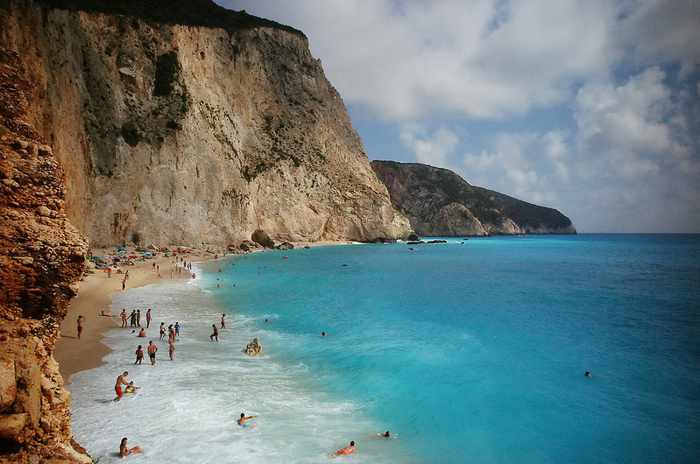
This photo of Egremni beach, from Lefkas.net, shows why it has often been cited as one of the world’s most beautiful beaches 

  Egremni beach Lefkada

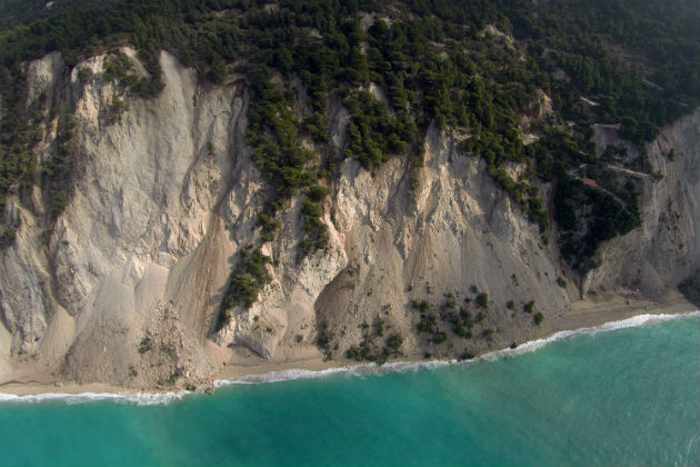
Most of Egremni is now buried from landslides triggered by the earthquake that struck Lefkada on November 17, as shown in this aerial photo by Antonis Nikolopoulos for the Eurokinissi press agency


Clifftops collapsed:  An earthquake that struck Lefkada island on November 17 made headlines around the world, with international media reporting what little information was available at the time about collapsed buildings, widespread property damage and two deaths directly attributed to the Richter 6.1-magnitude tremblor. Greek media have since revealed that two of the island’s top beaches also sustained extensive damage from landslides that occurred during the quake.

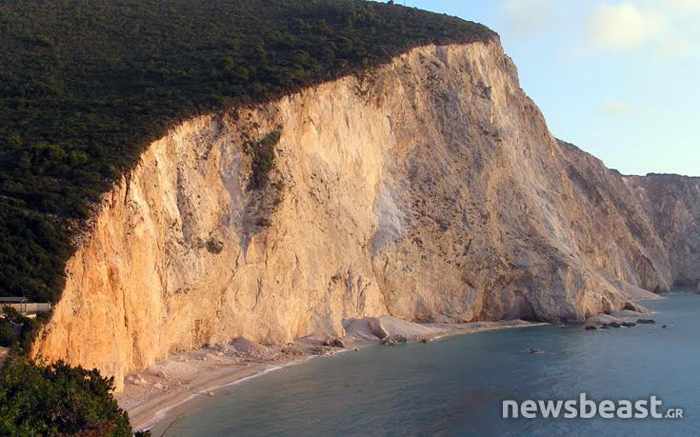
Egremni beach, which has often scored high rankings on lists of the world’s best and most beautiful beaches, suffered the most severe damage, with landslides burying much of the long, narrow strand. Landslides also damaged the scenic beach strip at popular Porto Katsiki, but the rockfalls there apparently were much less extensive and destructive. Tons of soil, sand and rocks swept onto the beaches after being shaken loose from the dramatic 150-meter-tall cliffs that tower over the two spectacular seasides.

I have never been to either beach,  but have been enthralled by both from awe-inspiring photos I have viewed online and in travel publications, and from all the good things I’ve heard about them — and about Lefkada in general — from a Greek-Canadian acquaintance who has long been urging me to visit the island, his personal favourite holiday destination in Greece.

Although I didn’t have plans to visit Lefkada in the next two years, I did hope to get there sometime in the future. It’s sad to think the two beaches might never look as gorgeous as they did before the quake, though there is a strong chance that Porto Katsiki, at least, may eventually regain much of its former glory with the help of Mother Nature. Greek news reports have quoted geological engineering experts as saying that winter weather will probably wash away much of the soil debris that currently covers parts of Porto Katsiki beach. In fact, the normal course of nature could restore much of that beach to its former look by the time next summer’s tourist season rolls around, one expert surmised. 


Porto Katsiki beach Lefkada

Dreamy Porto Katsiki beach is seen in this inviting image that Flickr member Out to Lunch captured during a visit in the summer of 2014. It’s one of my favourite photographs of the beach, and illustrates one of the reasons why I hope to visit Lefkada sometime — I want to see the amazing scenery in person.


Porto Katsiki beach Lefkada

Large mounds of sand and stone cover much of Porto Katsiki beach in this image provided to Greek website newsbeast.gr by Efthimios Lekkas, a professor at the University of Athens and President of the Earthquake Planning and Protection Organisation (EPPO)


Please click here or on the link below to continue reading on page 2 of this post, where you can view more photos along with videos showing Egremni and Porto Katsiki before, during and after the earthquake.


CONTINUED ON PAGE 2

Cool things to see in and around Andros Town

Share

Andros Town

Red-roofed buildings on the northeast side of Andros Town


Eye & camera candy:  If you enjoy exploring Greek island towns, either simply to stroll around and just see what’s there, to learn more about the destination’s history, or to discover interesting subjects for photography, painting or other artistic hobbies, you won’t be disappointed with Andros Town. 

During our Andros visit this spring, we spent three days at Chora (the Greek name for the island’s main town) and wandered its streets, lanes, and seaside areas several times. The town has many familiar features and amenities we enjoy seeing and photographing on other Greek islands — outdoor bars and cafes, public squares, picturesque churches and chapels,  impressive local architecture, and cats aplenty — but it also boasts its own special landmarks and historic sites, plus distinctive natural surroundings of seasides, beaches, bays and mountains.

Unfortunately, jet lag kept us from exploring Andros Town as thoroughly as we would have liked. Though we did view a lot of interesting sights and scenery, when it came time to move to a beach resort area on the south side of the island, we realized there had been much, much more we didn’t get to see. But that just means there will be plenty of new things to experience the next time we visit Chora. 

Page 2 of this post features photo slideshows of some of the sights we saw during our various walkabouts. Click here or on the link below to access the photos.

You can view full-size versions of all of the pictures, along with hundreds more, in our Andros Town album on the mygreecetravelblog Flickr page.

CONTINUED ON PAGE 2

The allure of Astypalea

Share

Astypalea is an inspiring short film by Eva Rodriguez and Ignasi Llobet 


Intriguing imagery: We have been to Astypalea just once, for an introductory 3-day visit back in 2009, but after watching the video posted above, I regret that we didn’t spend more time there.  We missed so many amazing sights!

Astypalea is a short video that was created by Eva Rodriguez and Ignasi Llobet. It’s only two minutes long, yet the film is packed with intriguing images and spectacular scenery from what the two filmmakers rightly describe as “one of the most beautiful and unspoiled Greek islands.”

Filmed by Ignasi with a handheld Blackmagic Pocket Cinema Camera, the video follows Eva as she tours the butterfly-shaped Dodecanese island, pausing to admire and contemplate Astypalea’s striking landscape, beach, coast and village scenery.  I recognized the spellbinding views from some of Eva’s vantage points, but felt a strong tinge of disappointment that I didn’t get to personally see many of the other sights while we were there.  

Happily, Eva and Ignasi have shown me plenty of good reasons to consider a return trip.


Filming is a challenge under the intense Greek sun

But it isn’t just their film that has rekindled memories of our own brief visit six years ago. In notes describing their film, Ignasi said “it was practically impossible to see what I was shooting, focusing, exposuring and framing… under the Greek sun it’s impossible to see anything on the screen.”

That is so true.  The sun is always incredibly brilliant in Greece, but in Astypalea I found it exceptionally intense.  Even though I wore sunglasses, I couldn’t stop squinting, and my eyes often watered uncontrollably because of the searing sunshine. Like Ignasi, I couldn’t see anything through my camera viewfinder or LCD screen, either, and most of my photos wound up blurred, overexposed, or poorly framed because I could only point and shoot and hope for the best. (It didn’t help that I was in a jetlag haze much of the time — Astypalea was our first stop on a four-island itinerary that year, and it had taken us well over 24 hours of travel to get there.) You can see the  photos that turned out okay in my Astypalea album on Flickr.

But do watch Eva and Ignasi’s film a few times — I think it’s remarkable for capturing the allure and charm of Astypalea, and making you feel like you’re actually there, experiencing the island yourself. If you can’t get to Astypalea, this film is the next best thing.

Many thanks to Eva for inviting me to publish the film on my blog. This is one of my favourite videos of Greece!

« Older posts Newer posts »

© 2026

Theme by Anders NorenUp ↑