
Category: Greek Island villages and towns (Page 5 of 32)

Greek tourism businesses urge travellers to ‘stay safe’ now, make plans to visit Greece later

Share

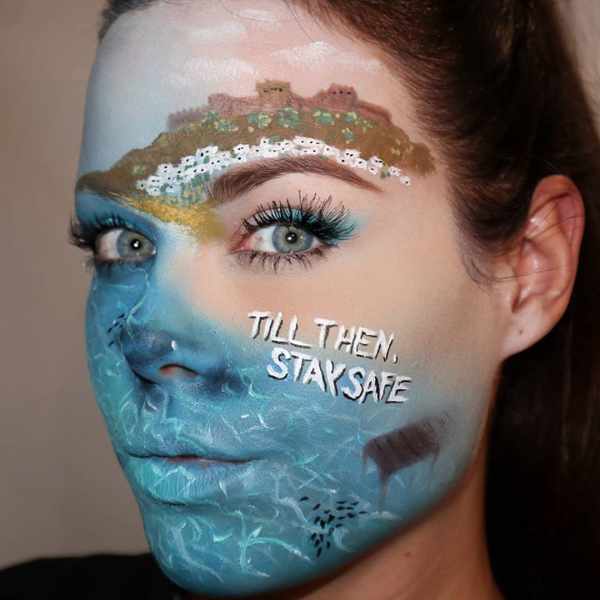
TillThenStaySafe image of Lindos Rhodes by makeup artist Natalia J

The Aegean Sea, Lindos village and the Acropolis of Lindos, on Rhodes, are depicted in a fabulous face painting by makeup artist Natalia J of Rhodes.  This image is one of several she shared on her Facebook page; Natalia also posted a photo of the painting on her Instagram. Her facial artwork was inspired by the Till Then, Stay Safe campaign for Greek tourism.


Dream now, travel later:  The Covid-19 pandemic has completely upended travel plans for millions of people (including us) who were supposed to holiday in Greece this spring and summer. Lockdowns, quarantines and international travel restrictions have put Greece off-limits to visitors since March, and as of mid-April it’s still far too early to tell if or when Greece will be able to welcome tourists back.

At this point, no-one knows if travel can resume sometime this summer or fall, or if there will even be a 2020 travel season at all.

Although their own livelihoods and personal well-being are in peril during the pandemic, Greeks who work in the tourism industry fully understand the frustration travellers are feeling because their Greek holiday plans have either been cancelled already, or remain in limbo. Feeling hopeful and positive despite the tremendous international upheaval caused by Covid-19, Greeks have been encouraging anxious travellers to stay optimistic, too, and to keep dreaming about going to Greece as soon as it’s safe to travel. To that end, the operators of hotels, resorts, tavernas, tour operators, promotional agencies, Greek destination websites, and many more, have been filling their social media pages with inspiring, positive posts and alluring images of beautiful sights and scenes in Greece.

They’re participating in an innovative initiative launched in mid-March by Marketing Greece,  a private sector company established by the Association of Greek Tourist Enterprises (SETE) and the Hotel Chamber of Greece (XEE) to promotes travel and tourism to Greece.  
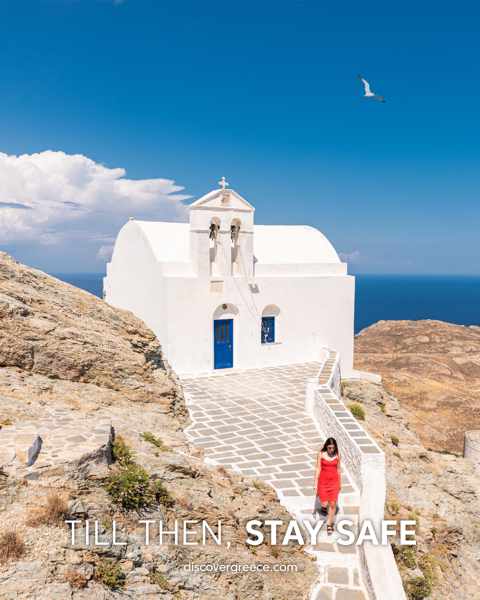
Marketing Greece photo of a Serifos island church photographed by Stefanos Addimando

One of several dozen images that Marketing Greece has made available to tourism businesses as part of its “Till Then, Stay Safe” campaign. This photo of a whitewashed chapel on Serifos island was shot by travel photographer Stefanos Addimando, better known to Instagrammers as @stef_greece.


“Nowadays, humanity is called upon to respond to a shocking challenge, with the messages of hope and optimism being more necessary than ever. Greek tourism, perfectly identified with the feelings of freedom, immediacy and escape from everyday life, sends its own message of anticipation for the next day,” Marketing Greece noted in a press release. Seizing upon that, the company kicked off a campaign called Till Then, #stay safe,  and created promotional content for Greek tourism businesses to share with the international travelling public, urging them to remain safe while waiting for the better days that undoubtedly will come.

“Utilizing photographic material and accompanied by the copy ‘When the time is right, we’ll be there for you. Till then #staysafe,’ Marketing Greece emphasizes the hopeful Greek light, the refreshing blue of our country, our relaxing nature and invites travelers to continue dreaming the next time that carefree people can enjoy the uniqueness of Greece,” the press release explained.

Greeks joined in the campaign instantly and enthusiastically, and have since shared thousands of messages on social media pages and websites, using either the “Till Then, Stay Safe” catchphrase and hashtag, or substituting similarly-themed messages like “stay home,” “don’t cancel — reschedule,” “dream now,” and “till we meet again.”
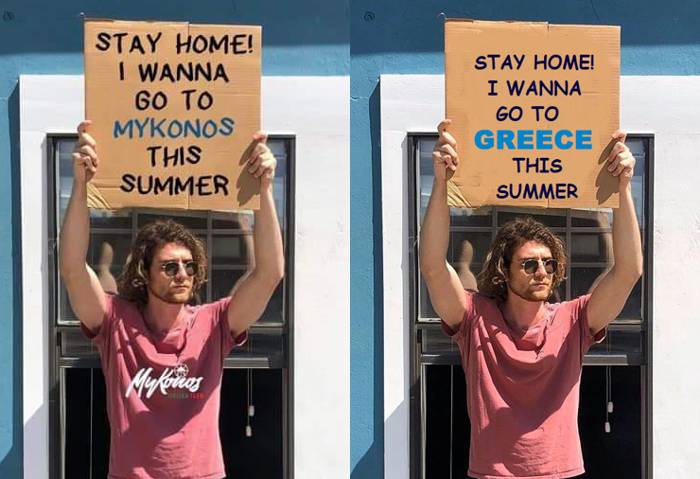
 

Stay Home I Wanna Go To Mykonos knockoffs of @dudewithsign

The “I wanna go to Mykonos” photo at left — a knock-off of a popular Instagram post by @dudewithsign — went viral on social media in late March and early April. The image was frequently reposted with the word “Greece” or the names of other islands or Greek destinations Photoshopped in place of “Mykonos.”
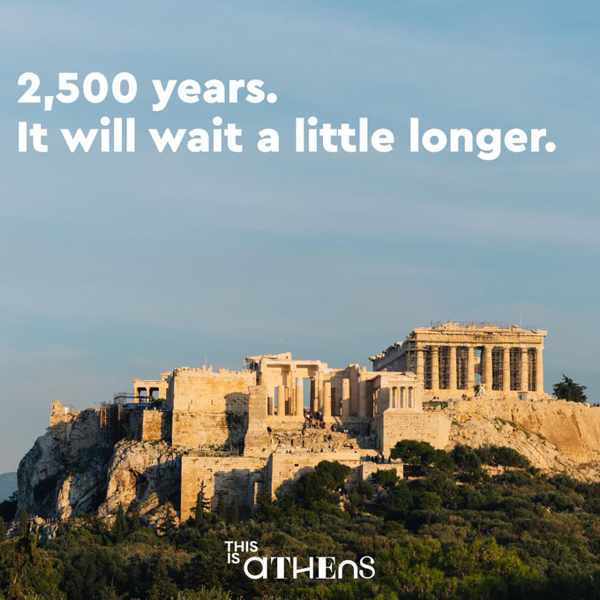
 

Acropolis image tweeted by @CityofAthens

This is Athens shared this image on Twitter to remind travellers that the Acropolis and Parthenon have endured tumultous events for centuries, and will still be around to visit after the Covid-19 pandemic is over.


The tourism center for the city of Volos and the region of Pelion shared this enticing short video to remind viewers of the immense natural beauty of Greece they will be able to enjoy once travel resumes.


We have collected dozens of Till Then,  Stay Safe images that evoke happy memories from our own past vacations in Greece and make us eagerly anticipate our next trip, whenever that can happen. We have compiled them on page 2 of this post, where you can see popular places, attractions and holiday activities in Greece that will be waiting to welcome you once the pandemic-related travel restrictions are lifted. If you haven’t yet decided where you would like to holiday once it is possible to arrange a trip to Greece, the pictures should give you plenty of ideas for amazing places to consider.

CONTINUED ON PAGE 2
Video spotlights spectacular Greece sights and scenery to send inspiring message: ‘Dreams can’t be quarantined’

Share

Filmmaker Aris Katsigiannis collected compelling images of Greek people, some of Greece’s most famous sights and attractions, and views of the country’s spectacular natural landscapes, to create this exhilarating video


Don’t stop believing: If you’re suffering a severe case of self-isolation blues because your upcoming trip to Greece has been cancelled or indefinitely delayed due to the Covid-19 pandemic,  Aris Katsigiannis’s inspiring video Dreams can’t be quarantined should give your spirits a big boost. The 4-and-a-half-minute film presents a dazzling panoply of sights and scenery from all over Greece as it conveys an uplifting message to people around the world: Don’t let these dark days stop you from dreaming.

If it’s dreams of going to Greece that you’ve been forced to put on hold, we strongly suspect the film’s visual delights and inspirational message will give you some joy and remind you that Greece is well worth waiting for, whenever you can finally get there. And we’re all hoping that will be sooner than later.

In notes accompanying the video’s release on YouTube, Katsigiannis says he started work on the project after the Greek government imposed a nationwide lockdown in late March in an effort to contain the spread of the coronavirus. He wanted to create a film that “could share a positive message worldwide, and motivate people globally during these difficult times.”

To send a message of hope in bleak, dark times, Katsigiannis couldn’t have picked a better subject for his film — after all, Greece has long been called “the land of light.” 

Copywriter and narrator Joanna Trafalis acknowledges this in the video’s introductory voiceover, noting “We have learned to see the light in the darkness. We have learned to never stop dreaming. The rough times will pass, so don’t forget your dreams.”

And as Katsigiannis adds in his descriptive notes, “Please remember this: We are all afraid, confused and we are all dealing with this crisis in our own way. But there is one thing that is for sure. Our dreams cannot be quarantined. We are all in this together. Stay positive, united, safe and better days will return.”

Lonely Planet’s April issue looks at ‘legendary’ Crete and 15 other Greek Islands

Share

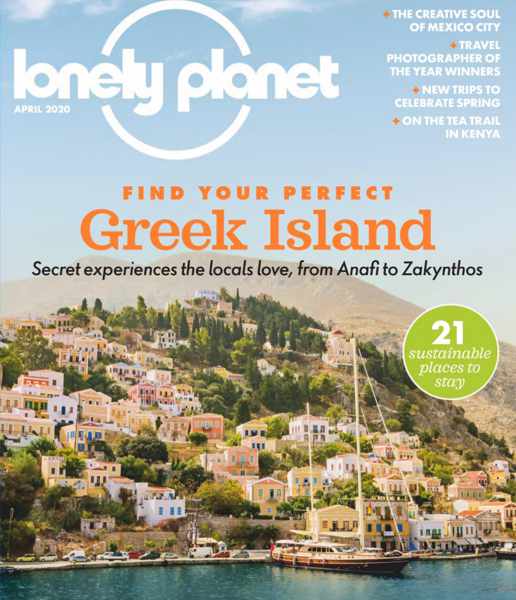
Cover of the April 2020 edition of Lonely Planet travel magazine

The cover of Lonely Planet‘s April issue promises to help readers find a perfect Greek Island holiday destination


Island profiles: Wondering where to take a holiday in Greece if Covid-19 quarantines and lockdowns get lifted in time to permit a trip sometime during the summer or fall? If you think an island might be the best place to de-stress once the pandemic has passed, Lonely Planet magazine has some excellent suggestions for you to ponder.

The travel publication’s April 2020 edition spotlights a selection of 15 household-name and lesser-known isles in its cover feature, Find your perfect Greek Island: Secret experiences the locals love, from Anafi to Zakynthos

“Here we outline the most original slow-travel experiences across the Aegean and Ionian Seas, from local festivals to hidden beaches — and beyond,” writer Oliver Smith explains in his introduction to the 12-page guide.

The piece profiles Folegandros, Hydra, Symi, Tinos, Chios, Zakynthos, Paros and Antiparos, Sifnos, Milos, Skiathos, Anafi, Ikaria, Kea and Limnos, providing a brief island description, suggesting accommodations to consider, and noting how to reach each island. Beautiful, full-colour photos illustrate an enticing place or sight in each destination.

The magazine also includes Gods’ Own Country, a 12-page feature story about Greece’s biggest island, Crete. 

“Beyond the harbours and white-sand beaches of Crete lies a land rich in history and myth, home to deities and monsters from the Minotaur to the thunder-god Zeus himself. We embark on a quest to discover this island’s legendary legacy,” Christa Larwood writes in the article introduction.

Both articles are interesting reads, and the stunning photos that accompany them will certainly provide a welcome distraction from the ongoing coronavirus crisis.

If you can’t find the April magazine at a retail outlet or a library, you can order a copy or purchase a digital download for your tablet or smartphone directly from the publisher. 

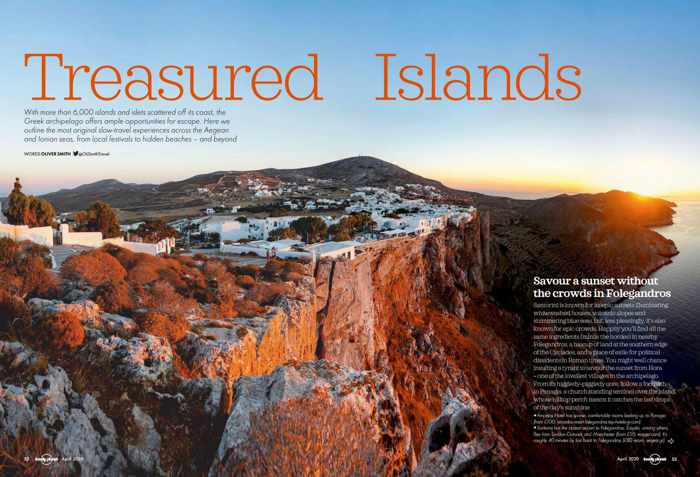
Screenshot of Greek Island guide in the April 2020 edition of Lonely Planet travel magazine

Illustrated with enticing photography, the magazine’s Treasured Islands feature suggests 15 places to consider for a “slow travel” experience


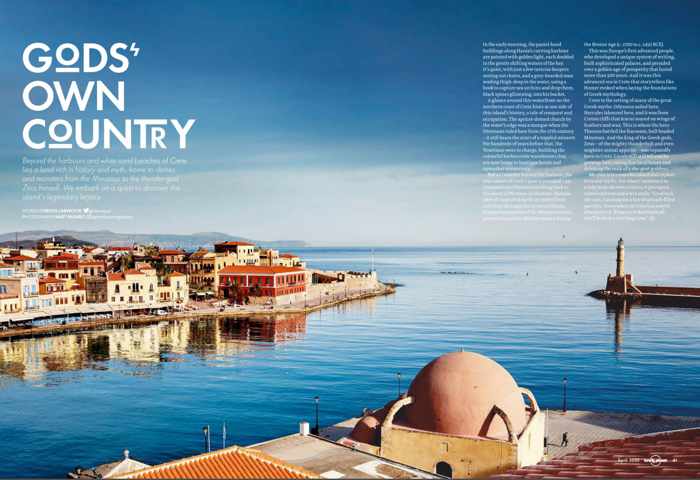
Screenshot of feature article about Crete in the April 2020 edition of Lonely Planet travel magazine

The feature article Gods’ Own Country takes readers on a journey across Crete, from the scenic seaports of Chania and Rethymno to the Samaria Gorge, the Palace of Knossos, and the Lasithi Plateau.

Top Greece travel reads of 2019: Best articles, stories & profiles of Greek islands

Share

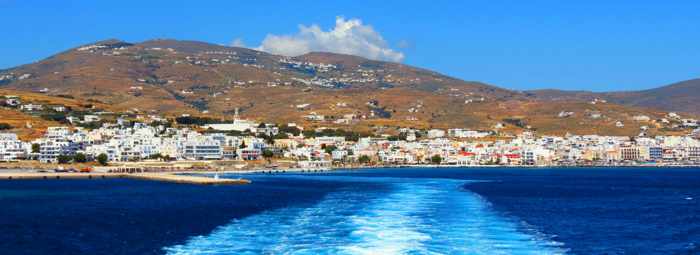
Tinos island as seen from a departing ferry

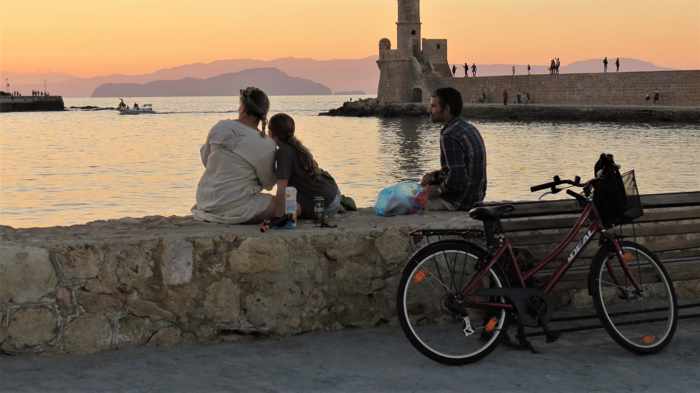
Chania harbourfront at sunset

Arkoi island ferry port

cliffs below Chora village on Folegandros island

Sarakiniko beach on Milos island

the western coast of Andros island IMG_1111

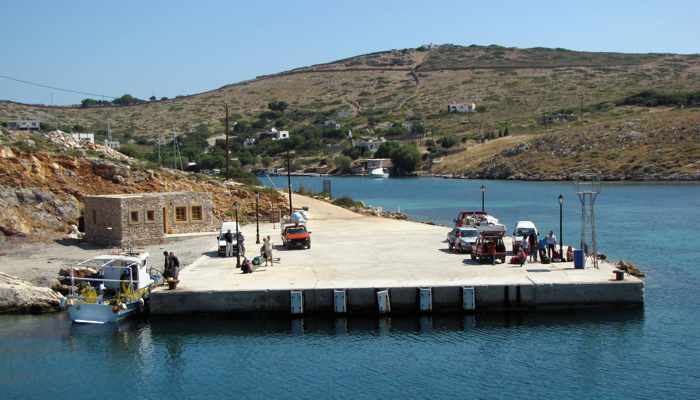
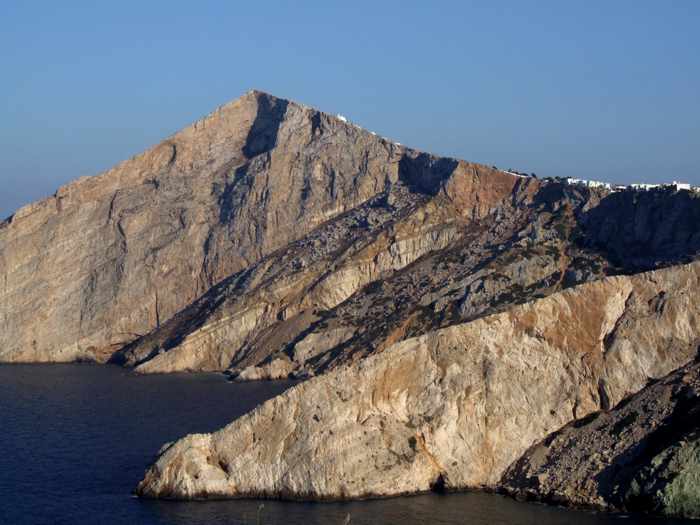
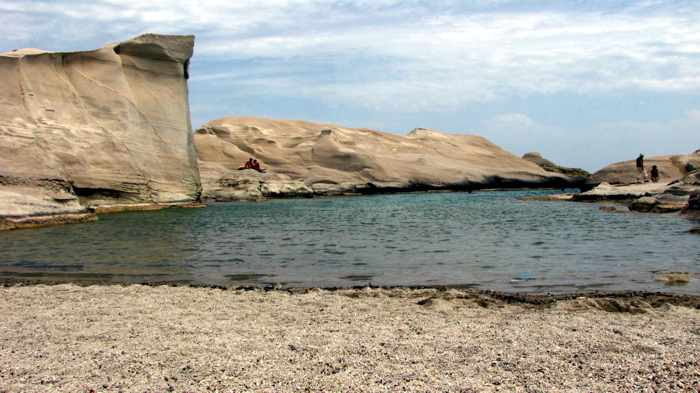
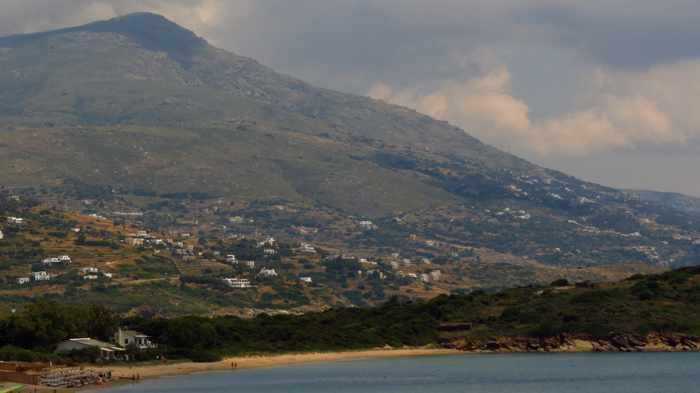
From the top: Tinos seen from a departing ferry; the Chania harbourfront at sunset; the small port pier at Arkoi; soaring cliffs beneath the whitewashed buildings of Chora village on Folegandros; rock formations at Sarakiniko beach on Milos; a mountain and beaches on the west coast of Andros. These are some of the places profiled in my favourite articles about Greek islands in 2019.


Magazine articles and newspaper stories about Greek Islands are the focus of this post, the latest instalment in my series of “best travel reads of 2019.”

The reports I have included in this list are the ones I liked the most last year because they me made wish I could rush right away to the island being discussed; taught me about interesting places, attractions and activities I wasn’t aware of previously; or provided thoughtful insights by exploring destinations from a unique and captivating perspective. Some are educational; some are inspirational; others are simply fascinating or fun to read.

Though they were published during 2019, all of the reports and profiles are worthwhile reads for anyone planning or thinking about a trip to one or more of the islands either this year or sometime in the near future.  They provide helpful practical information about intriguing things to see and do,  suggest areas to stay in or specific accommodations to consider, and offer ideas for discovering and experiencing the unique local character, history and features of each island. I have included links to the online source of the articles so readers can bookmark the ones that interest them for further reference.

The islands featured in my best articles round-up are:

♦ Amorgos, Andros,Folegandros, Ios, Kea, Milos, Paros, Santorini, Serifos, Syros and Tinos in the Cyclades;

♦ Ikaria in the eastern Aegean;

♦ Arki in the Dodecanese; and

♦ Crete

I’ve listed the articles in alphabetical order by island name so readers can easily scroll to a specific destination that interests them.

— Amorgos —

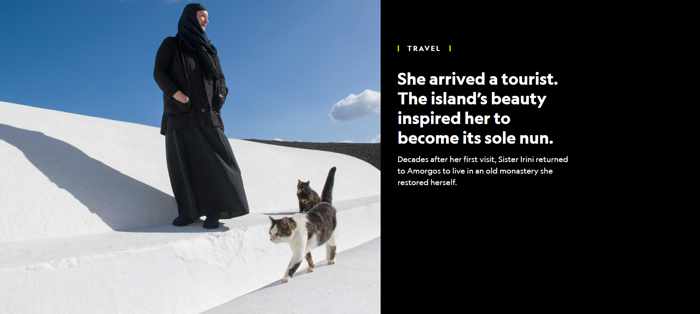
Screenshot of National Geographic article about Sister Irini on Amorgos

Screenshot of National Geographic article about Sister Irini on Amorgos


A highlight of our trip to Amorgos back in 2009 was a visit to the island’s best-known monument, the Chozoviotissa Monastery. Founded in the 11th Century, the whitewashed, fortress-like edifice clings to the face of a rugged cliff hundreds of meters above the sea. It is such an incredible sight, my first glimpse of the brilliant white building literally took my breath away.  I’m still so fascinated by Chozoviotissa that I get excited whenever I see photos of it on my Instagram feed, or find video views of it on YouTube.

While I’m certain we will pay it another visit next time we return to Amorgos, there’s a much newer monastery I’m equally keen to see. It didn’t exist when we travelled to the island, and I didn’t learn about it until I read Meet the tourist who became the only nun on Amorgos, a National Geographic piece published on January 17 2019. 


Written by Terri Steel, the article is an engaging story of transformation — a profile of a woman who decides to turn her life in a totally new direction while restoring a derelict church property into a lush garden “paradise” now known as Agios Georgios Valsamitis Monastery.

“She first came to the island as a young mother and wife 35 years ago; after her husband passed, she chose a new path. Her name is Sister Irini, now, and she remains Amorgos’s only nun,” Steel writes, noting that Sister Irini took her vows as a Greek Orthodox nun in 2011. 

“Seven years ago, Sister Irini began transforming a long-abandoned monastery into an oasis. Visitors come throughout the year to walk her bountiful garden lined with Byzantine frescoes, to hear her story, and to purchase her magnificent paintings of religious icons.”

Steel relates part of the sister’s story, outlines how the nun spends her days and speculates on how the “heavenly landscape” of Amorgos may have encouraged Sister Irini to pursue a simple, holy life there.

The article is illustrated with images of beautiful Amorgos sights and scenes captured by photographer Chiara Goia.


— Andros —

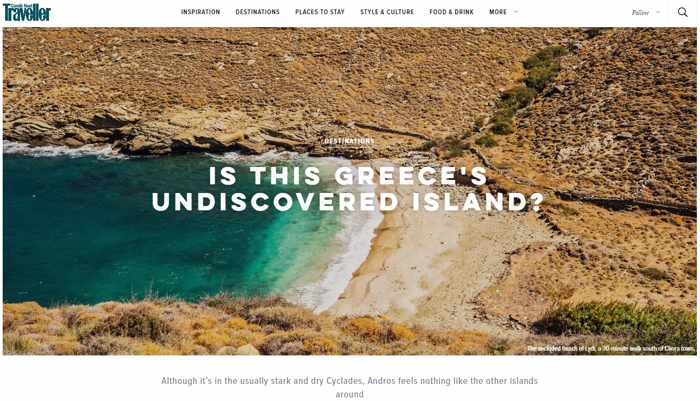
Screenshot of Conde Nast Traveller September 2019 article about Andros island


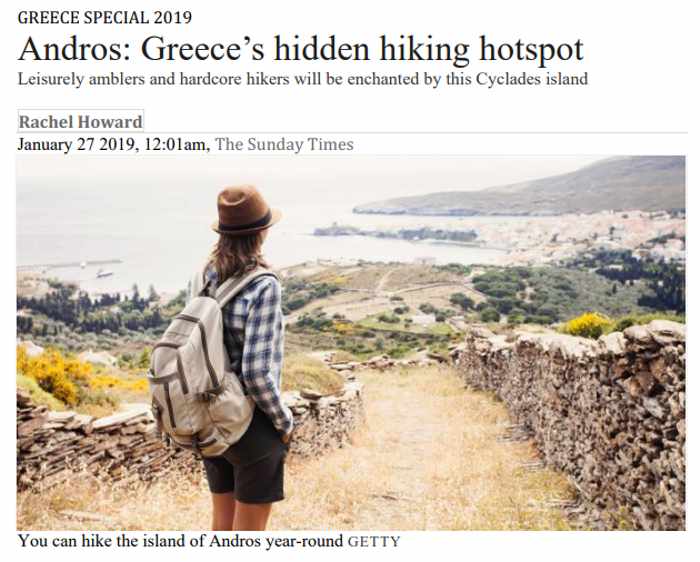
In 2019, prolific travel writer Rachel Howard penned two feature articles about Andros — one for Conde Nast Traveller magazine (top), the other for The Sunday Times newspaper (below).


Screenshot of Rachel Howard Sunday Times article about hiking on Andros island


Andros is a big island, and we knew we would barely scratch the surface when we spent six days there in late May of 2015, even though we split our stay between towns on opposite sides of the island. Last year, when I read two revelatory articles about Andros, it really hit home just how much we didn’t get to see or experience. I felt hugely disappointed when I realized we had missed some of the island’s best features.

Both stories were written by Rachel Howard, for different publications.

The first, Andros: Greece’s hidden hiking hotspot, was published January 27 2019 in The Sunday Times.   

Noting that Andros is a lush, mountainous isle, Howard observes that the “forested peaks are ribboned with streams and ravines careen down to wetlands teeming with wildlife. One third of it is a nature reserve, there are dozens of stone villages camouflaged in the hills and it has about 70 beaches, many of the best accessible only by boat or on foot. So it’s hardly surprising that Andros is carving out a niche as a year-round hiking destination.”

Hiking is what drew Howard to the island — she spent several days walking segments of the island’s 200-mile network of footpaths, many of which have been cleared and waymarked by the Andros Routes volunteer organization.

She describes trekking a circular route in Livadia, “a valley dotted with magnificent manor houses, where some of Greece’s most illustrious shipping families hole up for the summer,” gentler walks from the Ktima Lemonies guesthouse estate to the villages of Lamyra and Menites and to the island capital, Chora, and a 6-mile trail from the mountain village of Vourkoti to remote Achla beach. 

“Venture towards the highlands and you’ll stumble upon abandoned watermills, medieval watchtowers and cascading waterfalls. It’s easy to imagine Pan charging through the woods, but you’re more likely to meet a farmer threshing with an ox or frying sausages and potatoes in pork fat in an outdoor wood-fired oven,” Howard says.

Although we did some scenic walks during our own Andros visit, we didn’t get to explore any of the specific paths Howard talked about, or any of the trails marked and maintained by Andros Routes.  I’d love to get back to Andros to check some of them out, and perhaps attend one of the programs at Melisses guesthouse, located above Paleopolis Bay on the west coast of Andros.  Howard says bloggers and authors visit Melisses “to present cooking workshops and creative retreats such as illustration and travel photography, hosted by Allegra Pomilio, a glamorous Italian food stylist and a wonderful cook.” An Andros holiday with plenty of scenic walks and the opportunity to attend a creative retreat would be right up my alley.

Howard’s second article, Is this Greece’s undiscovered island? appeared in the September 2019 edition of Conde Nast Traveller magazine. Unlike the previous story, which focussed on island walks, this report is a more general overview of the island’s recent history as well as its top sights and leading attractions.

Howard notes that three Greek shipping dynasties — the Embiricos, Goulandris and Polemis families — put Andros on the map in the early 20th Century.  These wealthy families shared some of their largesse locally: They “paved the streets in marble, built imposing mansions and museums filled with billion-dollar art,” constructed the island’s first high school and hospital, and built a beautiful retirement home.

“Because the island’s shipping families used patronage as a show of power, Chora has an embarrassment of cultural riches. There’s an archaeological museum, a maritime museum, the Kaireios library with archives stretching back to the 16th century, and an open-air theatre where Pandelis Voulgaris, one of Greece’s most accomplished directors, stages the Andros International Festival, a summer-long celebration of the arts,” Howard notes.

Since  shipping was the island’s primary source of employment and income for so long, Andros didn’t have to begin  developing a local tourism industry until just a few decades ago. Tourist traffic is now picking up as more people learn of the island’s scenic hiking opportunities, and visit to see its lush natural greenery and “densely wooded hills and ravines” — features they won’t find on other islands in the Cyclades.

“Divided by four towering mountain ranges, the landscape is surprisingly varied and the weather can change around each bend. One moment it looks and feels like Tuscany, the next the Scottish Highlands. Watermills, dovecotes and watchtowers materialise in misty valleys,” Howard says. “Andros has plentiful springs and streams, waterfalls and wetlands. Every village has a communal marble washbasin fed by ice-cold mountain water. Venturing deeper into the mountains, carved fountains in village squares give way to waterfalls cascading through forests of chestnut, white poplar, oak and maple,” she adds.

If you have been to the Cyclades before but haven’t yet seen Andros, try adding it to your next island-hopping itinerary; you’ll find it’s a striking contrast from the arid brown landscapes dotted with whitewashed villages that are so characteristic of its neighbouring isles.

Please click on the link below to continue reading island profiles on page 2 of this post.


CONTINUED ON PAGE 2

Top Greece travel reads of 2019: Best island-hopping guides, articles and trip reports

Share

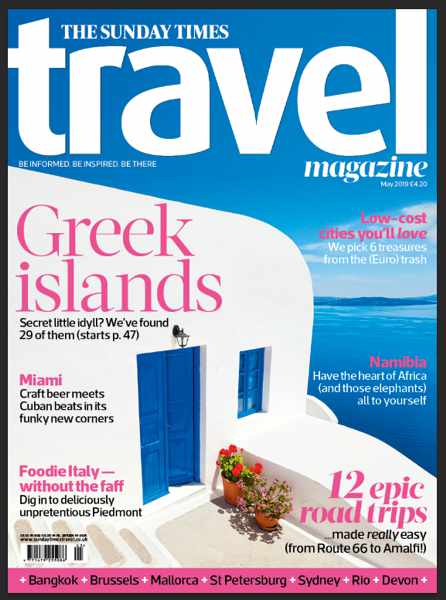
Cover of the May 2019 issue of The Sunday Times Travel Magazine

The May 2019 edition of The Sunday Times Travel Magazine featured a special Greek Islands travel guide, replete with gorgeous photos of dreamy destinations. I tell you more about the guide on page 2 of this post.


Athens is amazing, mainland Greece is marvellous, and the Peloponnese peninsula is pretty darned impressive. But for many people, it’s the Greek Islands that typically come to mind when talk turns to the subject of vacations in Greece.  Indeed, if you tell someone that you’re heading to the Hellenic Republic for a holiday, they’ll probably ask which islands you’re planning to visit. 

Since island hopping draws millions of tourists to Greece each year, many of whom are first-time visitors,  there’s tremendous demand for information about where to go, how to move between places, and what to see and do.  Likewise, there is a massive amount of Greece travel material available on newsstands and on the web. A simple Google search will produce links to articles and guides galore; thousands in fact, published by major magazines, newspapers, bloggers and social media influencers. One could easily spend weeks sifting through all the self-described “best” or “ultimate” island hopping guides, along with scores of feature stories trumpeting “hidden gems,”  “undiscovered islands,” or the newest trendy “paradise.”

I read hundreds of them in 2019, but found the vast majority disappointing and a waste of valuable reading time since they lacked originality and didn’t offer much useful  information. Most were simply puff pieces full of flowery descriptions and little else. Many were so similar, I’m sure the content was cribbed from quick online searches, then hastily rewritten and repackaged with stock photography. 

But several magazine and website guides stood out because they contain what I consider to be good, practical advice to help travellers pick the islands best suited to their personal travel preferences and lifestyles, and to plan how to get where they want to go.

Also noteworthy was a small selection of fascinating stories and engaging essays in which travel writers and even some high-profile authors recounted delightful and eye-opening personal experiences while visiting multiple islands.

This post spotlights the guides and stories that were my personal favourite reads during 2019. They’re the magazines I keep on my bookshelf, or the blog posts and website articles I have bookmarked on my computer, to keep close at hand for easy future reference. They include:

♦ A superb, detailed guide by The Mediterranean Traveller blog that promises — and delivers — “everything you need to know” about island-hopping;

♦ An excellent 26-page guide by The Sunday Times Travel Magazine

♦ General island profiles and trip suggestions in pieces published by the travel magazines Indagare, Afar and Lonely Planet

♦ An insightful 5-part report by a travel writer for The Guardian on his personal odyssey to explore six out-of-the-way islands;

♦ Reports by writers for the Boston Globe newspaper and Travel + Leisure magazine on trips that combined enormously-popular Santorini with visits to lesser-known and much-less-busy islands in the Cyclades; 

♦ An intriguing essay from Town and Country magazine in which a prominent author reflects on his  holiday travels to Spetses, Paros, Antiparos and Crete;

♦ Two separate stories on travelling by charter yacht or sailboat in the Ionian islands, from The Sunday Times Travel Magazine and World Traveller magazine;

♦ An account of a superyacht island-hopping tour of the Greek Riviera and several islands in the Argo-Saronic Gulf; and

♦ An article profiling small cruise ships with itineraries that include stops at several Greek islands.

Though they were published last year, these reports will still provide an excellent reference resource for travel in 2020 and the next several years. Even if you don’t need them to plan your own vacation, they’re all interesting and  fun reads that will quickly put you in a blissful Greek holiday state of mind.


— Best island hopping guide — 

Screenshot of The Mediterranean Traveller guide to Greek island hopping


It’s easy to make the decision to spend a vacation on one or more islands in Greece. The hard part is figuring out how to get to and from the island(s) you want to see. Many first-timers think it will be a breeze planning their itineraries, but quickly discover that the Greek Island ferry system isn’t as straightforward as they expected. In fact, it can be a rather daunting task to plan a multi-island holiday, particularly for ferry travel in off-season or low-season periods.

However, help is just a couple of quick clicks away, thanks to a superb guide published by The Mediterranean Traveller blog on February 5, 2019.

Aptly entitled Greek Island Hopping 101 — Everything You Need To Know, it’s the most comprehensive blog post I’ve seen on the subject, packed with tons of helpful tips, advice, information and links, and presented in a format that is super-easy to read and understand.  Topics include things travellers need to consider when initially planning their trip; flights versus ferries; an explanation of how the Greek ferry system works; ferry schedules and pricing; descriptions of the different island chains; deciding where to go and when is  best to visit; organized group tours, and plenty more. 


Please turn to page 2 to continue reading about the guides and articles that may help you determine which islands to visit, or give you inspiration for future holiday destinations.

CONTINUED ON PAGE 2

A winter daytrip to Paleochora in southwest Crete

Share

This 9-minute film by  fitness and travel buff William Taudien shows Paleochora, Crete from ground level, in the air, and even under water.


Just a few weeks back, I wrote about a new promotional video that tourism authorities on Crete had produced to encourage more travellers to visit the island in winter.

Since then, I’ve been keeping an eye on social media to watch for current photo and video posts, to get a better feel for what the island is like at this time of year. The latest we have ever been to Crete ourselves was in late October and early November 2017, when the tourist season was wrapping up and most hotels and restaurants were either already closed or shutting down. Despite a few days of inclement weather, we had a great time, but we often wondered how visiting in winter would compare. It seems other people are curious, too — in online travel forums, I’ve noticed an uptick in the number of people asking whether winter travel to Crete and other places in Greece would be worthwhile.

This week I got some answers when adventure traveller, fitness buff and vlogger William Taudien published the video I posted above.

William has been living near the Crete city of Chania for the past three months. In late December, he took a daytrip to Paleochora, a small town on the island’s southwest coast which happened to be the last stop on our late autumn holiday two years ago.

After a bumpy 90-minute bus ride through gorgeous mountain scenery, William arrived at Paleochora to sunny skies and comfortable temperatures in the low 20s Celsius — weather similar to what we had experienced. Conditions were ideal for William to film ground-level video while wandering the streets, the seafront on the east side of town, and beautiful big Pachia Ammos beach to the west, which he had all to himself. With his drone, he captured amazing aerial views of the colourful town, the beach, and the spectacular mountain and Libyan Sea surroundings. He even shot some underwater scenes while swimming and snorkeling.

Everything looked pretty much as it had when we spent three days in Paleochora, with one major difference — as William explains in the video, restaurant options are extremely limited in winter, especially if you’re looking for somewhere to have lunch.  

Although he had an enjoyable trip to Paleochora on that particular day, William told me in an email that “It seems like the weather is a bit unstable in the winter.” In fact, right after his daytrip, the weather changed rapidly when a massive storm system that meteorologists named Zenobia swept across Greece, lashing the country with gale-force winds, heavy rains, and snowfalls in some regions. Zenobia pounded Greece for the final four days of 2019, and weather conditions remained unsettled into the first week of the new year.

But conditions improved, and sunshine and mild temperatures returned. In his email, William told me he took another daytrip a few days ago, this time to explore the village of Hora Sfakion on Crete’s southern coast. And, once again, he went swimming. “It was really sunny and nice,” he said.

Now, as I look out my window at gloomy grey skies and the temperature below the freezing mark here in Toronto, I keep daydreaming about paying a winter visit to Chania, and taking daytrips to places like Paleochora and Hora Sfakion if the weather is decent. Definitely something to keep in mind for next winter!

Moments in Molyvos Part 3: Visiting the 650-year-old Castle of Mithimna

Share

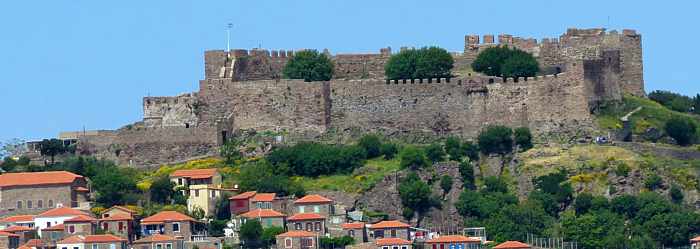
Molyvos Castle on Lesvos island

The Castle of Molyvos on Lesvos island

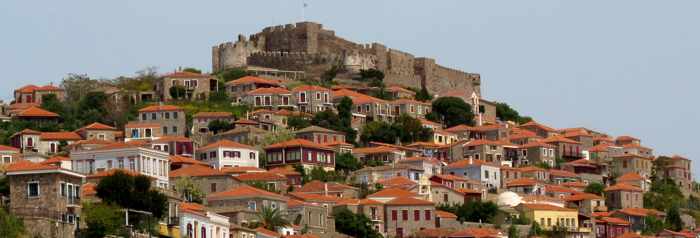
Molyvos Castle and houses in the town of Molyvos on Lesvos island

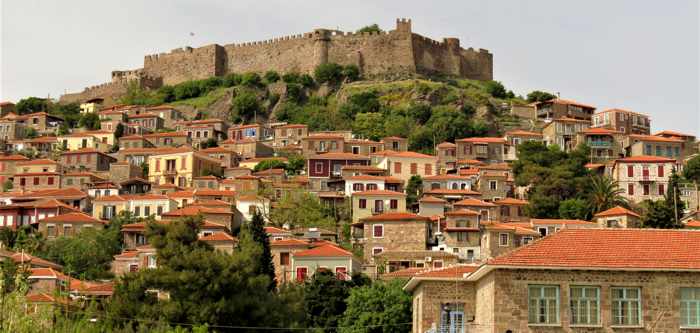
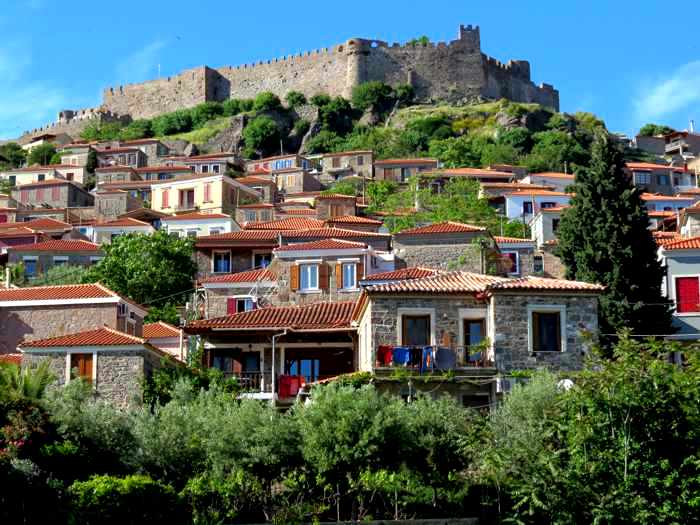
The Castle of Mithimna dominates views of Molyvos town from all directions. 


Editor’s Note: This is the third instalment of my Moments in Molyvos series of photo reports from our 8-day visit to Molyvos (also known as Mithimna) in spring 2019. Part 1 featured photos of sights along the main commercial road and harbourside, while Part 2 contained pictures from walks in the town’s traditional market, and on the hillsides below the castle.


It’s the biggest, most important and most visible monument in Molyvos, so of course we had to pay a visit to the Castle of Mithimna during our  first-ever Lesvos island holiday in late April 2019.

Nearly 650 years old, the castle occupies a hilltop location that has been historically significant for more than 2,500 years. According to a leaflet published by the Ephorate of Antiquities of Lesvos, an ancient acropolis stood on the site from around the 5th Century B.C. until sometime during the 6th Century A.D., when the Byzantines built a fortification in its place. The Venetians conquered the  fort in 1128, but from 1204 to 1287 it was occupied by Baldwin II of Flandre.  At the end of the 13th Century, the fortress came under Catalan control; however, much of the structure was destroyed when the Genoans seized the stronghold early in the 14th Century.  In 1373, the Genovese Francisco 1 Gateluzo ordered the reconstruction of the castle, and the Genoans controlled it until the Ottomans took occupation of Lesvos in 1462. The Ottomans made repairs and additions to the structure in the 15th and 17th Centuries, but the form of the fortress — an irregular trapezoid shape with 10 towers and two strongholds — has remained essentially the same to this day.

Further historical background information is available on the Molyvos/Mithimna Castle page of Odysseus, the official website of the Greek Ministry of Culture and Sport. The link contains two pages of historical and descriptive information, and while it’s available in Greek only, you can use an online translation program to read it in English or other languages. Additional information, along with maps and a video, on the Castle of Mithimna page of the Kastrologos Castles of Greece website.

To reach the castle from the main road in Molyvos, we had the choice of walking or driving to the top of the rocky hill. We preferred to hoof it, which meant huffing and puffing our way up dozens of flights of steps on the steep hillsides below the castle. It sounds like an arduous trek, but it’s actually a great opportunity to explore some of the scenic residential neighbourhoods of Molyvos en route. (You can see what these areas look like in Part 2 of this series). 

Admission to the castle cost only €2 per adult in April 2019.


This video by Yiorgaks takes you on a scenic flight over Molyvos, providing excellent views of the castle and upper town areas of Molyvos, and beyond


Please click on the link below to turn to page 2, where I have posted our photos of the castle (inside and out) and its views.

CONTINUED ON PAGE 2

Moments in Molyvos Part 2: Exploring the old market and hillsides below the castle

Share

Houses on the hills below the Castle of Molyvos on Lesvos island

Even though it meant climbing up and down hundreds of stone steps, we couldn’t resist exploring the residential districts that line the steep slopes beneath Molyvos Castle. 


My first Moments in Molyvos post included of photos we shot, during our spring 2019 vacation, of sights along on the town’s main road and harbour. 

In this instalment, we venture uphill to explore the residential areas situated on the steep slopes that descend from the hilltop Castle of Molyvos to the main road. Photos in this collection include elegant stone houses, villas and hotels; four of the town’s major churches; shops and restaurants lining the cobblestone lanes of the historic market district; a lovely pine-forested park; the municipal cemetery; and occasional scenic views from the hillsides. We will visit the castle in Part 3.


buildings cling to the steep hills below the Castle of Molyvos on Lesvos

Tile-roofed stone buildings, many of which are centuries-old, cling to the steep hills below the Castle of Molyvos. In this post, we enter the maze of lanes and steps between the buildings to take a closer look at what’s there.


Please click on the link below to continue the photo tour of Molyvos. 

Page 2 contains pictures from our walkabouts in the town’s traditional market and surrounding neighbourhood, while

Page 3 features photos of our walks on the hillsides below Molyvos Castle.

Page 4 has pictures from our walks on the hills northwest of the castle, high above the harbour.

CONTINUED ON PAGE 2
« Older posts Newer posts »

© 2026

Theme by Anders NorenUp ↑