Category: Greek Islands beaches

  • No sandy beach? No worries at these seaside swimming spots on four Greek Islands!

    Share

    sunbeds on the coast of Rhodes

    Colourful umbrellas and lounge chairs brighten a rocky stretch of coastline near Kallithea Bay on Rhodes


    Whenever I tell people we’re going to Greece, almost everyone says the same thing: “A beach vacation! Nice!”

    Truth be told, we visit Greece for many more things besides sunbathing, swimming and water sports activities. Still, I’m not surprised that so many people associate the country with bountiful, beautiful beaches. With its thousands of islands and its mainland combined, Greece boasts nearly 16,000 kilometers of coastline and many of Europe’s best beaches.

    But the Greek seashores aren’t long, continuous strips of stunning sand and pebble strands. While those number in the thousands, much of the country’s seafront is rugged and rocky, with no sandy shores in sight. But that doesn’t stop people from enjoying the seemingly endless waterfronts in Greece. In fact, it’s along craggy coastlines that you tend to find uncrowded swimming locations that are favourites for local residents and for in-the-know tourists, too.

    There must be countless seaside swimming “holes” throughout the country, but in this post I will profile four that we have seen during our Greek Island travels over the past 11 years. The photo at top shows one we discovered on Rhodes back in 2004, while the three pictures below showing swimming spots on Naxos, Santorini and Syros, respectively:


    swimming area below the Temple of Apollo on Naxos

    Several stone staircases descend to the water’s edge at a swimming spot below the Temple of Apollo monument (also known as the Portara) near the ferry port and harbour at Naxos Town.

      Photo by Rocio Lluch if the swimming area near Amoudi Bay Santorini

    A short walk from Amoudi Bay brings visitors to a narrow channel separating Santorini from little Agios Nikolaos island, seen in this photo by Flickr member Rocio Lluch. Tourists enjoy taking a dip in the channel and swimming to the islet, where they can dive from cliffs into the sea.

      Vaporia swimming spot

    This is one of several jetties in the Vaporia district of Ermoupoli, on Syros, where locals and visitors alike can take a quick dip and soak up some sunshine


    Click on the link below to continue reading and view more photos.

     CONTINUED ON PAGE 2

  • Bumpy rides to blissful bays and beaches on Karpathos

    Share

     Click on the arrow to take a ride to Kato Lako on Karpathos


    My fascination with Karpathos continues — I keep spending some of my spare time viewing photos and watching videos of the island. I won’t get to see Karpathos on my trip to Greece this spring, but it never hurts to research places to visit on future vacations, right?

    I thought I’d share several Karpathos videoclips that I enjoyed watching today. All four were posted online by YouTube member 365Roman, and I found them interesting because they show what it’s like to drive to some of the island’s sights and attractions, including gorgeous bays and beaches as well as charming mountain and seaside villages.

    As all the clips confirm, some of the most breathtaking views and scenery in the Greek Islands are off the main tourist path and take some effort to reach. But it’s worth it — and it’s all part of the fun of exploring Greece.

    So sit back, relax and enjoy your tours on Karpathos while someone else does the driving!


    The ride to Forokli beach


    Driving around the northern part of Karpathos


    Touring the island’s southern regions


  • Delightful moments on Naxos

    Share

    NAXOS from Kassiani Koufaki // on Vimeo


    It’s no secret that we love Naxos. We picked it as our Destination of the Year in 2013, and I have been happy to see Our Top 15 reasons to visit Naxos has been one of the most-read posts I have published to date.

    As you can probably imagine, I’m always keen to view photos and videos of Naxos, particularly to see how other travellers have enjoyed and experienced this remarkable island. This short video called Naxos, by Kassiani Koufaki, is one of my all-time favourites.

    Though it’s only a minute and a half long, it captures dozens of delightful sights and enchanting travel moments on the island.  It brings back many warm memories for me personally, since I’ve seen many of the scenes in person. But I think people who haven’t yet been to Naxos will also enjoy its brief glimpses of beautiful scenery and simple details that make it such a pleasure to visit.

  • Must-see sights in and around Rethymno on Crete

    Share

    Guest post by the Cretico blog

    Rethymno is the third largest city in Crete and one of the most beautiful in Greece. Byzantine churches and monasteries, renaissance monuments, caves, countless beaches and enchanting villages throughout the province, await the visitor to wander and admire them.

    The Old City
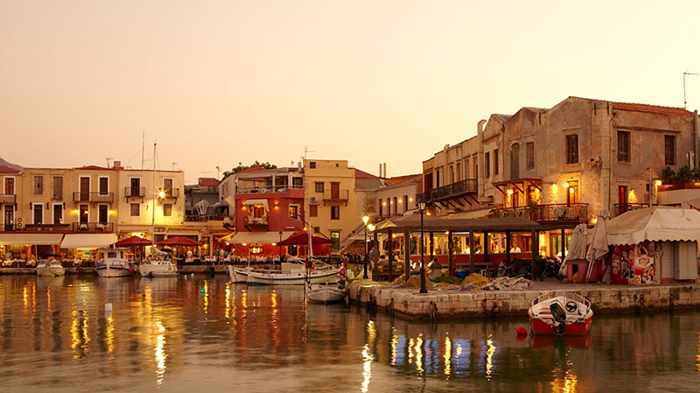
    Rethymno in Crete

    The oriental influence of the Turkish occupation, combined with the Venetian architecture of the Renaissance, compose the beautiful picture of the old town of Rethymno. Taking a walk through the narrow streets of the historic center, you can see many Venetian and Turkish monuments. From the Venetian harbor and the famous lighthouse, you can reach the Venetian Fortezza castle. The arches of the Venetian Loggia will definitely impress you. After a while, you will have the chance to rest and drink fresh water from the Rimondi fountain with three spouts in the shape of a lion, built in 1626 by rector Rimondi.

    A stop at the Historical – Folk Museum of Rethymnonn with its historical exhibits, is definitely not a waste of time. Continuing your tour in the old town, you will admire the church of San Francesco, you will pass through the Great Gate and will reach the main square where you will admire the various public buildings. The old city is the living history of Rethymno, it turns you back in time and invites you to visit it.


    The Fortezza Castle
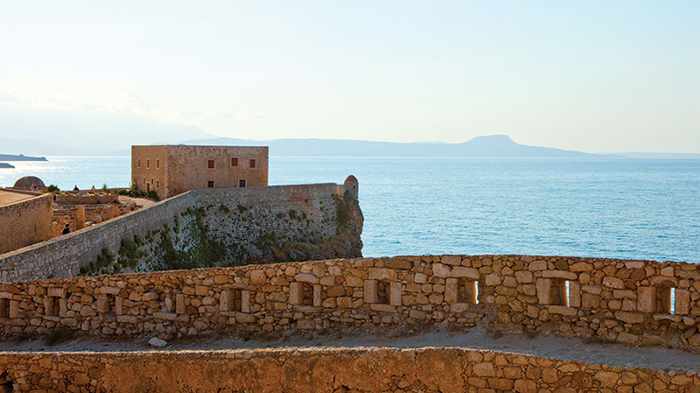
    Fortezza Castle

    Undoubtedly, one of the most prominent highlights of Rethymno is the unique Venetian castle Fortezza. This is the Venetian castle that dominates the hill of Paleokastro, in the heart of the city and is famous as the largest Venetian castle ever built.

    In the same place, in ancient times, was built the citadel of ancient Rirthymna and the Temple of Artemis, which have not survived. After the city was looted by the Algerian pirate Ouloutz Ali in 1571, was created the need for a good fortification. That’s why in 1573 was built the majestic pentagonal fort, according to all the modern methods of fortification and was designed so that it could shelter the entire population of the city.

    Its premises, many of which are preserved in good condition until today, included barracks, a church, hospital, warehouse, the residence of the Directors, the residence of the Rector and a luxurious and stately building in the central square of the fortress. In the fortress of Fortezza takes place, in the summer, the Renaissance Festival of Rethymno, which attracts many visitors to Rethymno.


    The Archaeological Museum of Rethymno
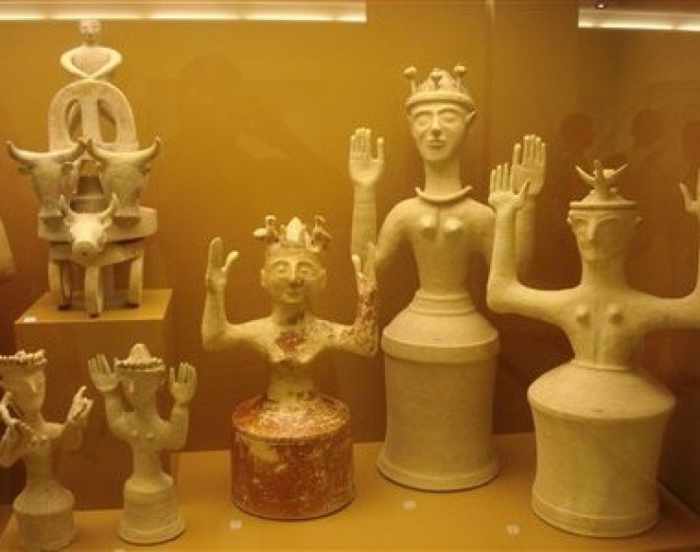
    Archaeological Museum of Rethymno

    In front of the main gate of Fortezza is the Archaeological Museum of Rethymno, since 1887. It is housed in a pentagonal Ottoman building that was built for the protection of the entrance of the east gate of Fortezza.

    Here are displayed findings of the Early Minoan, Middle Minoan and Late Minoan times, such as various pots, tools, weapons, pottery, jewelry, signets, and clay figurines, such as this of a female figure known as the “goddess with upraised hands”. The visitor can also admire various objects and artwork of the Classical, Hellenistic and Roman period, such as gold jewelry, glass vases and collections of sculptures from various regions.

    Among others, the Museum displays an interesting collection of coins from different historical periods of time.


    The Monastery of Arkadi
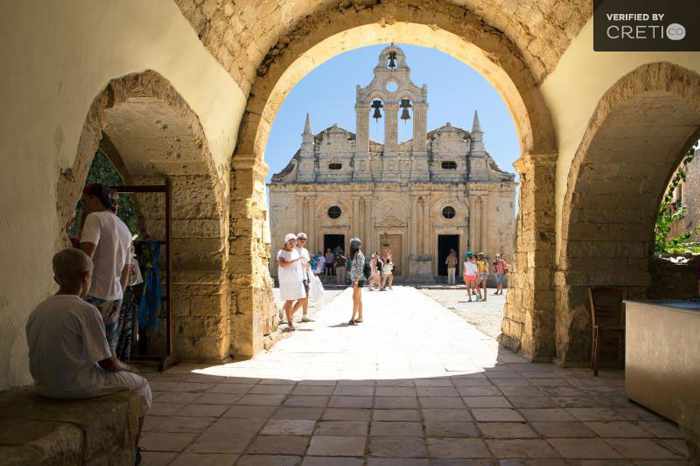
    Monastery of Arkadi

    One of the highlights of Rethymno which deserves a visit is the Monastery of Arkadi, one of the most important monasteries in Crete, situated 23 km from Rethymno, in a strategic location on the northwest side of the mountain Idi.

    The name of the monastery comes from the Byzantine Emperor Arcadius and its foundation dates back to the 5th century. The Monastery of Arkadi became known worldwide as it was strongly involved in the liberation struggles against the Turkish conquest. On November 8, 1866, the defenders of Crete who were sheltered in the monastery, blew alive in order not to surrender to the Turks. This event is known in history as the “Holocaust of Arkadi Monastery” and for this reason, this place has been characterized by UNESCO as a European Freedom Monument.

    After the destruction, the monastery was completely rebuilt and restored to its original form, although the burned-out temple, and a cannon ball, wedged in a cypress, witness its history. Visitors can admire the two-aisled church in the center of the monastery dedicated to Saint Constantine and the Transfiguration of the Savior, which was built in the 16th century, the chapel of St. Arkadius, the monastery’s museum hosting exhibits dating from its inception and the powder magazine where the tragedy of 1866 took place.


    The Monastery of Preveli

    The-Monastery-of-Preveli

    The Monastery of Preveli is located about 40 km south of Rethymno and is one of the most famous and respected monasteries of Crete. We don’t know exactly when it was built, but the evidence shows that the first part of the monastery was built in the late 10th to early 11th century, at a time when there was a great development of monastic life in the southern region of Crete.

    It consists of two building complexes, the Monastery of Prodromos, in which you will see paintings of the painter Mercurius, and the Monastery of Theologos. It is worth visiting the museum located inside the monastery, which hosts about 100 pictures of priceless religious and historical value. Important exhibits such as a Gospel of 1807, a gilt chalice of 1847, a collection of embroidered vestments, a collection of various ecclesiastical vessels etc., complete the rich collection of the museum. The library of the monastery contains about a thousand volumes of books and other church documents. The Monastery of Preveli is located in a unique natural environment which is almost tropical.


    Anogia Village
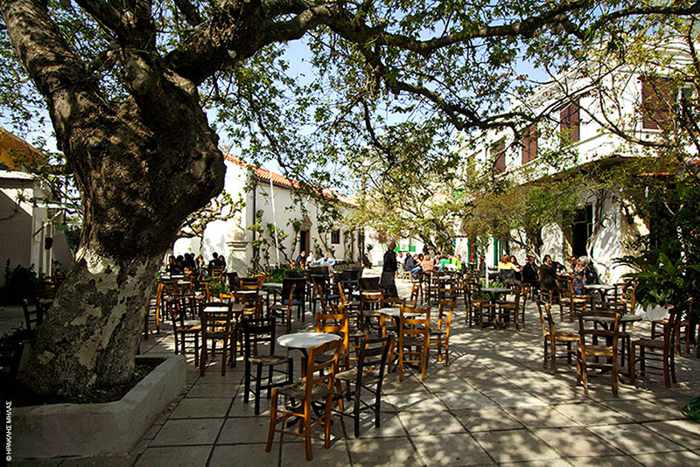
    Anogia-Village Crete

    The village of Anogia, in Mylopotamos, is approximately 50 km away from Rethymno at an altitude of nearly 800 m. Built on the slope of the hill Armi, with about 2500 inhabitants, Anogia have achieved a tremendous contribution to the national liberation struggle against the Turkish conquest, particularly in the Battle of Crete.

    Anogia is also an epicenter of contemporary Cretan civilization. If you visit Anogia, you will be surprised by the traditional textile industry of the place, the reputed embroidery of the village and the use of the loom, which continues even until today.

    The Anogians love their heritage and respect the customs and traditions of the place, keep the traditional clothing and language idioms. What remains intense in memory of every visitor of Anogia is the characteristic hospitality of the locals and the excellent care to foreigners.


    The Caves of Rethymno

    Ideon-Antron-Cave

    Another highlight of Rethymno is the 800 caves that exist in the mountains of  the region, which present archaeological and folklore interest. At an altitude of 1538 meters in Nida Plateau in Psiloritis, is the Ideon Andron, a large cave, where, according to Greek mythology, Zeus was raised by Amalthea. Ideon Andron was a cult center during the Minoan years. The excavations have brought to light various findings such as gold jewelry, ceramics and various metal objects.

    In the Cave of Melidoni, which was Mercury’s place of worship, the visitors can see the bones of the inhabitants of Melidoni, who died there from suffocation, as they were besieged by the Turks. Also, the cave Sfentoni in Zoniana village, with 14 halls, impresses the visitor with its stalactites and stalagmites. Accessible is also the cave of St. Anthony in Patso, with the beautiful church – dedicated to St. Anthony – located in the cave.


    The Renaissance Festival of Rethymno

    Rethymno Renaissance Festival

    Every summer, in Rethymno, is organized the Renaissance Festival, an institution that has been established since 1987, on the occasion of the great development that the city experienced experienced during the Venetian conquest, in arts, literature and architecture.

    The aim of the Renaissance Festival is the preservation and dissemination of the cultural heritage of the city, and the promotion of important Venetian monuments, like the old town of Rethymnon and Fortezza. So far, the Renaissance Festival has presented a variety of important plays of Cretan theater, and other important artists of the Renaissance, such as Shakespeare, Goldoni, Moliere, etc.

    The music concerts, involving orchestras and musicians from all over Europe, the opening and closing ceremonies with artistic events, and events organized in various places of the city.


    Beaches in Rethymno
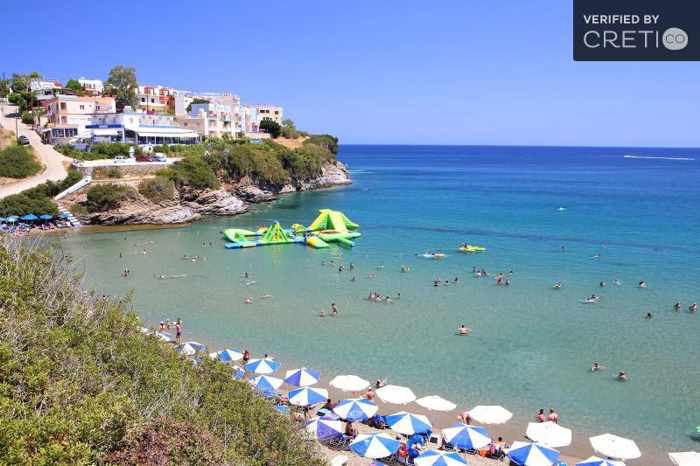
    Bali beach Crete

    Both in the north coast, and the south, there are many sandy beaches in Rethymno which attract visitors to walk along them, enjoy the sun and swim in the beautiful waters of the Cretan and the Libyan Sea. The beach of Rethymno is a huge, 12 km long sandy beach, which starts from the city of Rethymno and ends in the region of Scarleta.

    Near the Monastery of Preveli, there is the homonymous beach, an exotic place with palm trees, crossed by the river Koutalioti and considered by many as the most beautiful beach of Crete. For those who are looking for peace and mental calm, there is the secluded beach of Triopetra in approximately 50 km. south of Rethymno. Within walking distance, you will find the quiet beach of St. Paul, offered for nudism.
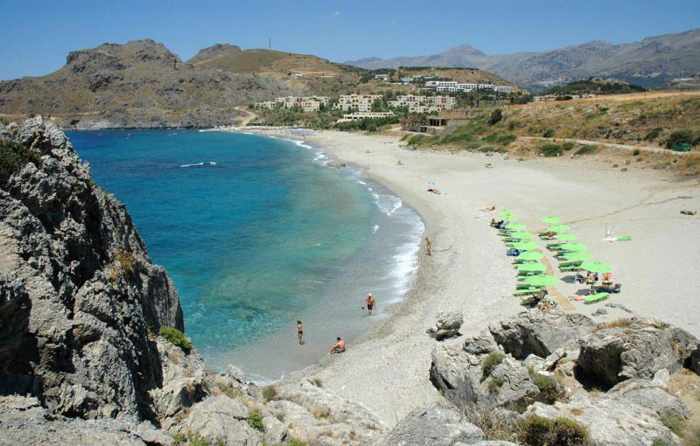
    Plakias-Beach on Crete

    The water sports enthusiasts can visit the beach in the village of Plakias, situated 40 kilometers from Rethymno, and also Bali, on the national road Rethymno – Heraklion, which is very popular. The beach in Platanes village is appropriate for a quick dip, and it is 4 km east of Rethymno. The beach of Panormo village, 16 km away, is very organized and offer many facilities to the tourists.

    Of course, these are the main highlights of Rethymno, however, when you visit it, you will realize that this place offers numerable places with such beauty and long history, that will make you love this city forever.


    This article originally appeared on the Cretico Blog published by the Cretico Crete holiday villa website, and is republished with their kind permission.


  • Why you should visit Paros

    Share

    BEST OF PAROS from Art in Design-Alternative on Vimeo.


    PAROS from Dimitris Christopoulos on Vimeo.


    I never need an excuse to visit Greece, but in online travel forums I often see people asking whether they should go to certain places, or wondering why specific Greek destinations are popular.  They think they want to visit them, but they really don’t have a clue what they will get to see and do once they get there.

    Paros is one of those places. Since it’s a stop on the busy ferry route between Mykonos and Santorini, the two most popular Cyclades islands, many travellers realize it would conveniently fit into an island-hopping itinerary. But is it the right island for them to visit? Does it have enough attractions to make it a worthwhile stopover for a few days?

    I think these two films, which I found on Vimeo today, will help visitors determine if Paros is their kind of place. (I think the answer will most likely be “yes.”) I’ve already been to Paros (twice), but both videos made me want to go back again.

    In case you need more convincing, click here to view my Paros Greece 2012 collection on Flickr, which features hundreds of photos from the picturesque harbour village of Naoussa, and several beaches in its surrounding area. Some photos of the main port town of Parikia, as well as the Yria Hotel and the scenic coastline near Parasporos beach, can be viewed in my Paros collection.

  • Marathi: a get-away-from-it-all Greek Island

    Share

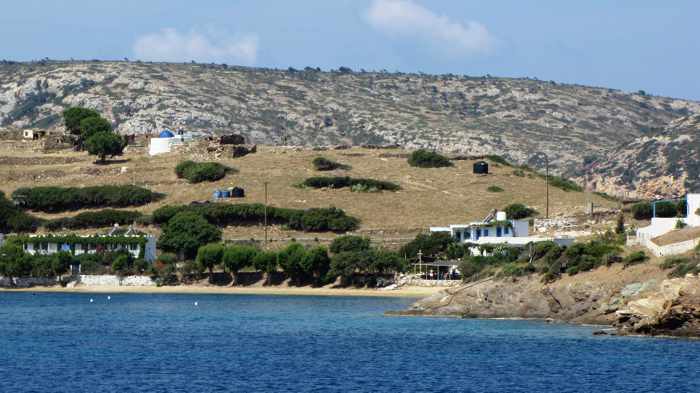
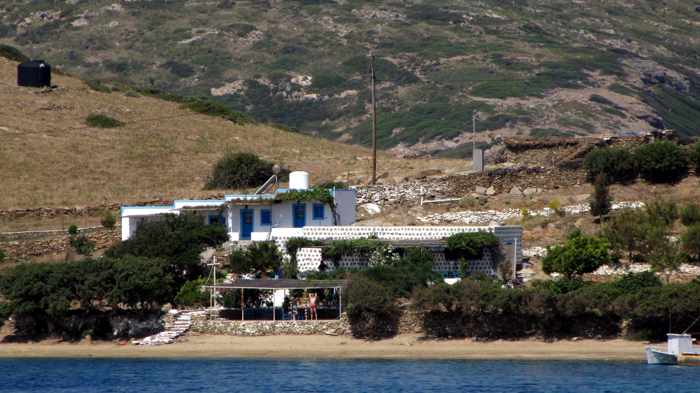
    Marathi island

    This was my first view — from a ferry — of the serene bay on Marathi where the tiny island’s restaurants and rental rooms are located


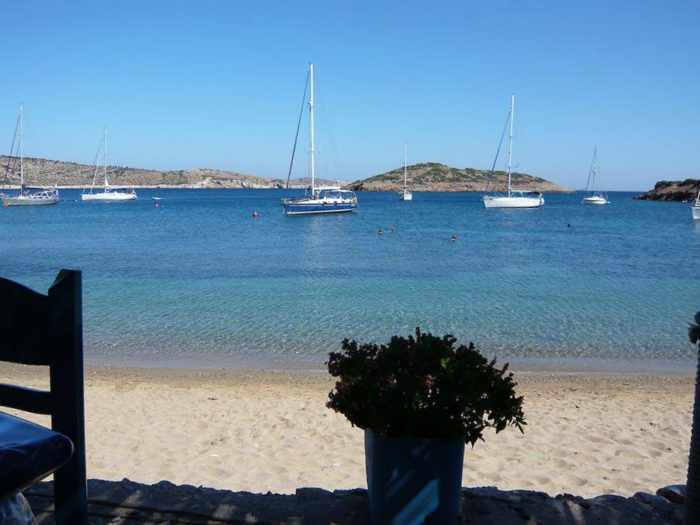
    Stavragos Taverna Marathi

    while this is a view of the bay from the taverna terrace at Stavragos, one of only three places where people can eat and  stay while visiting Marathi (photo from a  Stavragos group page on Facebook).


    Island escape: Sometimes when I’m feeling overwhelmed and stressed by city life — the crowded streets and sidewalks, incessant urban noise, construction all around and illuminated advertising signs everywhere I look — I daydream about getting away from it all on a remote Greek island few people know about. Somewhere like Marathi.

    A tiny isle situated about 12 nautical miles east of Patmos in the Dodecanese island group, Marathi is off the beaten tourist path and free from crowds, traffic, noise and light pollution. According to Kalispera Greece, the English-language version of a Swedish website about Greece, it’s an ideal spot for someone seeking a Robinson Crusoe-style escape from the demands of contemporary urban life.

    That’s because there simply isn’t much there —  just “three tavernas, three pensions, two jetties, one cemetery, one tiny church, a few goats and a pretty nice sandy beach. There are no shops, no cars, no scooters, no villages and no roads,” Kalispera Greece says.

    [adToAppearHere]


    There aren’t many people, either. A recently-published travel article on the website for the UK newspaper The Telegraph called Marathi one of Greece’s 11 least populated islands, with only 12 residents in summertime and just 3 during the winter.

    No crowds? No traffic? No bright digital ads? No noise besides birdsong, crowing roosters and jingling goat bells? It sounds idyllic to me, and in online holiday reviews many Marathi visitors have used the word “paradise” to describe the island.


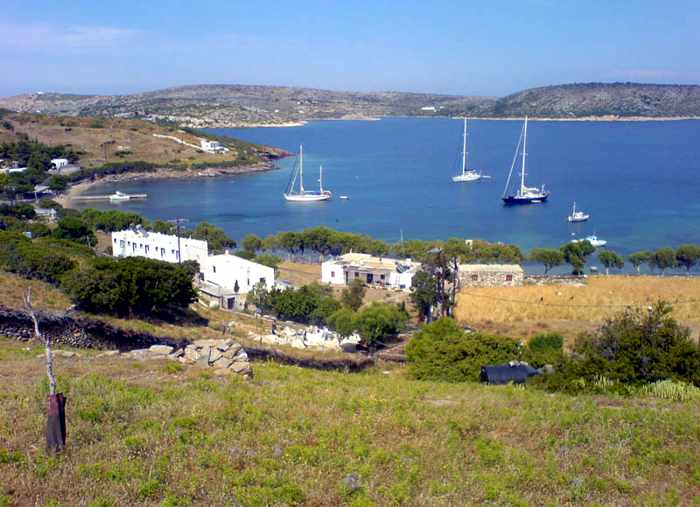
    Marathi island

    A hilltop view of the Marathi bay and nearby Arki island. (Image from the website for The Pirate Rooms and Taverna on Marathi.)


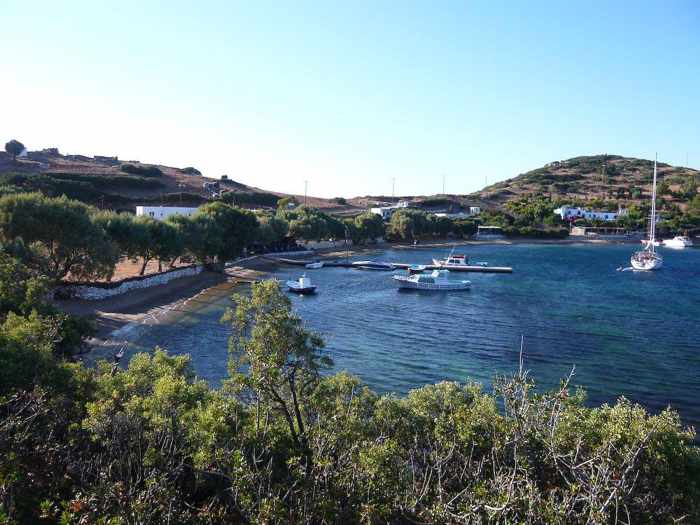
    Marathi bay

    Side view of the Marathi bay in another photo from the public Facebook group page for Stavragos Taverna and Rooms


    I haven’t stayed on Marathi yet, but I have been enthralled by the dream of enjoying some quality rest and relaxation there after getting a brief glimpse of the isle nearly five years ago.

    We were riding the Nissos Kalymnos ferry from Patmos to Samos at the time. The ship had just stopped at the island of Arki, and I was on the open deck enjoying the scenery as we headed to the next port of call, Agathonisi.  As we passed a crescent-shaped bay with a sandy beach on Marathi, I spotted several people watching us from a vine-sheltered terrace at what I assumed was either a private vacation home or a holiday rental villa. I felt a tinge of envy, imagining how restful it must have been for those people if a ferry sailing past once a day was one of the few interruptions to the island’s prevailing peace and tranquillity.

    [adToAppearHere]


    Several weeks later, when I was organizing photos I had shot during the ferry ride, I couldn’t stop looking at my pictures of the Marathi beach and bay. I wanted to learn more about the island and, a few Google searches later, discovered that I had photographed Stavragos, one of only three properties on Marathi with a taverna and rooms for rent.

    Click on the link below to view additional photos and read more about Marathi on page 2 of this post.

     Stavragos Taverna

    When I saw this building from the ferry, I thought it was a private vacation home. It’s actually rental accommodations and an excellent restaurant — Stavragos Taverna and Rooms.  It has four rooms for rent, and serves seafood and home-cooked Greek cuisine at its seaview garden terrace.


     CONTINUED ON PAGE 2

  • Two hot days on Crete

    Share

    beach on Crete

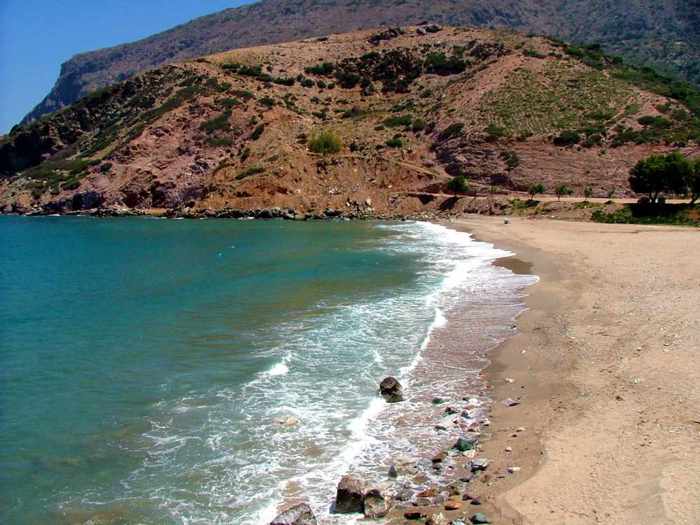
    Fodele beach on the north coast of Crete, about 25 km west of Heraklion. It was empty when we were here in 2004, but I’ve seen recent photos showing the beach lined with umbrellas and lounge chairs.


    Frostbite flashback: We had perfect hypothermia weather in Toronto today. Although it was gloriously sunny, the outdoor temperature was a frosty minus 24 Celsius — minus 40 with wind chill.  My face nearly froze while I was walking outside this afternoon, and for some reason I started remembering our one and only brief visit to Crete back in early June of 2004. Perhaps I was subconsciously trying to warm myself up by thinking about being somewhere hot instead of standing on a city street corner, shivering in the firm grip of a frigid Arctic air mass.

    Once back home, I sorted through photos we shot while on Crete. There weren’t many pictures to review, primarily since we had a whirlwind visit of just three nights and two full days. (It didn’t help that a malfunction with my camera’s memory card wiped out dozens of images we did manage to shoot.)

    We were in Greece on our first-ever island hopping holiday, a 2-week package tour that took us to Mykonos, Rhodes, Crete, Santorini and Athens. It was a great introduction to Greece, but the Crete segment of our itinerary was way too short and rushed. On an island as vast as Crete, two days gives you time to merely glimpse a few sites and attractions. With a visit so short and hectic, there’s no opportunity to soak up the island’s atmosphere, or to experience the local life and culture. Nevertheless, we felt our fleeting look at the sights and scenery was better than not making it to Crete at all. Next time, we’ll follow the advice of regular Crete visitors who advise spending one, two or more weeks just to explore one specific part of the island.

    Click on the link below to continue reading my mini trip report on page 2, where I have posted a few of the photos we shot during our quick stop on Crete.

     CONTINUED ON PAGE 2

  • A stylish roadtrip on Crete

    Share

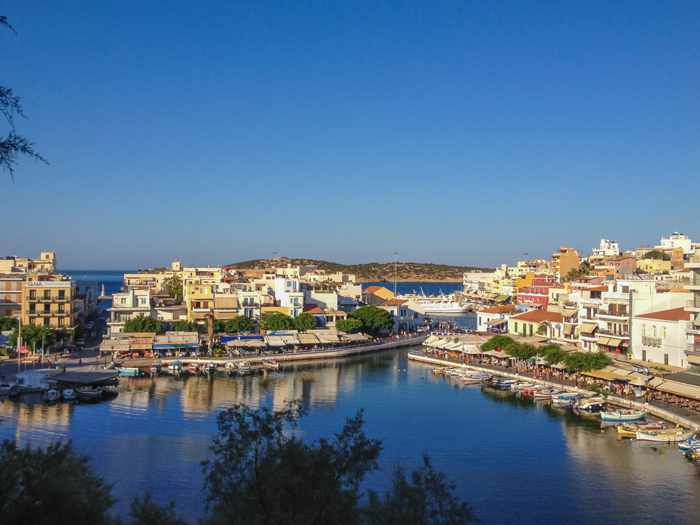
    Agios Nikolaos Crete

    Agios Nikolaos is an “arty, leisurely and sleepy town” where visitors “will feel unbelievable charm and calmness,” travel writer Alina Lisina says.


    Hit the Cretan road: What’s the best way to see Crete, the biggest island in Greece? By car, of course, and preferably in a convertible — so you can “enjoy the taste of the Island and of the fresh sea breeze while driving along the picturesque coastline,” travel writer Alina Lisina advises.

    In her view, Crete is not just another Greek island — “it’s more like a small country where you can find anything you want. ” Best of all, it’s “so fascinating and diverse that you can spend weeks here” without getting bored or feeling like you’ve had enough, she notes.

    Alina, the founder of TripTemptation.com, took a road trip on Crete last summer and posted a photo report on her website. Click here to view her photos and see why she enjoys the island she describes as a “patchwork of splendid beaches, ancient treasures and landscapes, and unbelievable tasty food combined with the genuine Greek hospitality.”