
MyGreeceTravelBlog.com
Photos & memories from our trips to Athens, the Peloponnese, mainland Greece & Greek Islands — plus profiles of places we would love to visit

  • Our brief stay at Irene’s Villas in Andros Town

    Share

    Irene's Villas on Andros

    Irene’s Villas is a collection of self-catering studio apartments on a hillside above Nimborio beach. We spent 3 nights here in late May.


    Hilltop hideaway: First stop on our island-hopping holiday this year was Andros, where we spent  three days with friends who, like us, were visiting the island for the first time.  They had researched accommodations and shared a short-list of three options they were considering in Andros Town. They ultimately booked at their first choice, Anemomiloi Studios, but by the time I contacted that property, there was no availability in our budget range. So we settled for our second choice, Irene’s Villas, and used their website’s online booking form to reserve a studio.


    Irene's Villas Andros

    Exterior view of the front of our apartment at Irene’s Villas. The studio was spotlessly clean, comfortable and quiet.


    Irene's Villas Andros

    What we liked the most about our studio was the long sea- and mountain-view veranda out front, where we enjoyed having breakfast and coffee


    Please click on the link below to continue reading our review of Irene’s Villas, and to see our photo slideshows of the property and nearby area.

    CONTINUED ON PAGE 2

  • Two of Lefkada’s top beaches buried by landslides during November 17 earthquake

    Share

    Egremni beach on Lefkada

    This photo of Egremni beach, from Lefkas.net, shows why it has often been cited as one of the world’s most beautiful beaches 

      Egremni beach Lefkada

    Most of Egremni is now buried from landslides triggered by the earthquake that struck Lefkada on November 17, as shown in this aerial photo by Antonis Nikolopoulos for the Eurokinissi press agency


    Clifftops collapsed:  An earthquake that struck Lefkada island on November 17 made headlines around the world, with international media reporting what little information was available at the time about collapsed buildings, widespread property damage and two deaths directly attributed to the Richter 6.1-magnitude tremblor. Greek media have since revealed that two of the island’s top beaches also sustained extensive damage from landslides that occurred during the quake.

    Egremni beach, which has often scored high rankings on lists of the world’s best and most beautiful beaches, suffered the most severe damage, with landslides burying much of the long, narrow strand. Landslides also damaged the scenic beach strip at popular Porto Katsiki, but the rockfalls there apparently were much less extensive and destructive. Tons of soil, sand and rocks swept onto the beaches after being shaken loose from the dramatic 150-meter-tall cliffs that tower over the two spectacular seasides.

    I have never been to either beach,  but have been enthralled by both from awe-inspiring photos I have viewed online and in travel publications, and from all the good things I’ve heard about them — and about Lefkada in general — from a Greek-Canadian acquaintance who has long been urging me to visit the island, his personal favourite holiday destination in Greece.

    Although I didn’t have plans to visit Lefkada in the next two years, I did hope to get there sometime in the future. It’s sad to think the two beaches might never look as gorgeous as they did before the quake, though there is a strong chance that Porto Katsiki, at least, may eventually regain much of its former glory with the help of Mother Nature. Greek news reports have quoted geological engineering experts as saying that winter weather will probably wash away much of the soil debris that currently covers parts of Porto Katsiki beach. In fact, the normal course of nature could restore much of that beach to its former look by the time next summer’s tourist season rolls around, one expert surmised. 


    Porto Katsiki beach Lefkada

    Dreamy Porto Katsiki beach is seen in this inviting image that Flickr member Out to Lunch captured during a visit in the summer of 2014. It’s one of my favourite photographs of the beach, and illustrates one of the reasons why I hope to visit Lefkada sometime — I want to see the amazing scenery in person.


    Porto Katsiki beach Lefkada

    Large mounds of sand and stone cover much of Porto Katsiki beach in this image provided to Greek website newsbeast.gr by Efthimios Lekkas, a professor at the University of Athens and President of the Earthquake Planning and Protection Organisation (EPPO)


    Please click here or on the link below to continue reading on page 2 of this post, where you can view more photos along with videos showing Egremni and Porto Katsiki before, during and after the earthquake.


    CONTINUED ON PAGE 2

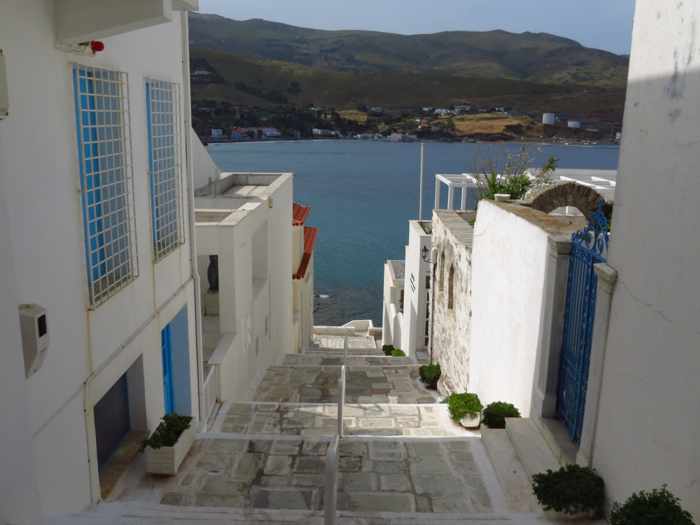
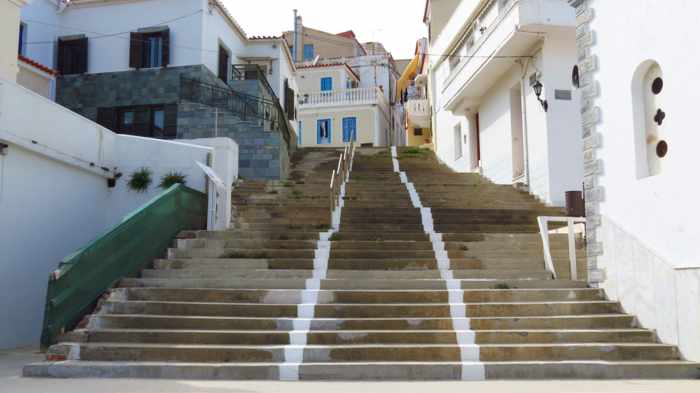
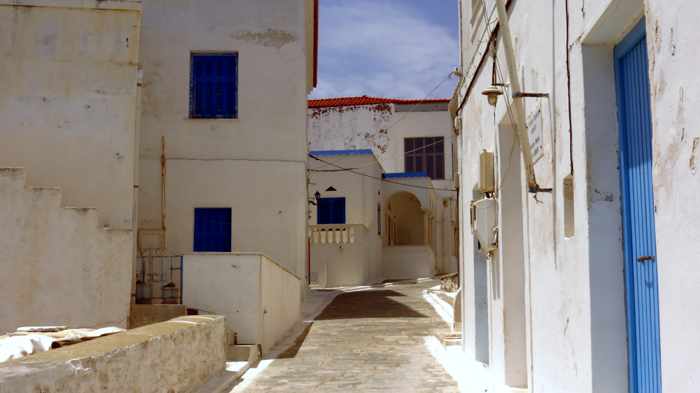
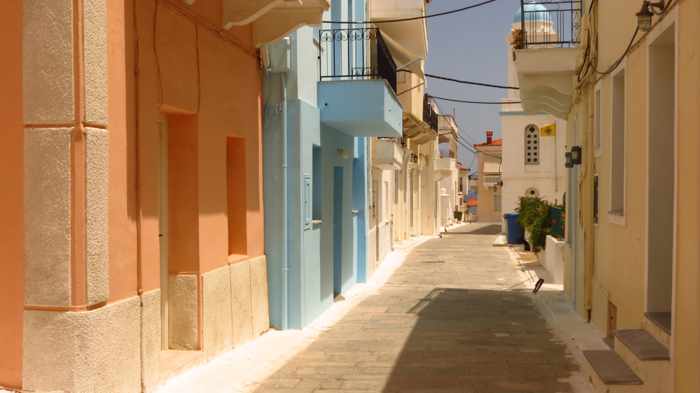
  • Cool things to see in and around Andros Town

    Share

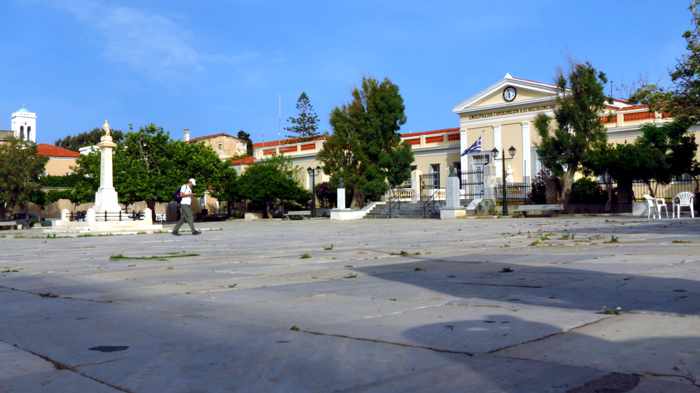
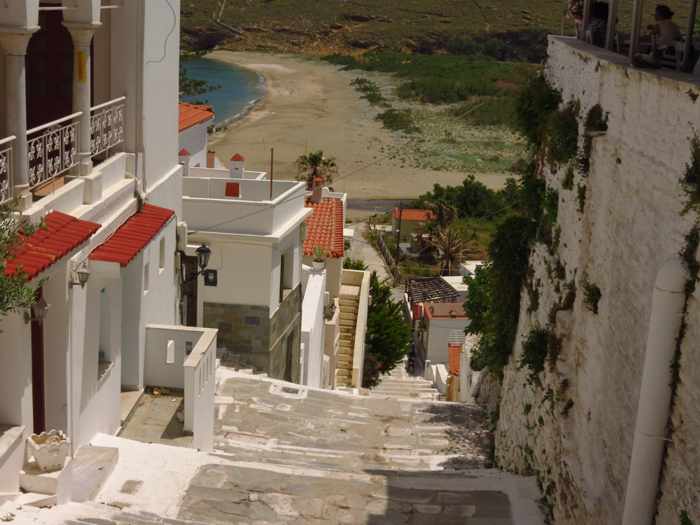
    Andros Town

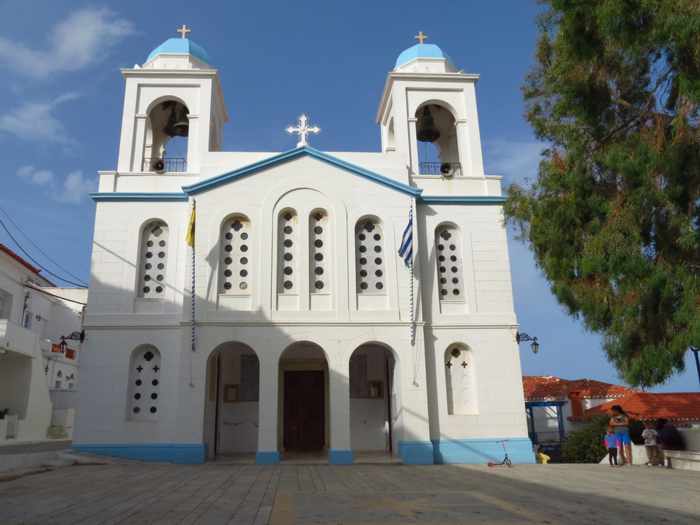
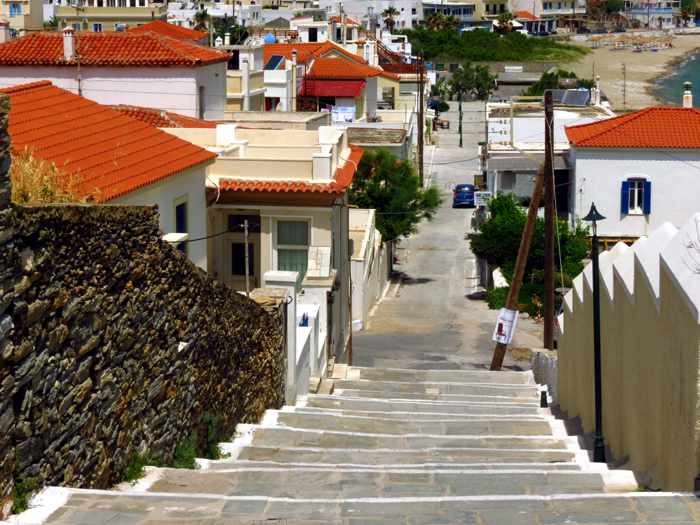
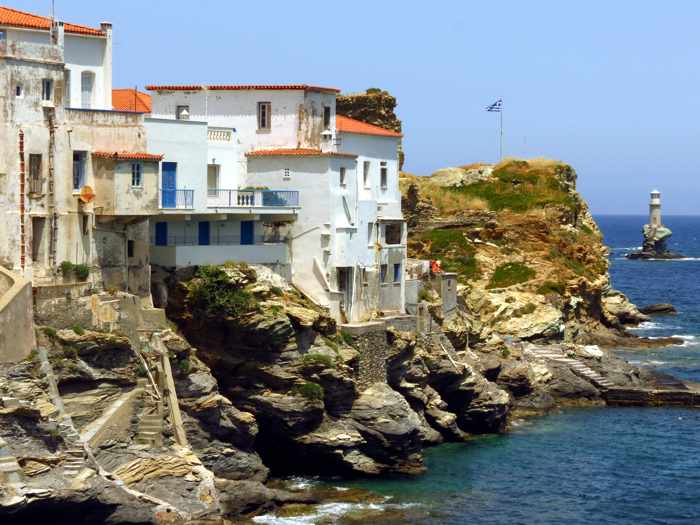
    Red-roofed buildings on the northeast side of Andros Town


    Eye & camera candy:  If you enjoy exploring Greek island towns, either simply to stroll around and just see what’s there, to learn more about the destination’s history, or to discover interesting subjects for photography, painting or other artistic hobbies, you won’t be disappointed with Andros Town. 

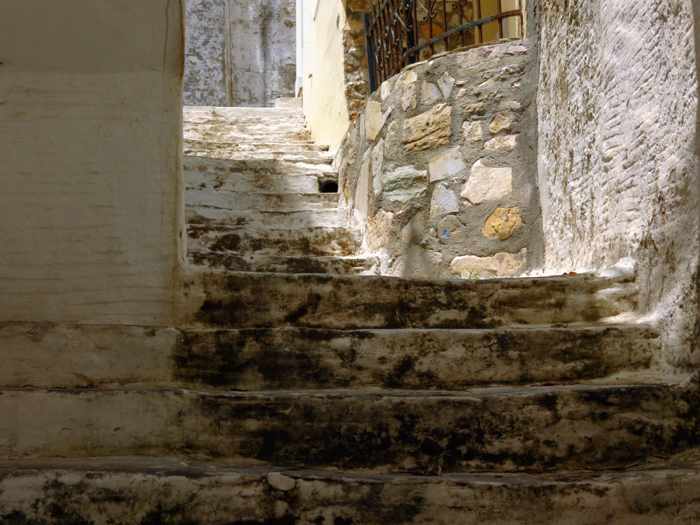
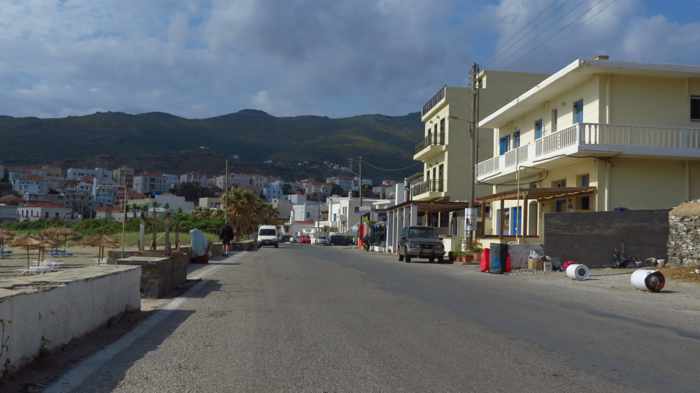
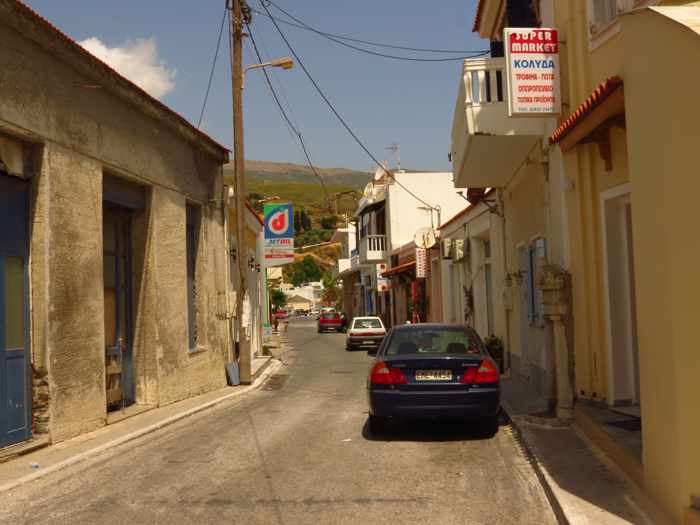
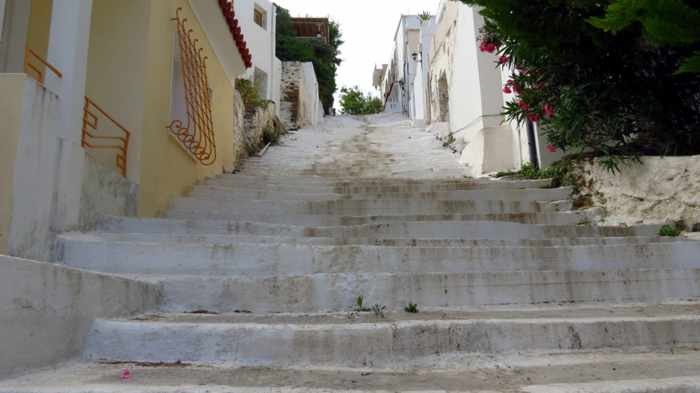
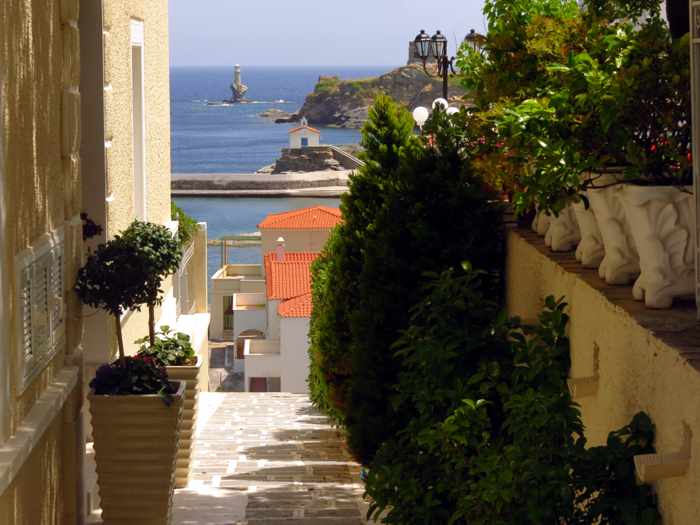
    During our Andros visit this spring, we spent three days at Chora (the Greek name for the island’s main town) and wandered its streets, lanes, and seaside areas several times. The town has many familiar features and amenities we enjoy seeing and photographing on other Greek islands — outdoor bars and cafes, public squares, picturesque churches and chapels,  impressive local architecture, and cats aplenty — but it also boasts its own special landmarks and historic sites, plus distinctive natural surroundings of seasides, beaches, bays and mountains.

    Unfortunately, jet lag kept us from exploring Andros Town as thoroughly as we would have liked. Though we did view a lot of interesting sights and scenery, when it came time to move to a beach resort area on the south side of the island, we realized there had been much, much more we didn’t get to see. But that just means there will be plenty of new things to experience the next time we visit Chora. 

    Page 2 of this post features photo slideshows of some of the sights we saw during our various walkabouts. Click here or on the link below to access the photos.

    You can view full-size versions of all of the pictures, along with hundreds more, in our Andros Town album on the mygreecetravelblog Flickr page.

    CONTINUED ON PAGE 2

  • The allure of Astypalea

    Share

    Astypalea is an inspiring short film by Eva Rodriguez and Ignasi Llobet 


    Intriguing imagery: We have been to Astypalea just once, for an introductory 3-day visit back in 2009, but after watching the video posted above, I regret that we didn’t spend more time there.  We missed so many amazing sights!

    Astypalea is a short video that was created by Eva Rodriguez and Ignasi Llobet. It’s only two minutes long, yet the film is packed with intriguing images and spectacular scenery from what the two filmmakers rightly describe as “one of the most beautiful and unspoiled Greek islands.”

    Filmed by Ignasi with a handheld Blackmagic Pocket Cinema Camera, the video follows Eva as she tours the butterfly-shaped Dodecanese island, pausing to admire and contemplate Astypalea’s striking landscape, beach, coast and village scenery.  I recognized the spellbinding views from some of Eva’s vantage points, but felt a strong tinge of disappointment that I didn’t get to personally see many of the other sights while we were there.  

    Happily, Eva and Ignasi have shown me plenty of good reasons to consider a return trip.


    Filming is a challenge under the intense Greek sun

    But it isn’t just their film that has rekindled memories of our own brief visit six years ago. In notes describing their film, Ignasi said “it was practically impossible to see what I was shooting, focusing, exposuring and framing… under the Greek sun it’s impossible to see anything on the screen.”

    That is so true.  The sun is always incredibly brilliant in Greece, but in Astypalea I found it exceptionally intense.  Even though I wore sunglasses, I couldn’t stop squinting, and my eyes often watered uncontrollably because of the searing sunshine. Like Ignasi, I couldn’t see anything through my camera viewfinder or LCD screen, either, and most of my photos wound up blurred, overexposed, or poorly framed because I could only point and shoot and hope for the best. (It didn’t help that I was in a jetlag haze much of the time — Astypalea was our first stop on a four-island itinerary that year, and it had taken us well over 24 hours of travel to get there.) You can see the  photos that turned out okay in my Astypalea album on Flickr.

    But do watch Eva and Ignasi’s film a few times — I think it’s remarkable for capturing the allure and charm of Astypalea, and making you feel like you’re actually there, experiencing the island yourself. If you can’t get to Astypalea, this film is the next best thing.

    Many thanks to Eva for inviting me to publish the film on my blog. This is one of my favourite videos of Greece!

  • A Sifnos island icon: The Church of the 7 Martyrs

    Share

    Chapel of the 7 Martyrs

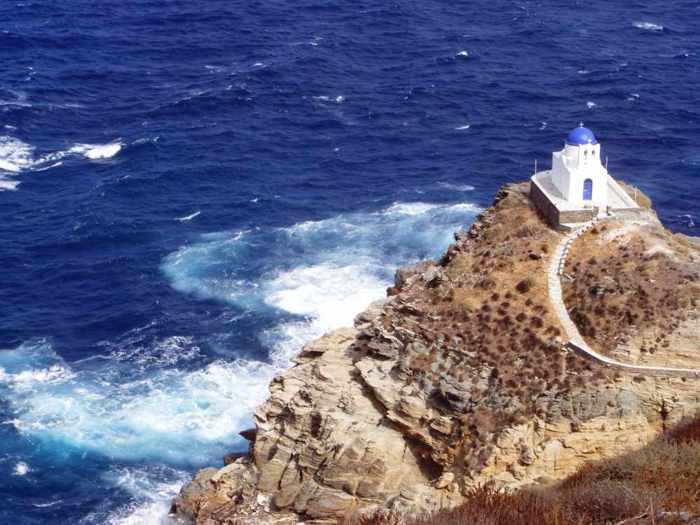
    Like hundreds of other picturesque chapels in the Cyclades, the Church of the 7 Martyrs on Sifnos has a traditional Cycladic design with whitewashed walls and a shiny blue dome


    Chapel of the 7 Martyrs

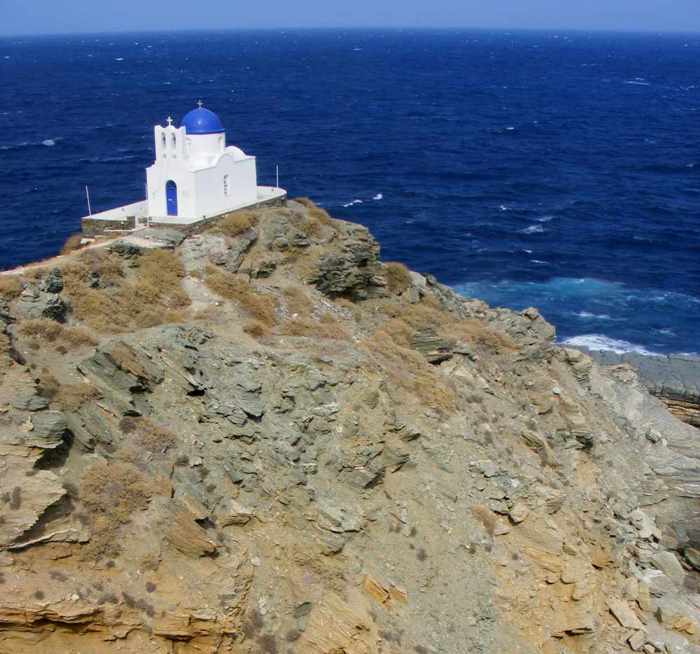
    but its startling location — perched atop a rocky peninsula pounded by powerful winds and waves — makes it one of the most memorable and impressive shrines in the region


    Windswept wonder: We have seen hundreds if not thousands of blue-domed churches in Greece, but the Chapel of the 7 Martyrs on Sifnos easily ranks as one of the most memorable.

    We got to see it during a four-day visit to Sifnos in late September 2007, and were practically blown away by the experience — and not just because the chapel is such an impressive sight. 

    It was warm and sunny when we arrived at Sifnos on a Friday afternoon, but conditions changed abruptly. Within less than two hours, near gale-force winds began blowing, followed overnight by thick, dark stormclouds and periods of light rain. The gusts were so strong that rough seas forced the cancellation of ferry service for the next three days. But we didn’t let the unrelenting wind stop us from sightseeing. Occasional breaks in the cloudcover motivated us to get out and explore,  and we spent one day hiking to the villages of Artemonas, Apollonia, Kato Petali and Kastro.  


    A breathtaking sight below Kastro village

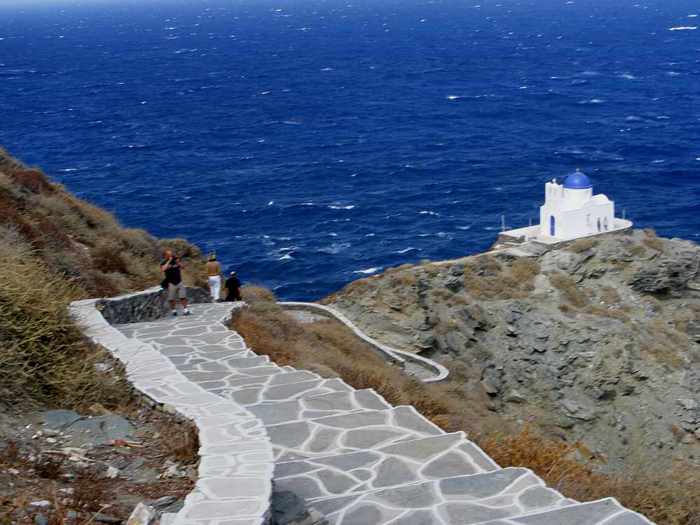
    We got our first glimpse of the Chapel of the 7 Martyrs while following a clifftop footpath that winds along the the east side of Kastro, about 90 meters above the sea. It was breathtaking to look down and suddenly see the whitewashed, blue-domed church far below, perched atop a rugged, rocky peninsula that juts into the Aegean. We saw a group of tourists making their way down a twisting, stone-paved path that leads to the church, and decided to make the trek as well.  But the blasting winds actually stopped us in our tracks a few times, and more than once nearly blew us off balance. When one particularly strong gust nearly knocked down a woman walking behind me, she and her companions turned back, saying they felt it was too dangerous to venture any further. But we plodded on, climbing down dozens of steps and then up a short hillside to reach the church.  

    The wind was even worse here, but we couldn’t go inside the church to escape it because the door was locked (apparently the chapel is open only several times a year for special occasions and feast days.) It was almost impossible to hold our cameras steady to take photos, even on the south side of the building where the wind was partially blocked. In fact, the blustery conditions were so unpleasant we stayed only a couple of minutes to view the coastal scenery before making a hasty climb back to the sheltered lanes in Kastro.

    Despite the inclement conditions, it was well worth braving the elements to briefly see the chapel. If anything, the wind and the surrounding whitecapped sea gave the Chapel of the 7 Martyrs even more of an exhilarating “wow” factor.

    Below are several more of our own photos of the church. You can see full-size versions of them, along with 20 additional images, in my Chapel of the 7 Martyrs album on Flickr.  At the bottom of the post are two wonderful pictures of the chapel that were shot by photographers from France and Greece.
     

    Chapel of the 7 Martyrs

    Much of the chapel’s tremendous visual appeal stems from its location on such inhospitable coastal terrain
     

    Chapel of the 7 Martyrs

    Dozens of stone steps lead down the cliffside to the church
     

     Chapel of the 7 Martyrs

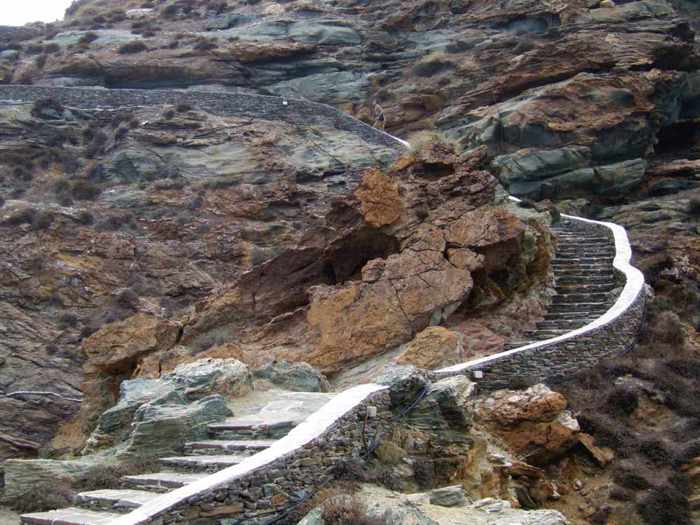
    Here’s a view of the steps from a point far down the cliff 
     

    Chapel of the 7 Martyrs

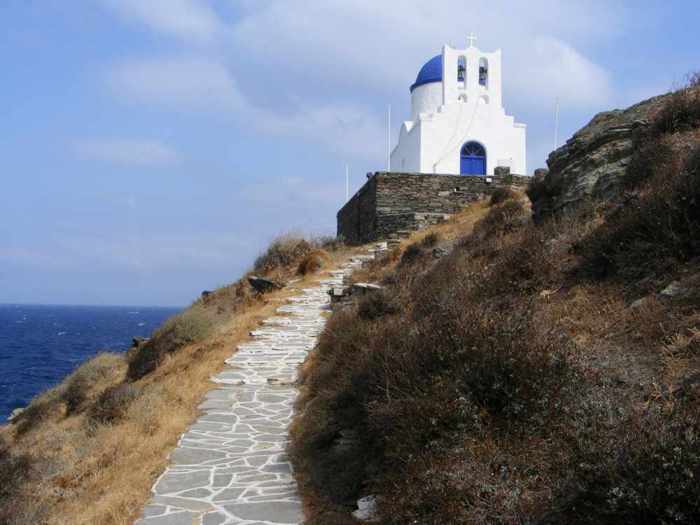
    After descending dozens of steps, visitors face a short uphill climb to the chapel. A terrace that wraps around the church offers amazing views of the sea, the Sifnos coast and Kastro village, but we weren’t able to enjoy the scenery because of the high winds.
     

    Chapel of the 7 Martyrs

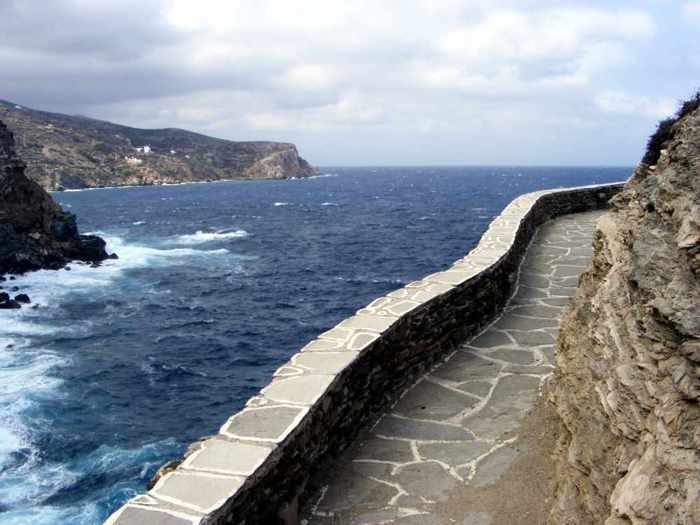
    Looking northwest along the rugged coast of Sifnos 
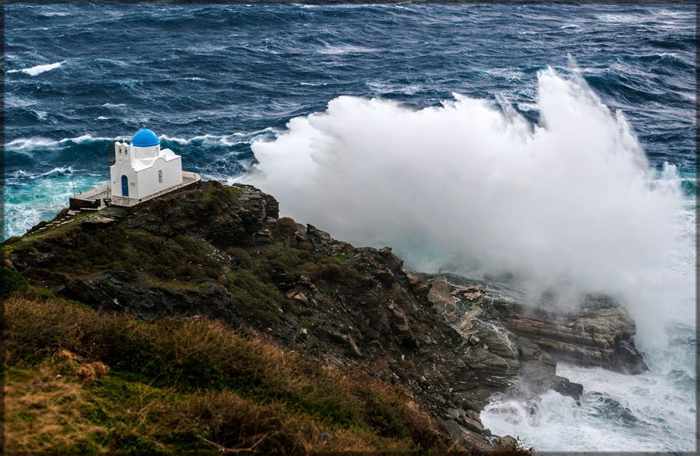
     

    7 Martyrs Chapel on Sifnos photo by Giannis Kontos

    A view of the Chapel of the 7 Martyrs in weather conditions even more severe than we experienced. This image, which has been widely circulated in social media, was captured by Sifnos photographer Giannis Kontos.
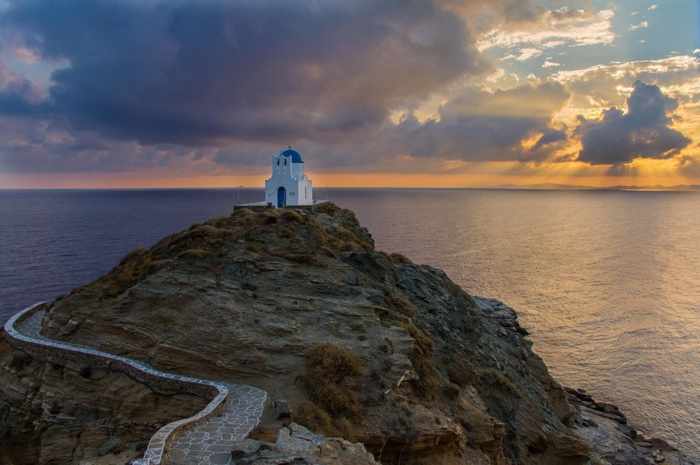
     

    7 Martyrs Chapel on Sifnos photo by Charley Lataste

    Another image that has been shared extensively on social media is this sunset view of the chapel, shot by photographer Charly Lataste.


  • Acropolis & Parthenon shine in print & social media spotlights

    Share

    Trudeau family at the Acropolis

    Pierre Elliot Trudeau was Prime Minister of Canada when he visited Athens with his three sons in 1983. His oldest son Justin (standing behind younger brothers Michel and Alexandre at the Parthenon) became Prime Minister after winning Canada’s federal election on October 19. This photo made the rounds on Greek social media following Justin Trudeau’s big election win.


    Media marvels: I’ve been seeing a lot of the  Acropolis and the Parthenon in Athens this month — unfortunately not in person, but in print and social media.

    Photos of the top two Athens attractions appear frequently on my Facebook and Twitter news feeds, but in the last several weeks there has been a noticeable spike in the number of picture, video and article links that have been posted about both monuments.

    Most social media posts have been travel pictures that tourists shot during their autumn visits to the world-famous monuments, but some of the stand-out photos and articles have been published by international print and online publications.

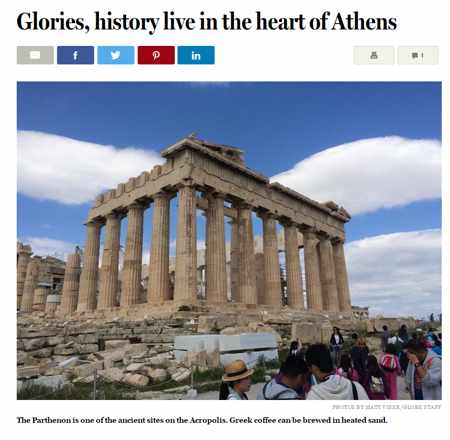
    Screenshot of a Boston Globe article about AthensOne widely shared link was for the travel article Glories, history live in the heart of Athens, published October 3 by The Boston Globe.  The story said the Acropolis is “the absolute must see” for visitors to Athens, and it featured a large picture of the Parthenon as its lead photo.
    Another popular share on Facebook was the photo I posted above showing then Canadian Prime Minister Pierre Trudeau and his three young sons during a visit to the Acropolis on August 30, 1983.

    The picture, credited to Peter Bregg of the Canadian Press news organization,  was republished by The Pappas Post website as its Photo of the Day on October 22 — three days after the eldest Trudeau boy, Justin, was elected as the new Prime Minister of Canada. Now 43, Justin was just 11 years old when the family photograph was taken at the Parthenon.

    Meanwhile, a trip to my local magazine retailer brought me face-to-face with pictures of the Parthenon and the caryatids at the Erechtheion monument on the Acropolis. 

    Prominently displayed on an eye-level shelf was the October/November issue of National Geographic History magazine, which has an attention-grabbing cover photo of the Parthenon basking in a golden sunset glow. 

    National Geographic History magazine cover October November 2015Inside is an informative and well-illustrated 12-page feature article describing noteworthy events during the Parthenon’s long history.

    “It was built to celebrate the triumph of Athens over adversity,” the article begins, “but survival would be hard for this extraordinary building. Over 2,500 years it has been abused, plundered, neglected, and all but obliterated. Its remains now stand as a proud symbol of the endurance of Greek civilization.”

    The feature includes “The day they blew up the Parthenon,” a two-page account of the September 21, 1687 artillery attack on the monument by Venetian forces.

    On another shelf, the November/December issue of Archaeology magazine caught my eye. Its cover image is a photo showing three of the caryatid figures on the Erechtheion, one of the historic buildings on the Acropolis. An 8-page feature article about the Acropolis describes “the decades-long project to restore the site to its iconic past.” 

    Archaeology magazine cover for November December 2015“After four decades of intensive work by hundreds of experts in archaeology, architecture, marble working, masonry, restoration, conservation and mechanical, chemical and structural engineering, much has been accomplished. Already the restoration of two of the major buildings, the Erechtheion and the Temple of Athena Nike, has been completed, as has much of the work on the Propylaia and on large sections of the Parthenon,” the article notes. 

    In outlining “7 keys to restoring an icon,” the article illustrates and discusses several specific monuments and elements at the Acropolis, including the Circuit Walls, the Propylaia, the Temple of Athena Nike, the Erechtheion, the Arrephorion, “scattered architectural members,” and of course the Parthenon.

    Both magazine features are fascinating reads, whether you’ve been to the Acropolis before or not. If you’re planning a trip to Athens for later this year or sometime during 2016, see if you can find copies of the publications at your neighbourhood news outlets. You will enjoy a more informed and educated visit to the Acropolis if you get to read the articles before your trip. 

    And just today (October 31), I have seen the Parthenon and Acropolis getting even more attention in a news video being shared widely on Facebook.

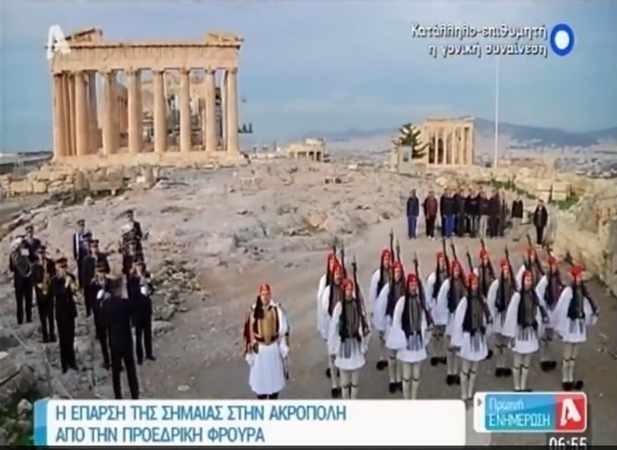
    Originally posted on the Facebook page for the Greek Gateway entertainment website, the clip shows the Greek Presidential Guard participating in a flag raising ceremony to commemorate the 75th anniversary of Oxi Day this past Wednesday. A national holiday, Oxi Day celebrates events on October 28, 1940, when Mussolini’s forces demanded they be allowed to enter and occupy Greece. In response, Greek leader Iannis Metaxas bluntly said “oxi” (“no”) and refused the Italian ultimatum. 


    Oxi Day ceremony at the Acropolis

      A screenshot from the special Oxi Day video that Greek Gateway shared on its Facebook page. Click here to view the clip.


     My last visit to the Acropolis was in May 2014, but after seeing all these photos and stories about it in recent weeks, I wish I could get back soon for another look around.

  • A purrfect place for a catnap

    Share

    cat sleeping on a squash on Andros

    A cat catches an early afternoon snooze on a giant butternut squash displayed on a table outside a house in Stenies village on Andros. We saw the cute kitty cozying up to the giant gourd while we were hiking around the Stenies area during our Andros visit in late May.

    [adToAppearHere]

  • Champagne season gets back into full swing on Mykonos

    Share

    Champagne photo from the Rock N Roll Mykonos nightclub Facebook page

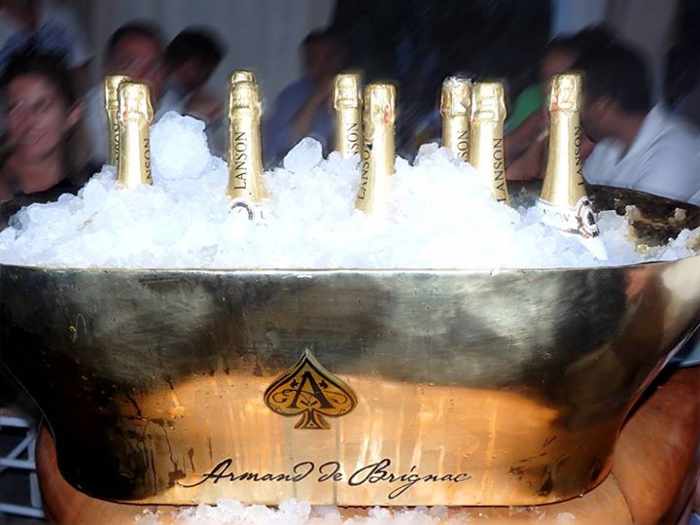
    Rock N Roll Mykonos nightclub shared this image, by @michalisleventogiannis, on its Facebook page


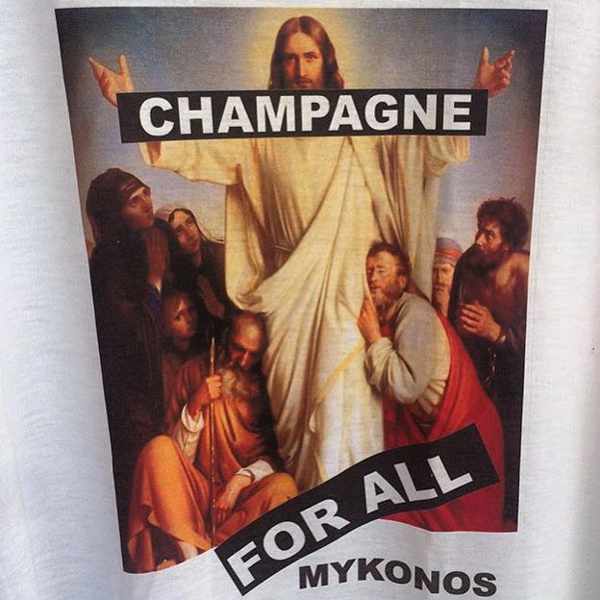
    Corks keep popping: Much like the bunny in the television commercials for the Energizer® brand of batteries, the Mykonos party scene just keeps going and going, fuelled in large part by a seemingly unquenchable thirst for champagne by travellers who have money to burn. 

    Last summer, I published a post describing how champagne was the summer’s top drink on Mykonos. Fast forward to this month, and Mykonos visitors still have an insatiable demand for the fine bubbly beverage — and that has been making headlines in international media.

    This week, newspapers and websites around the world reported on a June 23 Bloomberg Business article entitled: As Athens boils and banks teeter, the party goes on in Mykonos.


     This video, “Mykonos: The ‘Crisis-Free Island,” was posted online this week by Bloomberg Business. It explains why the champagne keeps flowing in Mykonos while the rest of Greece reels from its ongoing economic woes.


    “Mykonos is not about austerity”

    The Bloomberg piece was written by Tom Mackenzie, who travelled to Mykonos earlier this month after spending six days in Athens. Noting that the island’s bars, clubs and restaurants were busy, Mackenzie said Mykonos “could be another country, divorced from the nation’s economic woes. Mykonos is not about austerity. The hotels are among the most expensive in Europe, and a good night is measured in empty champagne bottles, stacked in piles. One three-liter bottle of Armand De Brignac champagne can set you back 12,000 euros (U.S. $13,500).”

    Some of those bottles are practically flying off the shelves at Nammos, the premier beach bar and restaurant on Mykonos. Mackenzie interviewed the Nammos manager, who said “he sells 300 to 400 bottles of champagne” on an average night, “much of it shipped out to the yachts that line the harbor.”


    champagne at Nammos

    Just some of the hundreds of bottles of champagne that Nammos restaurant and beach bar sells on an average night. Nammos shared this picture on its Facebook page with the caption: “Any time is the right time for champagne!”


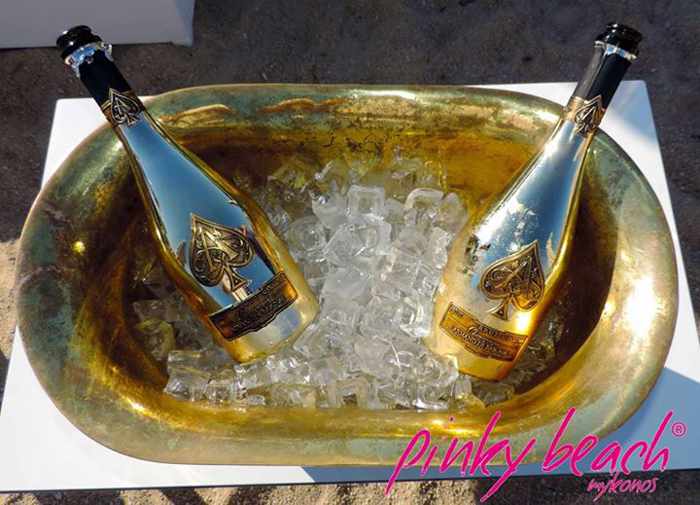
    Armand de Brignac champagne photo 02 from the Pinky Beach Mykonos Facebook page

    Two golden bottles of Armand de Brignac champagne chill in a bucket of ice in this photo posted on Facebook by the Pinky Beach Mykonos restaurant and club at Super Paradise beach


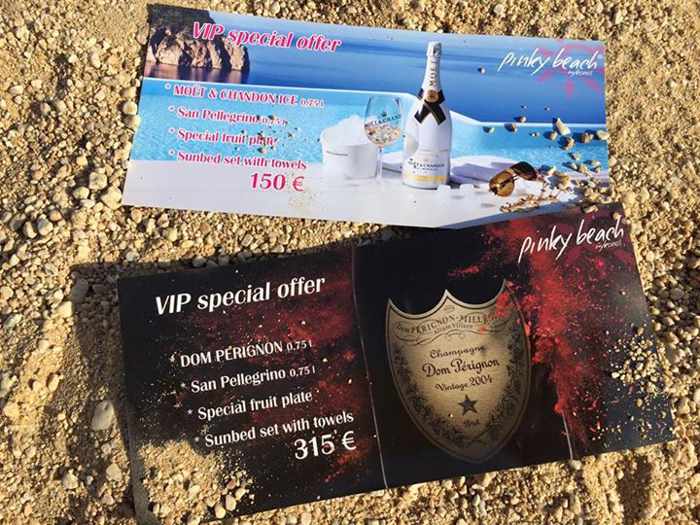
    Pinky Beach Mykonos champagne special offers

    Pinky Beach posted this image on Facebook on August 7 to promote two of its champagne and sunbeds special offers


     Dozens of new businesses in 2015

    Although the Bloomberg article got wide attention when it was picked up and shared by news services around the globe, it was basically paraphrasing an observation that I made at the beginning of May  when I reported on dozens of new businesses that have opened on Mykonos this year. Mackenzie’s comment that “Mykonos “could be another country, divorced from the nation’s economic woes,” seems to be simply an abbreviated version of my statement that “While Greece shudders through its sixth straight year of devastating economic turbulence,  Mykonos appears to be in a different world altogether, virtually unscathed from the recession that has ravaged the rest of the country.”  Indeed, as I pointed out in my what’s new on Mykonos post, many regular visitors to the island will probably be asking themselves “Crisis? What Crisis?” when they arrive this summer to see all the new and freshly-renovated bars, clubs, hotels, restaurants and shops.


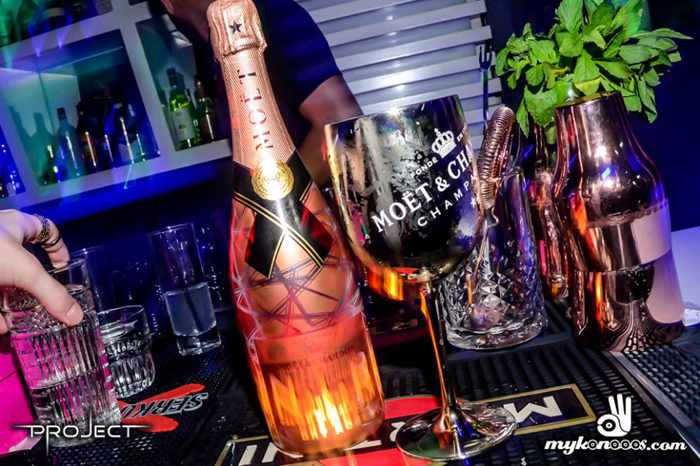
    champagne at Project Mykonos nightclub seen in a Facebook photo by mykonooos.com

    Project Mykonos is one of the newest nightclubs on Mykonos this year — a sister to the Project Club in London. This bottle of Moet & Chandon at Project Mykonos was photographed by mykonooos.com.


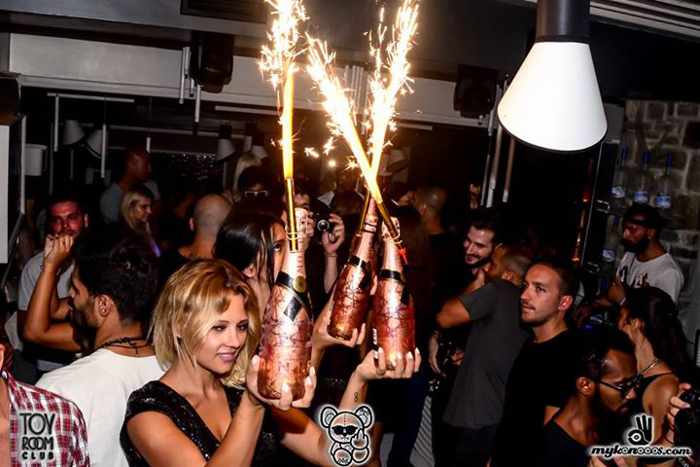
    champagne bottles at Toy Room Club Mykonos in a Facebook photo 2 by mykonooos.com

    Sparklers herald the delivery of champagne at Toy Room Club Mykonos, another nightclub new to Mykonos this year (an island version of the Toy Room Club in London). This photo was shared on Facebook by mykonooos.com.


    Top international brands flocking to Mykonos

    Internationally-renowned retail chains, restaurants and nightclubs — most of which cater to an affluent clientele — have been scooping up all available rental space on the island in a bid to cash in on the big-spending jet-set travellers who have been vacationing on Mykonos during the last several years. The top-flight brands opening on Mykonos this season include Victoria’s Secret, Lapin House, Le Concept Avant-Garde, Six Senses Spa, Buddha-Bar, Hakkasan, and the chic London nightspots Bonbonniere, Project and Toy Room. They have been joined by four new hotels, two new upscale beach clubs, plus at least a dozen new restaurants and wine bars, with more reportedly on the way.

    And it isn’t even high season for tourism yet — the peak months for travel to Mykonos are July and August, when the island will be awash with champagne. With so much bubbly flowing already, the heaps of empty bottles collecting behind some of the Mykonos beach clubs could be enormous by summer’s end.

    Click on the link below to continue reading page 2 of this post.


    champagne photo from Toy Room Club Mykonos

    A bevy of beauties with bubbly at Toy Room Club


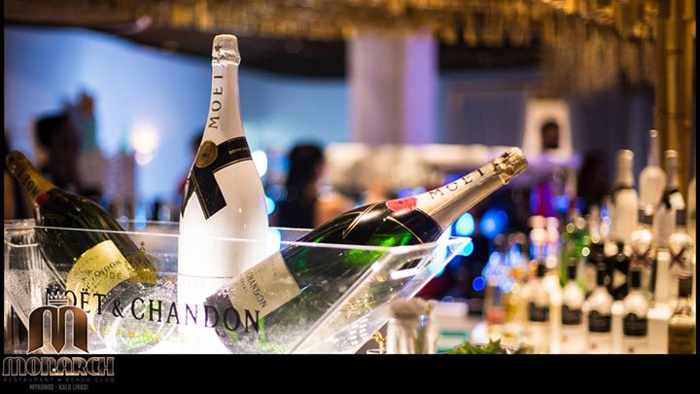
    champagne bottles on the bar at Monarch restaurant & beach club Mykonos

    Champagne on the bar at Monarch Restaurant & Beach Club, a new dining and party venue at Kalo Livadi beach


    CONTINUED ON PAGE 2