The Town Hall for the Municipality of Vathi on Samos island
A view of Stelida beach, also known as Hohlakas beach (right), and St George’s Bay (upper left) on Naxos
This sweeping view from a slope on Stelida mountain takes in Hohlakas beach (right) and Naxos Town on the far side of St George’s Bay
Naxos port quay view of 151-meter-tall Stelida mountain. Construction of the Dream View Hotel is visible halfway up the mountainside.
This Google satellite image shows Hohlakas beach (circled) and the Stelida district of Naxos on the southwest side of St George’s Bay, directly opposite Naxos Town. The island’s popular Agios Prokopios beach stands out at lower left.
Scruffy and secluded: Greece is abundant in beaches, and many Greek islands are justifiably world-famous for their beautiful beaches and stunning coastal scenery.
One of them is Naxos, which boasts a variety of excellent beaches that cater to specific traveller tastes and needs. For instance, families enjoy St George’s beach next to Naxos Town as well as Agia Anna on the island’s southwest coast. Windsurfers flock to Mikri Vigla and to St George’s, which also attracts scores of sailboat and catamaran enthusiasts. The long sandy strand at Agios Prokopios and the grassy dunes at Plaka are popular with sunbathers — especially travellers who like to tan au naturel. And people who prefer secluded quiet coves or isolated coastal swimming spots can find those in spades.
CONTINUED ON PAGE 2
A sensational sunset view from a window on the cocktail bar terrace at Hotel Rochari in Mykonos Town. Click on the image to view the photo in a larger format.
The exterior wall of the Castle of the Knights of St John, viewed from the opposite side of palm-tree-lined Finikon street in Kos Town …
… and part of the castle interior, viewed from the elevated walkway that extends along the perimeter of the castle’s tall stone walls. Visible in the distance is the Bodrum area of Turkey.
Seaside stronghold: When I was a little kid, my friends and I used to build makeshift forts and treehouses and compete for control over the territory. “I’m the king of the castle, and you’re a dirty rascal” was a familiar taunt back in those days. It’s too bad our parents never took us to Kos, because we would have had the time of our young lives visiting the Castle of the Knights in Kos Town.
One of the most popular tourist attractions in Kos, the castle was constructed sometime in the 15th Century by the Knights of St. John, who used stones and marble recovered from the ruins of an ancient city that was devastated by an earthquake. It took them more than 120 years to finish building the stronghold, which was the second castle to be built on the site. (The first one was built in the early 1300s and later got completely destroyed). There actually is a castle within a castle — the outer wall was built between 1495 and 1514 to provide extra fortification for the original castle built more than a half century before.
CONTINUED ON PAGE 2
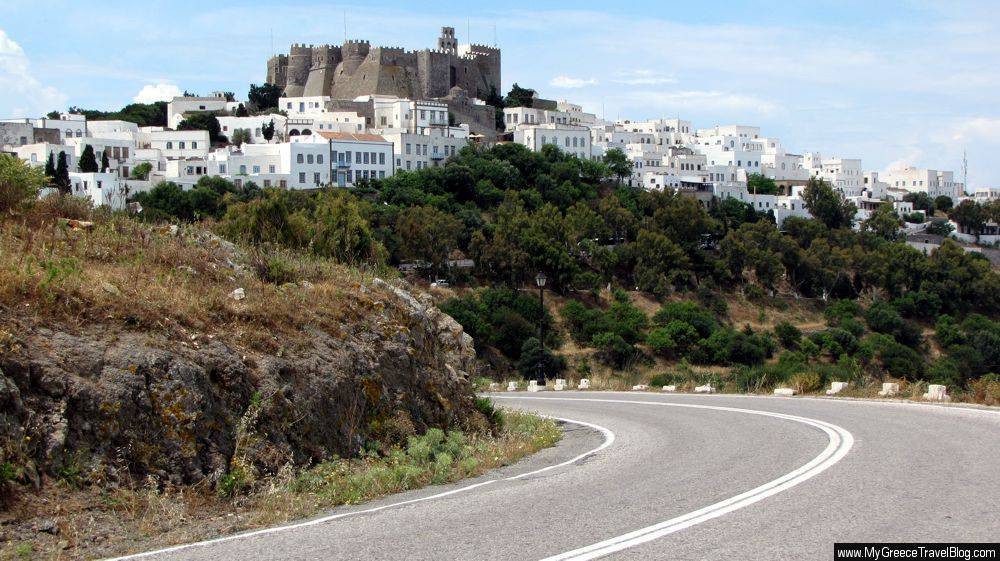
The biggest building on Patmos just happens to be the island’s biggest tourist attraction — The Holy Monastery of Patmos, seen towering above the houses and mansions of Chora. Also known as the Monastery of St. John, it was built around 1088.
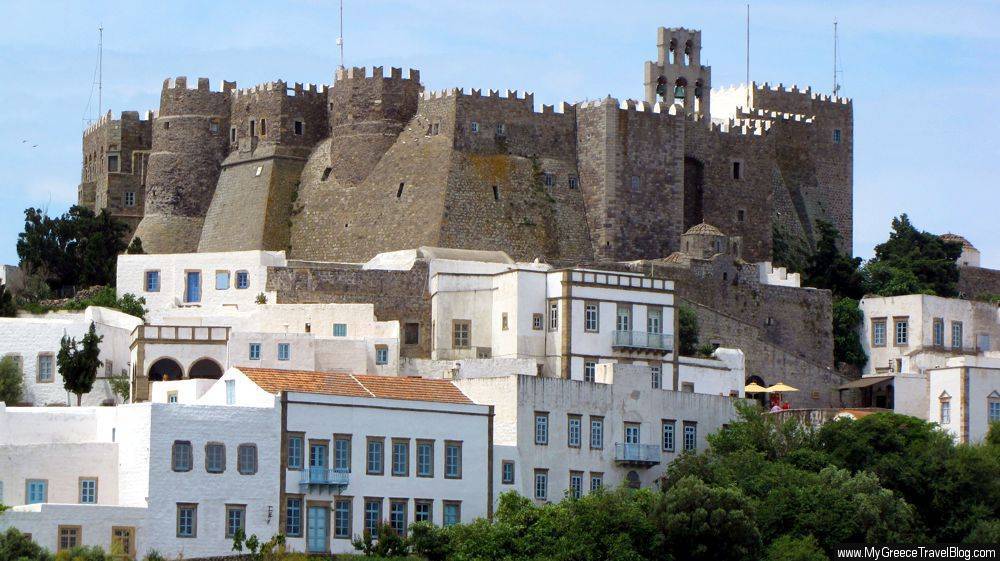
Another view of the imposing fortress-like monastery, the number 1 sightseeing destination for tourists whose cruise ships make brief calls into Skala port at Patmos
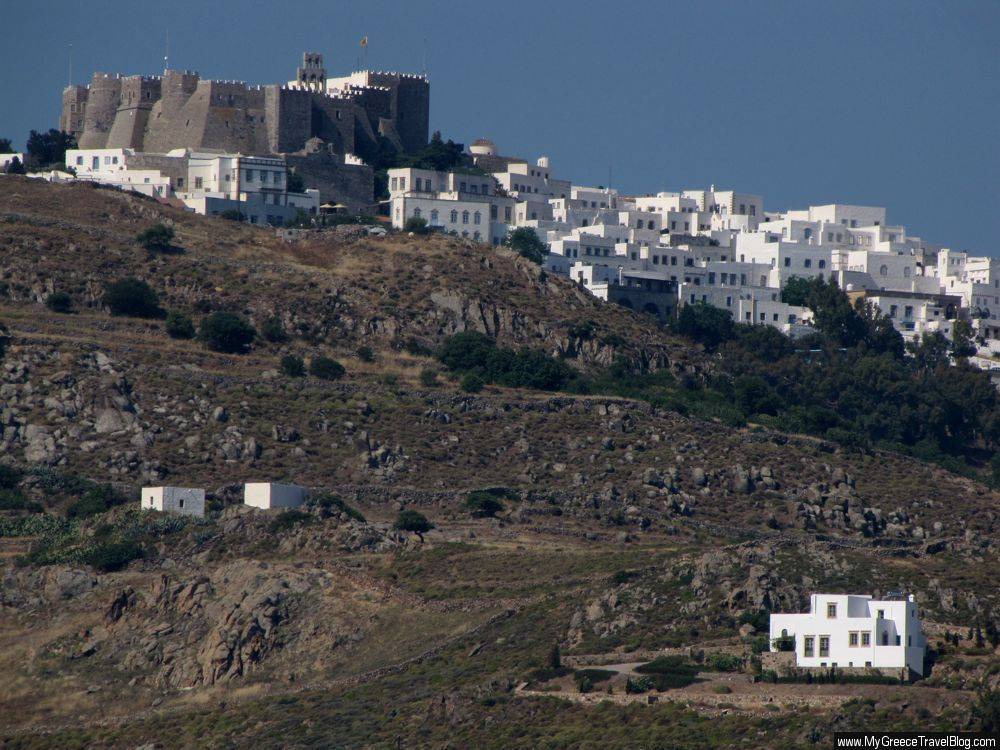
The monastery dominates the Patmos landscape even when viewed from sea
A zoom view of Chora and the monastery, shot from a ferry departing Skala port
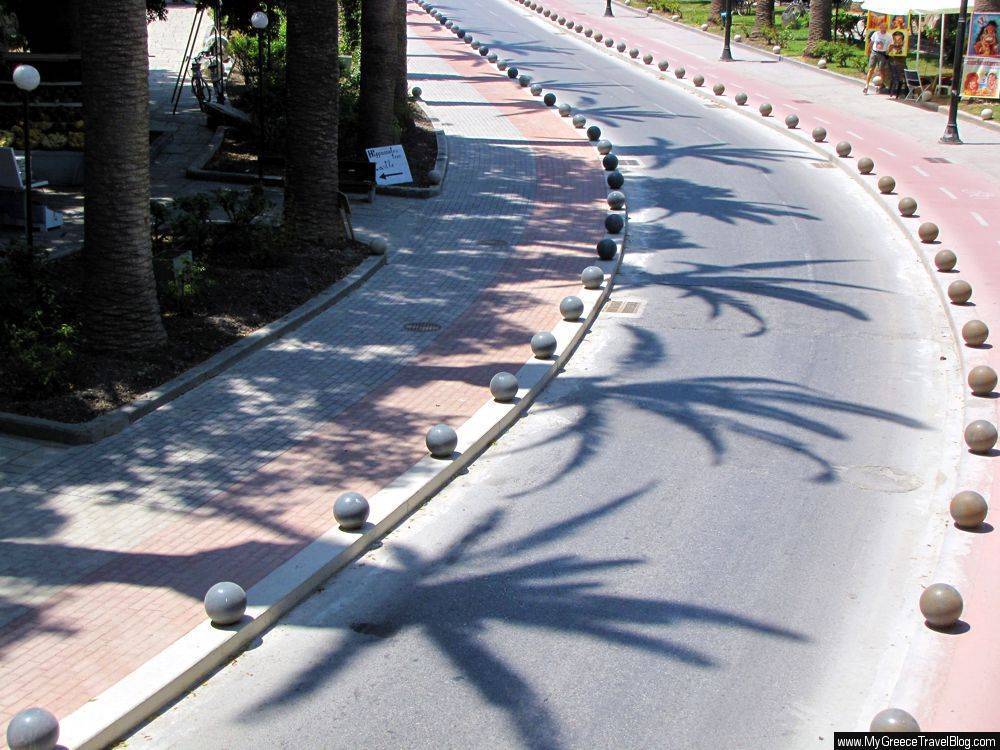
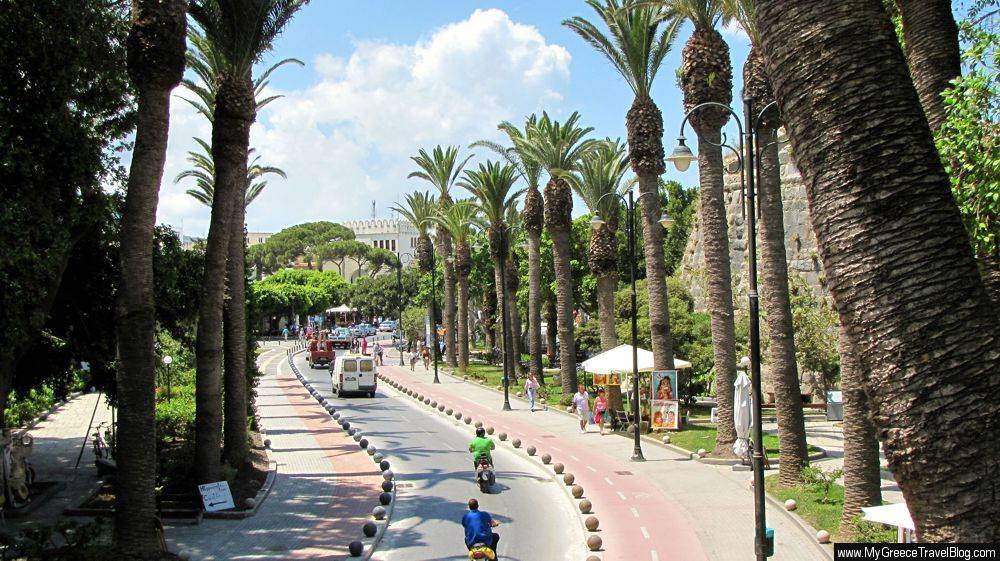
Palm trees cast their shadows onto Finikon street in Kos Town
The elegant, tall trees line both sides of the street outside the 15th Century-era Castle of the Knights of Saint John (also called the Castle of Neratzia) at right.
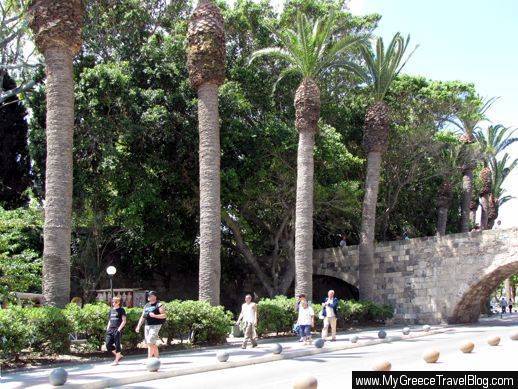
A view of palm trees on both sides of the elevated entrance walkway to the castle. The bridge originally passed over a moat that was filled in and replaced with a street many years ago.
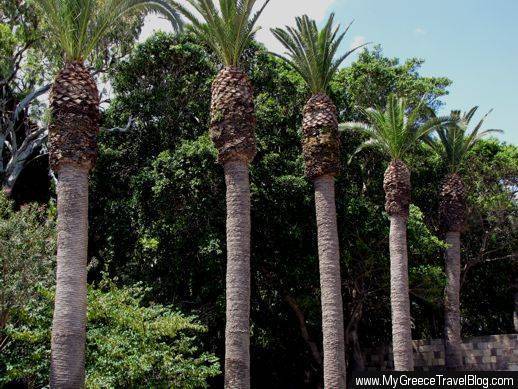
A row of graceful palm trees stands sentry next to the castle
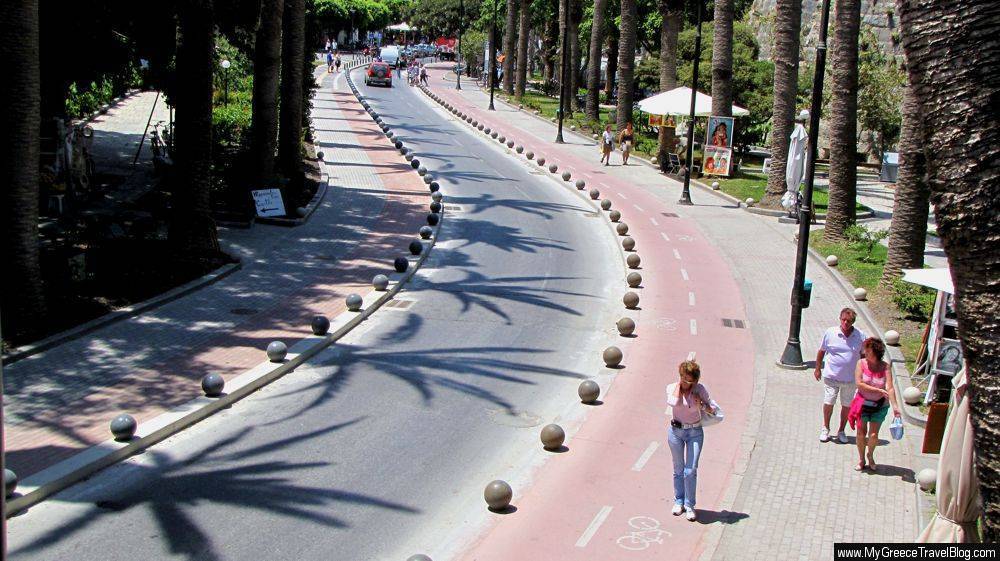
Another view of the palm shadows on the road. Finikon street starts at the seafront and winds its way west past the castle. It turns into Akti Kountouriotou street, which wraps around the bustling Kos Town harbourfront
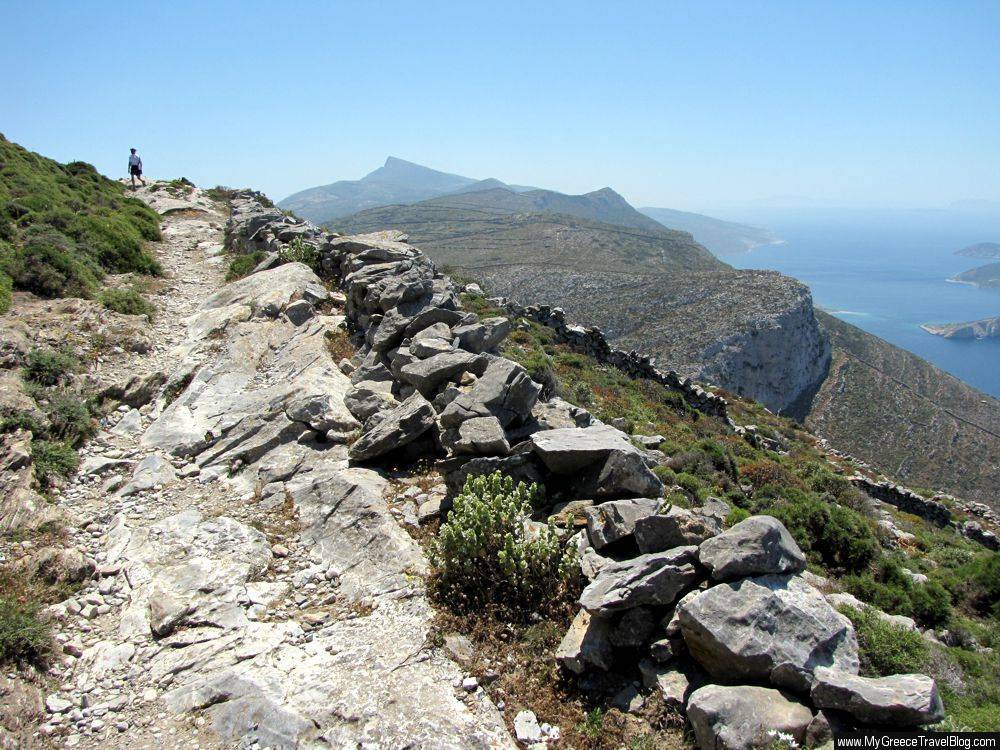
You will feel like you’re on top of the world while hiking on Amorgos. This particular trail leads from Egali to Chora along what’s called “the spine of Amorgos”
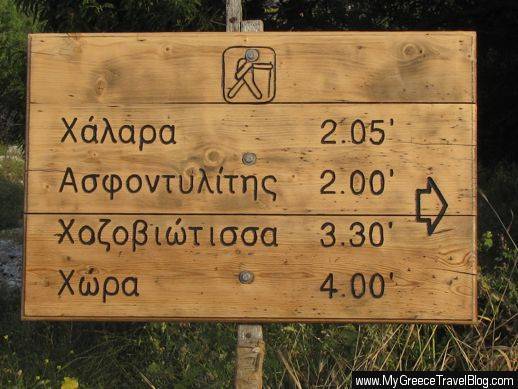
Start points for many of the hiking routes on Amorgos are well-marked by signs. This one even shows the approximate walking times to the destinations indicated.
Wonderful walks: If you like to see vacation destinations on foot rather than through the windows of a rental car or tour bus, you can’t beat the Greek Islands. Most islands, especially those in the Cyclades, are ideal for walking and hiking. Some, like Sifnos and Amorgos, boast extensive networks of footpaths and donkey trails that take visitors to scenic parts of the island that can’t be reached by vehicles.
Amorgos is one of our favourite destinations for hiking.
CONTINUED ON PAGE 2